If you ask a Dutch person which city feels least Dutch, a good number will say Maastricht. The list of things to do in Maastricht reads like a mix of Netherlands, Belgium and Germany: Burgundian food, hills on the horizon, churches older than most Dutch towns, and a river, the Maas, that cuts straight through the centre. It sits in the far south of the country, in the province of Limburg, and it rewards slow wandering more than ticking boxes.
Things to do in Maastricht, starting with the squares
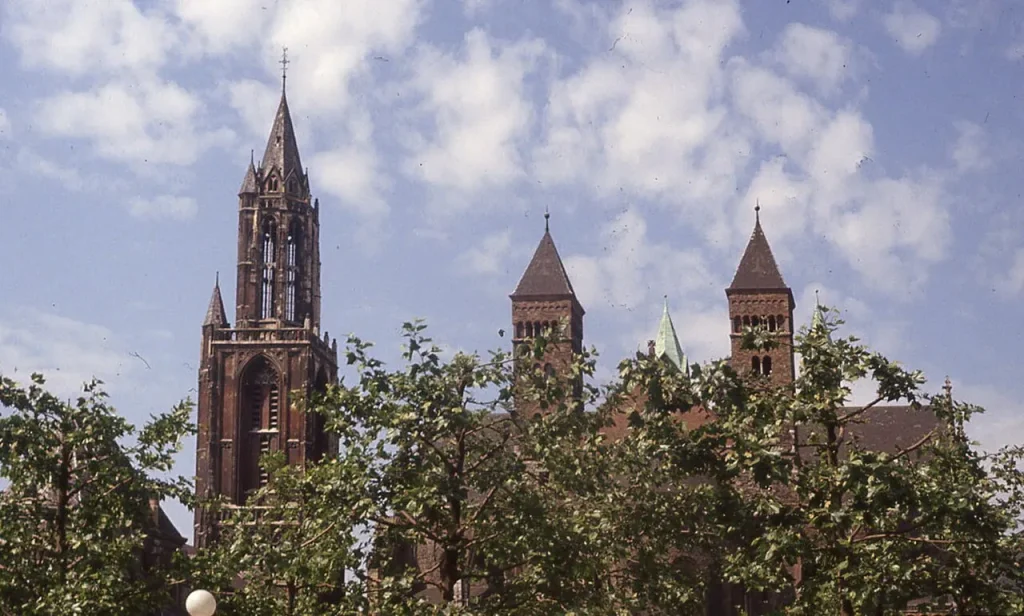
Maastricht is built around a handful of squares, and each has its own mood. The Vrijthof is the big, open one, lined with terraces and dominated by two churches standing side by side: the Basilica of Saint Servatius with its heavy Romanesque look, and the slim red tower of Saint John’s church next to it. Order a coffee here and just watch. In the evening the terraces fill up, and during carnival season the whole square turns into a party that the rest of the country mostly misses out on.
The Markt, a few minutes’ walk away, is more business-like. The town hall sits in the middle, and on market days stalls sell cheese, flowers and fresh produce. Check the current market days before you plan around them. Between the two squares you will find small lanes full of independent shops, which is a nice change if you are tired of the same chain stores in every city.
The bookshop that used to be a church
Nobody should skip Boekhandel Dominicanen. It occupies a medieval Dominican church, and the shelves climb up inside the nave in a steel structure, with a cafe laid out along the old choir. You do not need to read Dutch to enjoy it; the architecture is the show. Go early on a weekday if you want photos without a crowd.
Walls, gates and bridges
Maastricht has some of the oldest defences in the Netherlands. The Helpoort, or Hell’s Gate, is usually described as the oldest surviving city gate in the country. Follow the remaining stretch of the medieval wall and you end up in quiet green corners that most day trippers never reach. The old Sint Servaasbrug bridge over the Maas links the historic centre to the Wyck district on the other bank, where the mood is younger and more casual, with cafes, small restaurants and a good place to sit by the water.
Underground and uphill
South of the centre rises Sint Pietersberg, a hill riddled with man-made tunnels cut out of soft limestone over centuries. Guided visits take you into the caves, and the guides tell you about the quarrying, the wartime use and the cooler temperature underground, so bring a jacket even in summer. On top of the hill stands Fort Sint Pieter, with views back over the city. Book guided tours ahead in busy periods and check current schedules.
Museums worth your time
- Bonnefanten Museum: contemporary and old art in a striking building on the riverbank, easy to spot by its rocket-shaped tower.
- Church treasuries and crypts: the Servatius basilica has a treasury with religious art, and the city’s Roman past shows up in small displays around town.
- Natural History Museum: small and friendly, a decent choice if it rains and you have children with you.
What to eat and drink
Limburg has its own food culture, and it is a big part of why people come back. Try vlaai, a fruit pie with a yeasty base, available in a dozen flavours in local bakeries. Look for rijstevlaai, filled with sweet rice, if you want the classic. Regional dishes lean towards stews, asparagus in spring and a lot of butter and cream. Wine plays a larger role here than in most of the country, and several terraces serve local wines alongside the usual beer.
For a quick lunch, look for a bakery selling sandwiches on dense, crusty bread, or find a cafe in the lanes off the Markt. Prices in the main squares are higher than a few streets away, which is true almost anywhere, so walk one block further.
Getting there and how long to stay
Trains from Amsterdam and Utrecht to Maastricht take roughly two and a half hours, often with a change, and the station is a short walk from the river. You can see the main sights in a long day, but one night makes the trip much more pleasant, because the old town is calmest in the early evening and the morning. Two nights lets you add the caves and a leisurely walk along the river.
Because the city lies so close to the Belgian border, you could add a short hop to Liege or Aachen across the border, both a short train or bus ride away. Many visitors find that is the best way to understand how mixed the region really is.
A simple plan for one day
- Morning coffee on the Vrijthof, then a stroll through the Dominicanen bookshop.
- Walk the lanes to the Helpoort and follow the old wall.
- Lunch near the Markt and a slice of vlaai afterwards.
- Cross the old bridge to Wyck and wander along the river.
- Finish with dinner back in the centre, where the squares light up in the evening.
That route covers the best things to do in Maastricht without rushing. Leave a couple of hours free for getting lost, because the small streets are the best part, and if you have time to spare, the hills around the city invite a short walk or cycle ride as well.
More from us: The Netherlands.
Featured photo: Unknown photographer (Fotografische Dienst Gemeente Maastricht) / Wikimedia Commons (CC BY 4.0).