The word Dutch can mean three things at once: a language, a nationality and a general sense of style, from food to design. Visitors meet all three within an hour of landing at Schiphol, usually when a cheerful stranger answers their English question with a better accent than their own. This guide takes the three meanings in turn and offers a few notes on what to expect.
The language in brief
The language belongs to the West Germanic family, sitting somewhere between English and German. That explains why it can feel strangely familiar when you read it. Words like water, bakker or appel look almost obvious, while grammar and pronunciation take more work. It is spoken in the Netherlands, in northern Belgium, where the variety is usually called Flemish, and in Suriname, as well as in some Caribbean territories of the Kingdom.
The famous difficulty is the sound of the letter g, a throaty, scraping sound that differs between regions. In the south it softens, and in the north it is sharper. Do not worry about getting it perfect. Locals will respond to effort with patience, and often with a switch to English, which can be a mixed blessing if you are trying to practise.
Why everyone switches to English
Many people in the Netherlands speak very good English, learned from school, television and international work. Films and programmes are usually subtitled rather than dubbed, which means children hear English constantly. As a result a shop assistant may answer your halting greeting in perfect English before you finish. It is not rudeness. It is usually a wish to be helpful.
If you want to practise, say so politely and ask for slower speech. A simple phrase goes a long way. Hello is hallo, thank you is dank je or dank u in a more formal setting, and please is alsjeblieft. Learning these takes a few minutes and earns warmth.
The people and the famous directness
You will often hear that the people here are direct. It is true, and it surprises visitors from countries where politeness involves padding. A colleague, waiter or neighbour may say plainly that something does not suit them, without meaning any offence. Once you recognise that, it can feel refreshing: you rarely have to guess what someone thinks.
Other habits worth knowing:
- Punctuality: being late is taken seriously, even among friends. Send a message if you are running behind.
- Birthdays: congratulations go to everyone in the room, including family, not just the person with the birthday.
- Splitting bills: very normal, and usually done precisely. It is not stinginess, just fairness.
- Curtains: famously, many people leave them open, so you can see living rooms from the street. Looking is rude. Glancing is human.
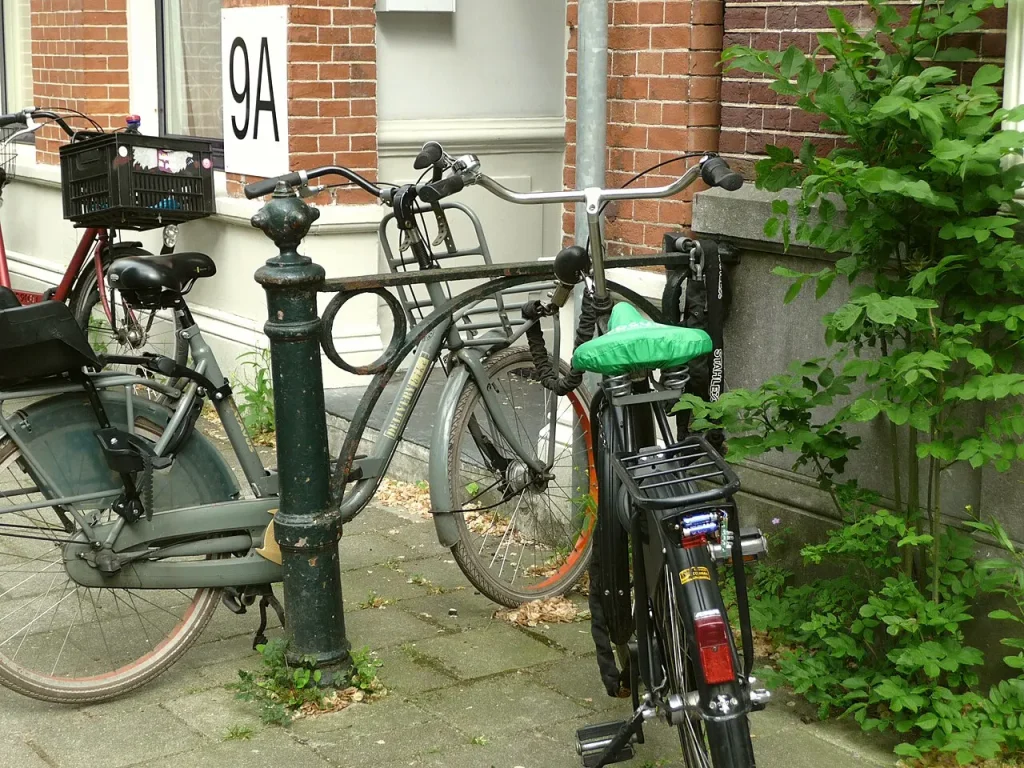
- Cycling: a basic form of transport for everyone, whatever the weather.
Food and drink with a local accent
Food here is practical and comforting. Breakfast and lunch are often bread with cheese, ham or chocolate sprinkles, known as hagelslag. Dinner traditionally comes early, often around six. Typical dishes include stamppot, a mash of potatoes and vegetables with sausage, and erwtensoep, a thick pea soup that suits winter. Snacks such as bitterballen, a crisp fried ball with a creamy meat filling, show up in bars alongside beer. Indonesian dishes are woven into everyday eating, a legacy of colonial history, and rijsttafel is a good way to sample them.
Sweet treats include stroopwafels, caramel-filled waffle cookies, and poffertjes, tiny pancakes served with butter and sugar. Try them warm if you can.
Dutch courage and other confusing English phrases
English is full of expressions that borrow the national name, and almost none are flattering. Going Dutch means splitting the bill, a Dutch oven is a cooking pot and Dutch courage is bravery from a drink. These phrases date from old rivalries between England and the Netherlands in the seventeenth century, and locals know about them. Most take them with humour, though you do not need to quote them in conversation.
Learning a bit before you go
You do not need to become fluent. A small effort helps: download a language app, learn numbers and greetings, and practise reading signs. Station names, menus and shop signs give you constant practice. Reading is easier than speaking for English speakers, thanks to many shared roots.
If you are serious about learning, look for a local course or an online tutor. Many cities have affordable evening classes for newcomers, and community cafes where learners can practise. Be patient: the grammar around word order and the little words used for emphasis takes time. It is a language that rewards stubbornness, and listening to everyday speech helps more than memorising lists.
What to take away
The simplest way to understand the place is to watch how people behave: they speak plainly, they respect time, they share bills and they cycle through rain without a fuss. Add a few words of the language and a relaxed attitude to being corrected, and you will feel at home sooner than you expect. Whatever meaning of the word you came for, the reality is warmer than the stereotype, and a bit funnier too.
More from us: The Netherlands.