The Hague cost of living sits in a middle position: more affordable than Amsterdam for most people, yet clearly pricier than many smaller Dutch cities. For expats, students and families who are weighing a move, the real answer depends on housing, lifestyle and whether you have a salary in euros. This guide breaks down the main categories and explains how to save, without quoting precise numbers that go out of date quickly.
Why people choose The Hague
Den Haag is the seat of the Dutch government, and it hosts international institutions such as the International Court of Justice and the International Criminal Court. That makes it a large international community, with plenty of English-language services, schools and employers. It also has a beach at Scheveningen, parks and a lively dining scene, so many residents feel they get a city and seaside in one place.
Housing: the biggest expense
For most residents, rent is the largest part of the budget. The Dutch housing market is tight, particularly in the western cities, and The Hague is no exception. Prices vary a lot by neighborhood:
- City center and Statenkwartier tend to be higher, as they are popular with professionals and families.
- Scheveningen is attractive for sea views, but short-term holiday lets can raise local prices.
- Laak, Escamp and Transvaal are generally more affordable.
- Voorburg and Rijswijk, nearby towns, offer another option and are close by tram or train.
Expect to compete for homes. Landlords often ask for proof of income, a deposit, and sometimes a guarantor. Be careful with scams: never pay a deposit before viewing and signing a contract. Rent-regulated housing exists, but waiting lists are long, and you should not rely on it when you first arrive. Check the current rules on the Dutch government’s website, as rental regulations have changed in recent years.
Health insurance and mandatory costs
Anyone living and working in the Netherlands must take out basic Dutch health insurance, paid monthly to a private insurer. The basic package is standardized, and premiums differ by company and the deductible you choose. Many residents may qualify for a government health allowance depending on income. In addition, you will pay municipal taxes, water board charges and possibly waste fees, which can appear on separate bills.
Groceries and eating out
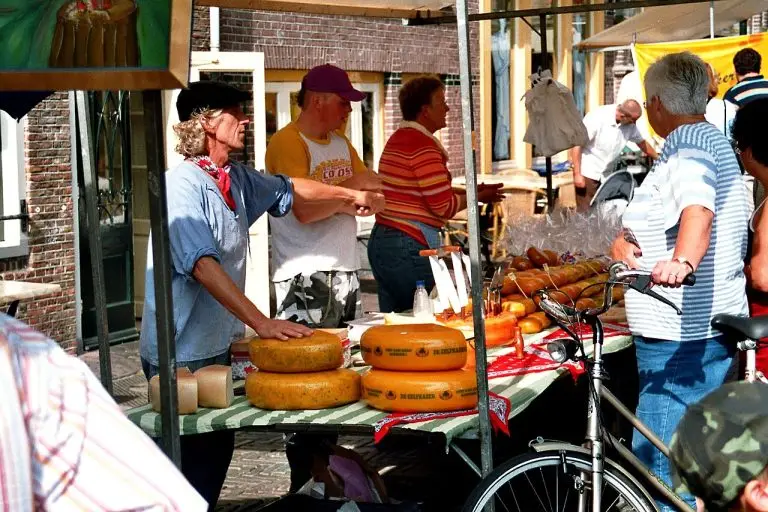
Supermarkets such as Albert Heijn, Jumbo, Lidl and Aldi are widely available. Food prices are moderate compared with other Western European capitals, and shopping at markets, such as the Haagse Markt, one of the largest outdoor markets in Europe, can lower your bill. Eating out ranges from cheap snacks like herring or broodjes to higher-end restaurants. A casual dinner for two will usually cost less than in Amsterdam but more than in many other countries.
To save money, cook at home, buy seasonal produce, use supermarket loyalty programs and shop for household items at discount stores.
Transport costs
The city has trams and buses run by HTM, and trains connect to Amsterdam, Rotterdam and Utrecht. The OV-chipkaart or contactless bank card is used for local public transport. Many residents instead cycle, which is cheap and fast in this compact city. Owning a car is possible but parking permits and fuel can add up.
If you commute by train regularly, consider an NS subscription or discount card that lowers fares. Employers sometimes reimburse part of commuting costs, so ask.
Utilities, internet and phone
Gas, electricity and water are separate charges, and heating costs can be notable in winter, especially in older buildings with poor insulation. Compare energy providers and consider fixed or variable contracts, though choices change frequently. Mobile plans and home internet are competitively priced by international standards.
Leisure and extras
Museums such as the Mauritshuis, the Panorama Mesdag and Escher in Het Paleis charge entry, but many parks, the beach and city streets are free. Sports clubs, gym memberships and cinema tickets are priced similarly to other Dutch cities. A cultural pass such as the Museumkaart can help if you visit a lot.
How The Hague compares
Compared with Amsterdam, rents are usually lower. Compared with Rotterdam, they can be similar or slightly higher, depending on the district. Smaller cities and towns further from the Randstad generally offer the lowest housing costs. If you are sensitive to price, searching in surrounding towns with good rail links can make sense.
Ways to save
1. Look for housing outside the most central neighborhoods. 2. Cycle instead of owning a car. 3. Shop at open-air markets and discount supermarkets. 4. Compare health insurance each year during the open enrollment period. 5. Check eligibility for allowances and tax advantages.
Getting reliable information
For general background about the city, its districts and its role, see The Hague on Wikipedia. For rules on taxes, healthcare and rent, always consult official Dutch government websites, because rates and regulations change frequently.
Bottom line
The Hague cost of living is manageable if you plan carefully. Housing is the main challenge, while food, transport and leisure remain reasonable by Western European standards. Start by deciding which neighborhood suits you, budget for mandatory insurance, and verify current prices on official sources before committing to a move.
More to read
Image credit: Fred Romero from Paris, France via Wikimedia Commons (CC BY 2.0).