Planning things to do in Netherlands is easier than it sounds, because the country is small, the trains run often, and each region has its own character. Beyond the famous canals of Amsterdam, you can find medieval cities, giant sea barriers, flower fields, art museums and flat landscapes made for cycling. This guide sorts the options by interest so you can build a trip that fits your time.
Start with the cities
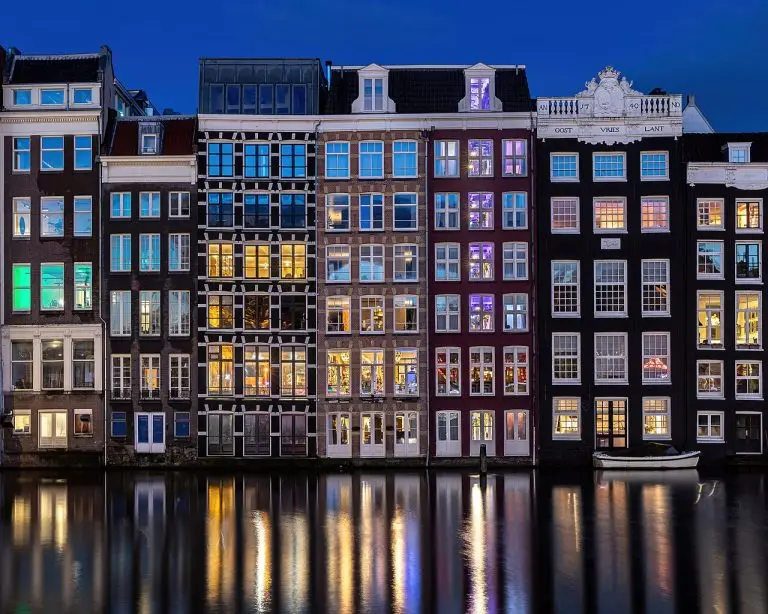
Amsterdam is the obvious first stop. The Rijksmuseum, the Van Gogh Museum and the canal ring are the classic sights, and the Anne Frank House needs advance booking. But do not stop there.
- Utrecht has a two-level canal with wharf cellars and the Dom Tower, the tallest church tower in the country.
- Rotterdam was rebuilt after the Second World War and is known for bold modern architecture, such as the Markthal and the Cube Houses.
- The Hague is the seat of government and home to the Mauritshuis, where Vermeer’s Girl with a Pearl Earring hangs, as well as the Peace Palace.
- Delft is a compact town known for blue-and-white pottery and a link to Vermeer.
- Leiden has a historic university and a pretty canal network.
Most of these can be reached from Amsterdam by train in under an hour or so, so you can base yourself in one city and visit others as day trips.
Windmills, dikes and water
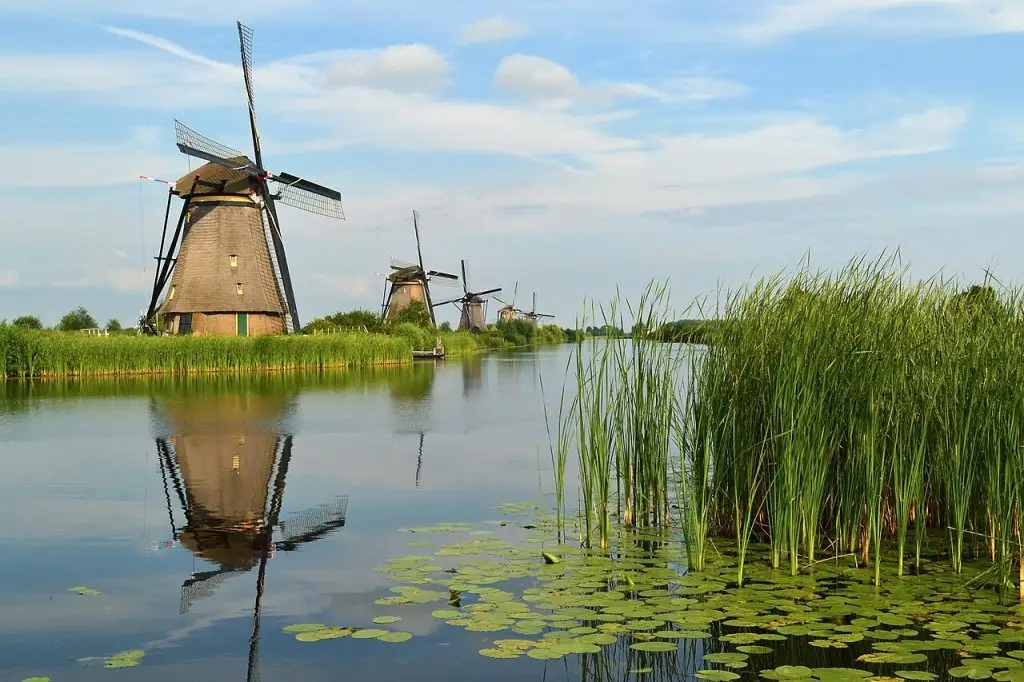
The Dutch have shaped their land with water management for centuries, and this is among the most memorable topics to explore. Kinderdijk, a UNESCO World Heritage site near Rotterdam, has a row of historic windmills along the canals. Zaanse Schans, north of Amsterdam, presents working windmills and traditional houses, though it can be crowded.
For a sense of scale, visit the Delta Works in Zeeland, a system of storm surge barriers, or the Afsluitdijk, the long dam that closes off the former Zuiderzee. These sites show why the Netherlands is described as a country partly made by its people.
When is the best time for tulips
If flowers are the goal, visit in spring. Keukenhof near Lisse opens for a few weeks from late March into May, and the surrounding bulb fields usually color up in April. Exact dates change every year, and the bloom depends on weather, so check official information before booking.
Cycling and the outdoors
The Netherlands is one of the best places for cycling, with a dense network of separated bike paths and numbered junction routes. You can rent a bike in nearly any town. Good options include:
- the dunes and beaches along the North Sea coast
- the Hoge Veluwe National Park, where free white bikes are provided for visitors with a park ticket
- the polders and villages north of Amsterdam
- the island routes in the Wadden Sea
Always lock your bike, follow traffic signals and be aware that bike lanes in cities are busy. Wind is the real challenge, so plan routes that give you a tailwind home if you can.
Food and drink to try
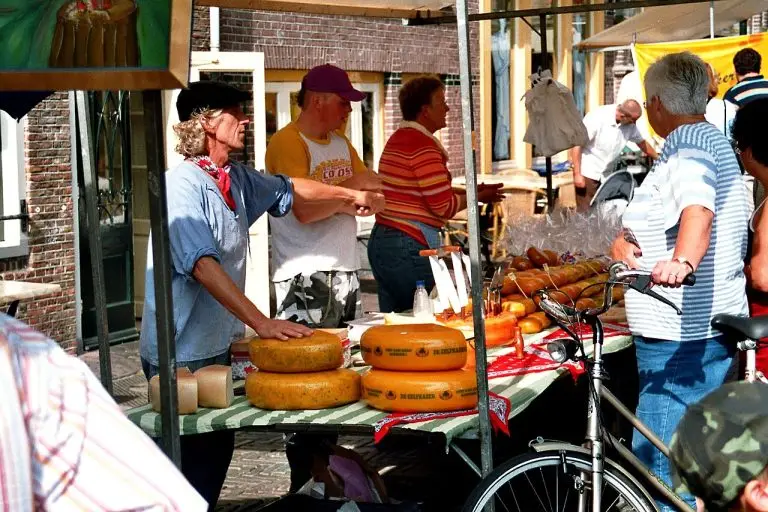
Dutch food is simple and comforting. Try stroopwafels warm from a market stall, herring with onion, bitterballen with mustard, poffertjes and local cheeses such as Gouda and Edam. Visit a cheese market in Alkmaar, Gouda or Edam during their summer seasons if you enjoy tradition, though these are partly staged for visitors. Indonesian food, from the colonial past, is also common, and a rijsttafel is a worthwhile meal.
Coastal and island escapes
The Dutch coast is long, with wide beaches and seaside towns such as Zandvoort, Scheveningen and Noordwijk. In summer, beach clubs open, and in autumn, walkers have the sand almost to themselves. The Wadden islands, including Texel and Terschelling, are reached by ferry and suit nature lovers who want birds, dunes and seals.
Museums beyond the big names
Besides the headline museums, consider the Kröller-Müller Museum in the Hoge Veluwe area for Van Gogh and sculpture, the Boijmans in Rotterdam (check current status of its depot and building), and the Escher in Het Paleis in The Hague. Many museums are covered by the Museumkaart, a pass that can pay off if you visit several, but check eligibility for foreign visitors.
Getting around
The rail network run by NS connects the major cities, and OV-chipkaart or contactless payments work on many local services. Trains can be busy at peak hours, so avoid them if you travel with large luggage. For flexible trips, a car is rarely needed; parking in cities is expensive.
Planning your trip
For a first visit, three days is enough for Amsterdam plus a day trip, and a week allows Rotterdam, The Hague, Utrecht and the coast. Spring and early autumn offer comfortable temperatures and fewer crowds than July and August. Bring layers and a rain jacket, because rain can appear at any time of year.
You can find official trip ideas and event information on Holland.com, the national tourism site. Opening hours, ticket prices and train schedules change, so check official websites for the latest details.
Final thoughts
The best things to do in Netherlands are rarely just one famous sight; they are the combination of cities, countryside, water and food that sits within a short train ride of one another. Pick two or three regions, book popular museums early, leave time for wandering a canal at dusk, and you will see why the country rewards both short and long stays.
More to read
Image credit: Tarod via Wikimedia Commons (CC BY-SA 3.0 nl).