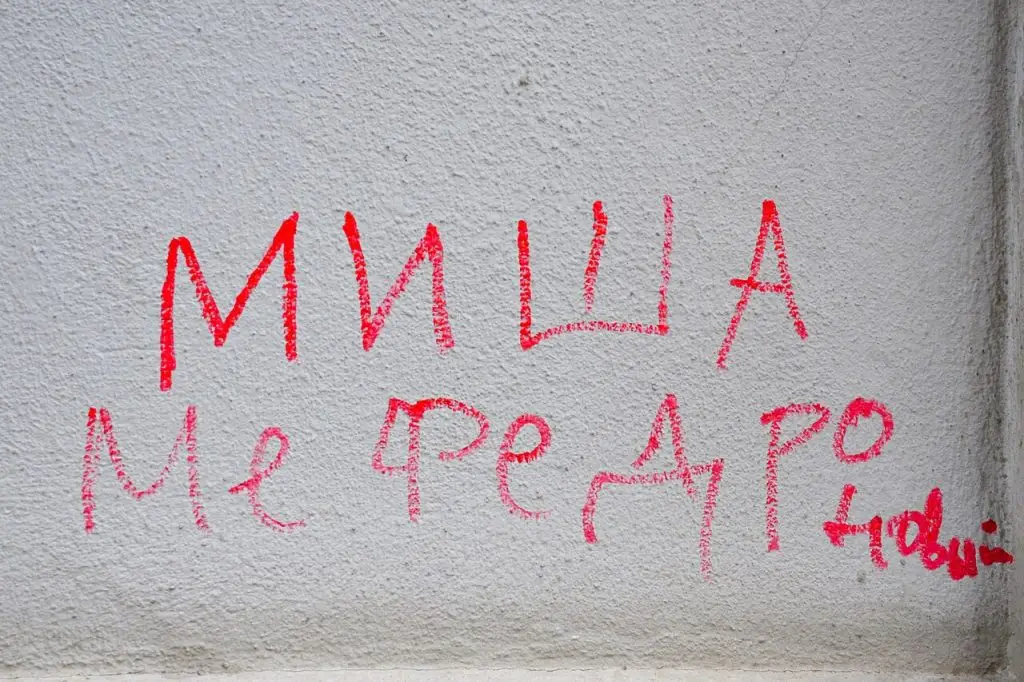
If you plan to visit Russia, Serbia, Bulgaria or other countries that use it, you will benefit a lot from knowing how to learn the cyrillic alphabet. It looks intimidating, but many travellers pick up the basics in a few days. Reading street signs and menus makes a trip much easier and more fun.
How many letters?
The Russian version has 33 letters, while Serbian Cyrillic has 30 and is almost phonetic: each letter is one sound. Other languages add or drop a few letters. Start with the one you need for your trip.
Letters that look familiar
Several letters look like Latin ones and sound similar: А, К, М, О, Т, and Е are easy. Be careful: some look familiar but sound different. For example, Н sounds like “n”, Р like “r”, С like “s” and В like “v”. These “false friends” are what make beginners stumble, so learn them early.
Letters that are new
Some letters have no Latin equivalent, like Ж (“zh” as in measure), Ш (“sh”), Щ (a longer “shch”), Ц (“ts”), Ч (“ch”), Я (“ya”) and Ю (“yu”). Learn them in small groups, repeating the sounds.
A simple routine
- Learn five or six letters per session
- Write them by hand, because writing helps memory
- Read street names, brand logos and menus in Cyrillic
- Use flashcards or an app for short sessions
- Practise by sounding out words, even if you don’t know the meaning
Many travellers find that reading brand names, such as familiar fast-food chains written in Cyrillic, is a fun way to practise.
Memory tricks
Make a mental picture for each letter: Б looks like a boot, Д looks like a house with legs, Л is a roof. Silly images stick. Group letters by sound, and say them aloud.
Serbian: two scripts
Serbia uses both Cyrillic and Latin, so you can often see both together. If you visit the capital, our guides on Belgrade restaurants and how many days in Belgrade can help you practise on real menus. For solo trips, see our notes on whether Serbia is safe for solo female travellers.
Useful first words
Read and say simple words: “да” (yes), “не” (no), “хвала” (thank you in Serbian), “спасибо” (thank you in Russian), “кафе” (cafe) and “метро” (metro). You will quickly find many words look like English ones.
How long will it take?
With short daily practice, most people can read slowly after a week or two. Fluency in reading takes longer, but it is not needed for travel.
Final encouragement
You will be surprised how fast the letters become familiar. For more details see Cyrillic script on Wikipedia. Find more guides at invisionfree.com.