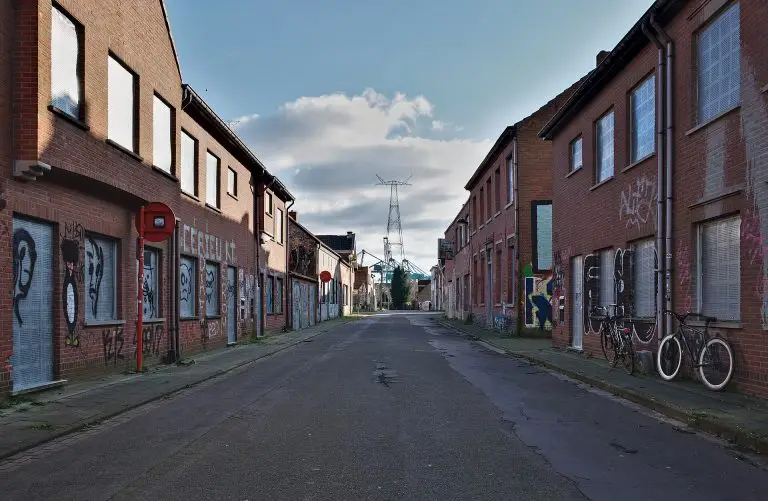
Doel Belgium looks like a stage set that has been left standing after the audience left. Rows of brick houses face an empty street, many windows are boarded up and covered in graffiti, and behind the rooftops rise the cooling towers of the Doel nuclear power station and the cranes of the Port of Antwerp. Yet people still live here, and the village has become a curious destination for photographers, urban explorers and anyone interested in how industry and community collide. This guide explains the story, how to visit, and how to do it respectfully.
What is Doel?
Doel lies on the left bank of the Scheldt, in East Flanders, a short distance from the Dutch border and not far from Antwerp. It has been a settlement for centuries, protected from the river by a dike, and was once a small farming and fishing community with its own church and windmill. From the 1960s onward the expanding Port of Antwerp began to claim land around it, and plans to clear the village for new docks were put forward repeatedly. Over the decades, many residents sold up or left, and houses were bought and emptied by the port authorities.
Plans changed over time. Residents and activists campaigned to save the village, and the legal and political situation shifted more than once. Some houses were demolished, others were kept, and the story is still developing, so treat any summary as a snapshot and look for recent updates.
Why people visit
The main draw is the atmosphere, along with the street art. Over the years, graffiti artists, some of them well known, have covered the empty façades with large murals and lettering. The result is a constantly changing outdoor gallery in an unusual setting. The contrast between the faded brick, the colourful paint and the power station behind makes for striking photographs.
It is also a place with a real history. The old windmill, a stone mill dating back several centuries, stands on the dike and is one of the village’s symbols. The church and the old school building also remain part of the picture.
How to get to Doel Belgium
By car, Doel is reachable from Antwerp via the road along the left bank of the Scheldt, and there is parking at the edge of the village. Public transport options exist from Antwerp, usually involving a tram or train and a bus that connects with the Waasland area, but services can be limited and change regularly. Check the Flemish operator De Lijn for current routes. Cycling is a popular alternative; the area is flat, and the dike paths are scenic, though they can be exposed to wind.
What to see nearby
The Scheldt dike and polder
Walk or cycle along the dike to look at the river, the ships heading to the port and the long skyline of industry on the opposite shore. The polder landscape behind the dike is quiet farmland, a sharp contrast with the industrial sites.
Verdronken Land van Saeftinghe
Across the Dutch border is the Verdronken Land van Saeftinghe, a large tidal salt marsh known as the Drowned Land of Saeftinghe. It is a protected nature reserve, and guided walks across the marsh are offered at low tide. These require booking and proper footwear, and you should only go with an authorised guide, because the tides are serious.
The Waasland and Antwerp
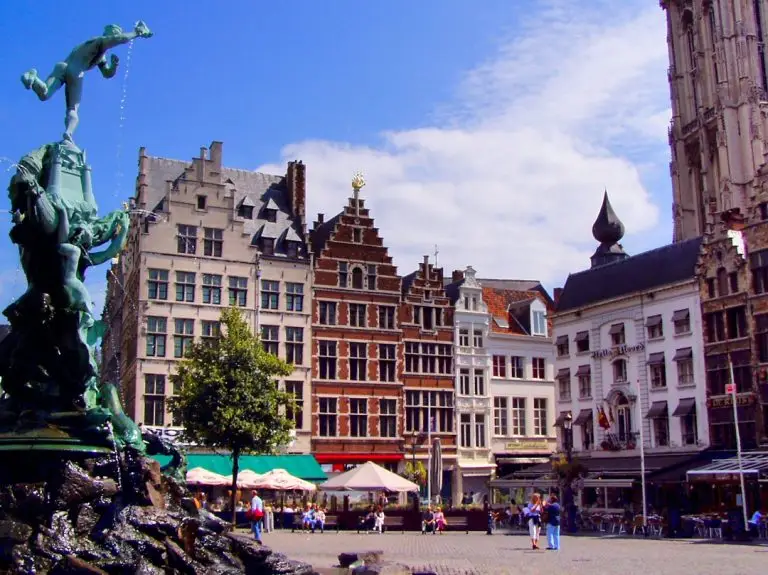
Antwerp itself is a short drive away, and combining a morning in Doel with an afternoon at the Cathedral of Our Lady or the MAS makes for a varied day.
Visiting respectfully
Remember that Doel is a living village and not a theme park. Some of the homes are occupied, and residents have spoken about the intrusion of curious visitors. A few simple rules go a long way.
- Stay on public streets and do not enter fenced or posted properties.
- Never go into abandoned buildings; they can be unstable and entering may be illegal.
- Be careful with photography when people are in view, and ask before pointing a camera at someone.
- Keep noise low, and take your rubbish with you.
- Do not add graffiti unless an area is clearly designated for it.
Facilities and timing
Facilities in the village are limited, though a small café or local initiative may open at times. Bring water and snacks, and check the weather, because the dike offers little shelter. Early morning and late afternoon light are best for photography. Allow around two hours for the village itself, longer if you add the dike or marsh.
Conditions in Doel have changed several times and may change again, so check current information before you go. A neutral overview with sources is available on the Doel page on Wikipedia, and local tourism offices in the Waasland and Antwerp can tell you what is open. Visited thoughtfully, Doel Belgium is a thought-provoking short trip that shows what happens when a village and a port meet, and it stays with you long after the photographs are filed away.
More to read
Image credit: Trougnouf via Wikimedia Commons (CC BY 4.0).