Mons Belgium is one of those places that rewards travellers who step off the usual Brussels-Bruges-Ghent circuit. It is the capital of the province of Hainaut in Wallonia, a compact town on a low hill, with a handsome main square, a baroque belfry that made it onto the UNESCO list, and a festival tradition that is unlike anything else in the country. It was a European Capital of Culture in 2015, and the museums and public spaces that came out of that year are still a good reason to visit. This guide covers what to see, how to get there and how to fit it into a short trip.
Getting to Mons Belgium
Mons sits in the south-west of the country, close to the French border. Direct trains run from Brussels and the journey usually takes somewhere between 30 and 60 minutes depending on the service, so it works as a day trip or a relaxed overnight stop. Trains also connect with Charleroi and with Tournai and Lille on the French side, though connections can involve a change. The station was redesigned by Santiago Calatrava, and its white, skeletal roof is worth a look even if you only pass through.
From the station it is a short uphill walk to the old centre. Mons is small enough that you will rarely need a bus once you are there. Check the national railway website for current timetables, because engineering works are common on Belgian lines.
The Grand-Place and the Belfry
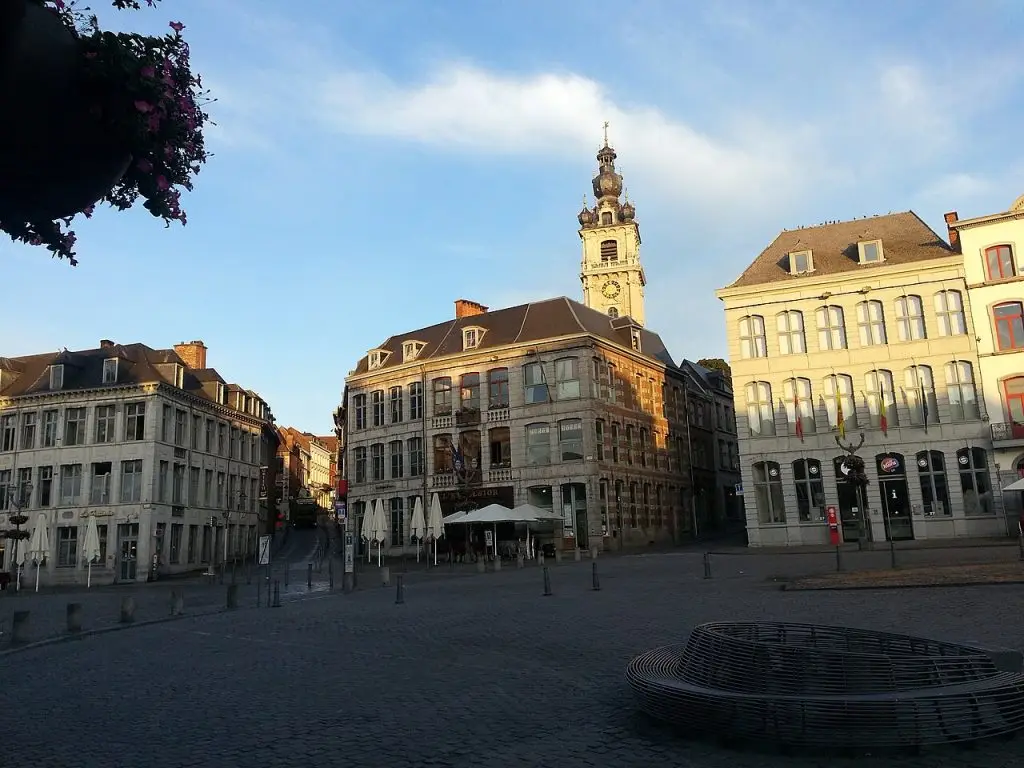
The Grand-Place is the natural starting point. It is lined with café terraces and dominated by the Gothic town hall, which dates from the fifteenth century. A small bronze monkey on the town hall’s side is a local good-luck charm; tradition says you stroke its head with your left hand and make a wish. Expect to see a polished head and a few visitors queuing patiently.
Above the square, on the highest point of town, stands the Belfry, built in the late seventeenth century in a distinctive baroque style. It is one of the Belfries of Belgium and France inscribed by UNESCO, and it is unusual because it is not Gothic like most of its northern cousins. The surrounding gardens give a good view across the roofs and the surrounding Hainaut countryside. Visits to the tower are possible at certain times, so check opening arrangements before you go.
Saint Waltrude’s Collegiate Church
Just down the hill, the Collegiate Church of Saint Waltrude is a large late-Gothic building that dominates the skyline together with the belfry. Inside, look for the treasury and the sculpture, and note how much of the structure was built over a long period. It is a quiet place and a good counterpoint to the lively square.
Museums and the Capital of Culture legacy
Several museums were created or renovated for the 2015 programme. The BAM, the Beaux-Arts Mons, shows art from the Middle Ages onward and hosts rotating exhibitions. Other venues cover local history, archaeology and contemporary design. Mons also has a strong link to Vincent van Gogh, who lived and worked as a lay preacher in the nearby Borinage mining region in the late 1870s. The Maison Van Gogh in Cuesmes, a short ride from the centre, tells that part of his life and is a rewarding detour for anyone interested in how his early years shaped his work.
Spiennes and the Neolithic flint mines
One of the most surprising reasons to visit Mons is just outside town. The Neolithic flint mines at Spiennes are a UNESCO World Heritage Site and among the oldest and largest known concentrations of prehistoric mining in Europe. The site is more about landscape and interpretation than dramatic ruins, so a visit suits people who enjoy archaeology. There is an interpretation centre; guided visits and seasons vary, so confirm before you travel.
The Doudou festival
If your dates are flexible, aim for the Doudou, the Ducasse de Mons. It takes place around Trinity Sunday, the weekend after Pentecost, and centres on a symbolic fight between Saint George and a dragon on the Grand-Place, known as the Lumeçon. The festival is recognised by UNESCO as intangible cultural heritage. The town fills up with locals in costume, and the square is packed, so book accommodation early and arrive with patience if you want to see the climactic moments.
Where to eat and how long to stay
Local cooking is typical Wallonian and Belgian comfort food: stews, frites, hearty beer-based dishes, and good local beers. Terraces around the Grand-Place and the pedestrian streets nearby are the obvious places to start. A single full day is enough to cover the centre, the belfry and one museum. Two days lets you add Spiennes and the Van Gogh house.
Practical tips
- Bring comfortable shoes: the old centre is hilly and paved with cobbles.
- Many museums close on Mondays, so check before planning your route.
- Weekday trains are frequent, weekends can be thinner.
- French is the main language, and English is understood in the centre.
Prices, opening hours and festival dates change from year to year, so check the official sources before you go. A good general reference is the Mons page on Wikipedia, which links on to the official tourism resources. Used as a base for a gentle two-day trip, Mons Belgium offers history, culture and a very local character without the crowds of the bigger Belgian cities.
More to read
Image credit: Mr N via Wikimedia Commons (CC BY-SA 4.0).