Brooklyn Heights is a calm, tree-lined neighborhood with some of the best views of Lower Manhattan, just one subway stop from the Financial District. It is known for brownstones, quiet streets and the Promenade, a pedestrian walkway above the East River. Many visitors come for a short walk after crossing the Brooklyn Bridge, but the area rewards a longer look.
A brief history
Brooklyn Heights was among the first neighborhoods in New York to be designated a historic district, in 1965, and it holds a large collection of nineteenth-century row houses. Its position on a bluff facing Manhattan made it an early residential area for people who worked across the river, helped by the ferry and later by the bridge. Today it remains largely residential, with a mix of long-term residents, families and professionals.
Getting there
The neighborhood is easy to reach. Subway stations include Borough Hall, Clark Street, High Street and Court Street, served by various lines; check the MTA website for current routes and disruptions. You can also walk across the Brooklyn Bridge from Manhattan, which takes roughly 30 to 45 minutes at a steady pace, and then continue into the area. The NYC Ferry and other waterfront services also stop in the surrounding area.
The Brooklyn Heights Promenade
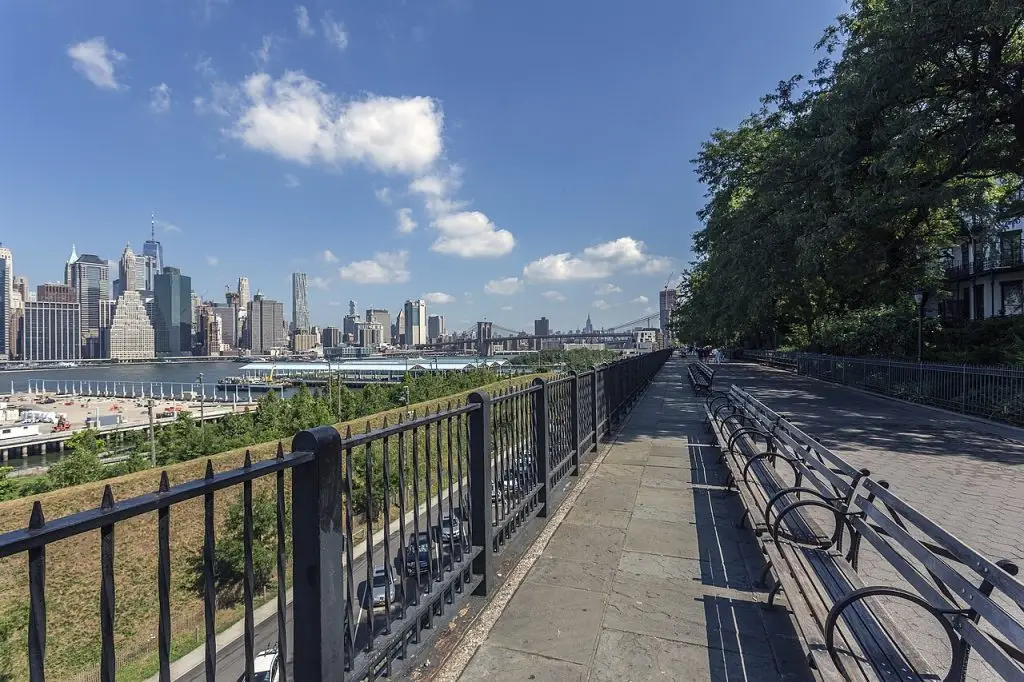
The Promenade, officially the Brooklyn Heights Promenade, is a pedestrian path about a third of a mile long, running along the edge of the bluff above the Brooklyn-Queens Expressway. From there you can see the Statue of Liberty in the distance, the Lower Manhattan skyline, the East River and the Brooklyn Bridge. Benches line the walk, and it is popular at sunrise, sunset and evenings.
The Promenade has been subject to major construction work in connection with the highway beneath it, so check current conditions to see which sections are open.
Brownstone streets
The streets behind the Promenade are the real draw for those who enjoy architecture. Orange Street, Pierrepont Street, Willow Street and Columbia Heights have fine examples of Federal and Greek Revival houses, alongside brownstones. Willow Street in particular is known for its row of well-preserved houses. Please remember that these are private homes: keep your voice down, do not block doorways and avoid photographing residents.
Brooklyn Bridge Park
At the foot of the neighborhood, Brooklyn Bridge Park stretches along the waterfront with lawns, playgrounds, sports courts and piers. It has wonderful views and is a good spot for a picnic. Highlights often include Pier 1, the Squibb Park Bridge connection and the historic carousel in the DUMBO end of the park. The park also hosts events, so check the official page for programs and hours.
Things to do and see
- Plymouth Church: a historic congregation tied to abolitionist history.
- Brooklyn Borough Hall: a Greek Revival building at the heart of the downtown area.
- Center for Brooklyn History: an archive and exhibition space on Pierrepont Street.
- Montague Street: the area’s main commercial street with cafes and shops.
- Fulton Ferry area: slightly north, with riverside views and a historic landing.
- Transit Museum: a museum in a former subway station, a short walk away on Boerum Place; check its current schedule.
Where to eat
Brooklyn Heights has a range of places, from relaxed cafes and bakeries to pizzerias and restaurants. Rather than listing names that change, here is how to approach it: walk along Montague Street or Henry Street for casual spots, and look to neighboring DUMBO and Cobble Hill for more options. Weekend brunch is popular, so expect a wait at well-known places.
Best time to visit
Spring and fall are comfortable and photogenic, with blossoms in spring and foliage in autumn. Sunrise is quiet and gentle, while sunset brings the best light on the skyline. Summer can be hot and crowded, especially near the water. In winter, the Promenade is cold but nearly empty, and the skyline is clear.
A simple half-day route
1. Cross the Brooklyn Bridge on foot in the morning. 2. Walk along the waterfront through Brooklyn Bridge Park. 3. Climb up to the Promenade for views. 4. Wander the brownstone streets, such as Willow and Pierrepont. 5. Finish with lunch or coffee on Montague Street.
Tips
- Wear comfortable shoes, as there are hills and cobbled streets.
- Respect the residential character of the area.
- Bring water and sun protection in summer.
- Check ferry or subway schedules if you plan to leave in the evening.
Reference
For a general overview of the neighborhood’s history and features, see Brooklyn Heights on Wikipedia. Park hours, construction schedules and museum details change, so check official sites before you go.
Closing thought
Brooklyn Heights offers a quieter side of New York: historic streets, calm views and easy access to the water. Give yourself a couple of hours, walk slowly, and you will see why many consider it one of the city’s most pleasant neighborhoods.
More to read
Image credit: Acroterion via Wikimedia Commons (CC BY-SA 4.0).