Short answer: WiFi in Europe is common in hotels, cafes and train stations, but it isn’t something to rely on for everything. Speeds vary, some networks need registration, and open hotspots aren’t private. A mix of hotspots plus a mobile data plan is what most travellers end up using.
Where you’ll find WiFi
- Hotels and hostels: Almost always offered, often free. Quality ranges from excellent to patchy in old buildings with thick walls.
- Cafes and restaurants: Common in northern Europe and big cities. Ask for the code with your order.
- Trains and stations: Varies by country and operator. Don’t count on it for video calls.
- Airports: Usually free, often time-limited or needing a registration.
- Libraries and tourist offices: Often free and safer than random cafe networks.
Your phone plan: check roaming first
Within the EU and EEA, “roam like at home” rules mean you can generally use your home country’s plan on the same terms as at home. That applies to EU-based plans. It doesn’t automatically apply if you come from outside the EU, or for countries outside the bloc such as the UK, Switzerland or some Balkan states. Check what your provider includes and whether there’s a fair-use cap.
eSIMs and local SIMs
If your phone supports eSIM, a travel eSIM can be installed before you leave, then switched on at arrival. Compare a few providers on data size, validity and coverage of the countries you’ll visit. Prices change often, so check them close to your trip. Some regional plans cover many European countries at once, which suits multi-stop itineraries.
Local prepaid SIMs from a carrier shop can be good value for a longer stay. You may need a passport to register, and not every country allows quick street purchase.
A quick comparison
| Option | Good for | Trade-off |
|---|---|---|
| Hotel and cafe WiFi | Light use, saving data | Variable speed, privacy |
| Home plan roaming | Convenience, EU residents | May cost more or be capped abroad |
| Travel eSIM | Multi-country trips | Phone must be unlocked and compatible |
| Local SIM | Long stays | Registration, shop visits |
| Pocket hotspot | Groups, laptops | One more device to charge |
Staying safe on public networks
- Treat open WiFi as public. Avoid banking or entering passwords on it if you can.
- Use a reputable VPN if you must handle sensitive accounts.
- Check the network name with staff. Fake hotspots with look-alike names do exist.
- Turn off auto-join for open networks.
- Keep your phone and apps updated before you travel.
Plan offline too
Download offline maps for each city, save tickets and hotel confirmations as screenshots, and download a language pack for your translation app. When the network drops in a station or on a rural train, you’ll still have what you need.
Practical notes by situation
City break of three or four days
Hotel WiFi plus an eSIM with a few gigabytes is usually enough, as maps and messaging don’t need much data.
Remote work trip
Test the connection before you book. Ask hosts for a speed test screenshot, and carry a backup data plan. Cafes with fast WiFi are plentiful in big cities, less so in villages.
Road trip
Mountain regions, such as parts of the Alps, have patchy coverage. Download maps ahead and don’t depend on live navigation in tunnels and valleys.
What to pack
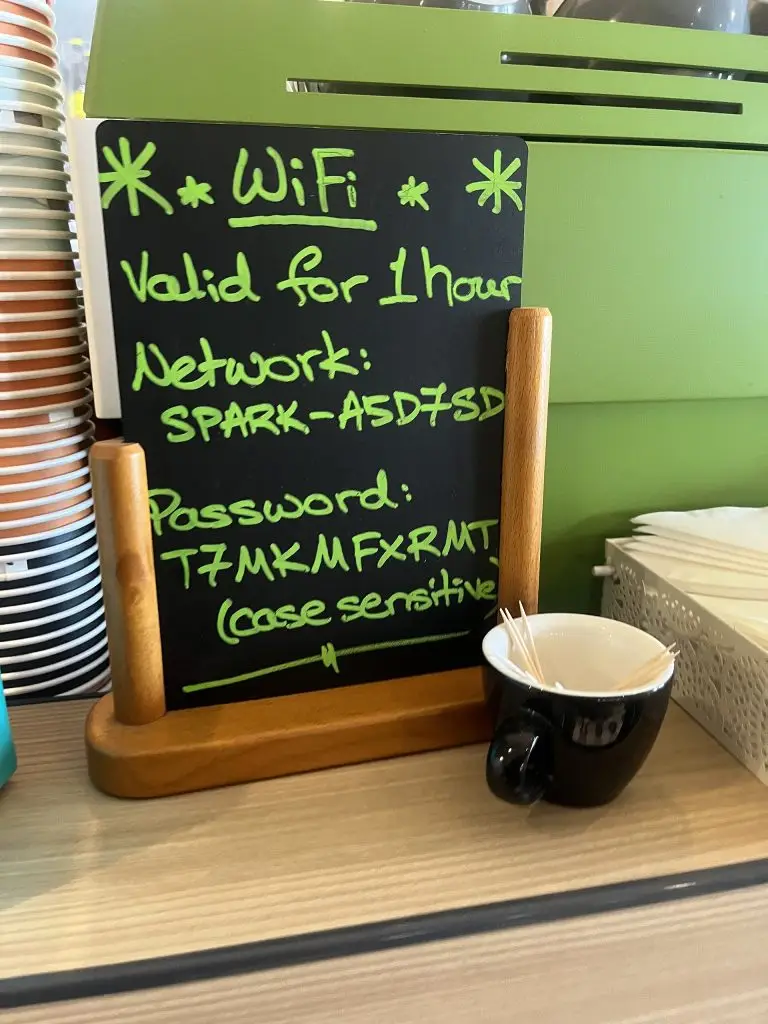
A small power bank is more useful than most gadgets, because maps and tickets drain a battery quickly. Pack a short cable, a plug adapter for the country you’re visiting, and a spare SIM tool if you swap cards. Before you leave, check that your phone is unlocked if you plan to use a local SIM or eSIM. When hotels give you a WiFi code, take a photo of it, since it saves asking again. Using WiFi in Europe wisely means spending data where you need it, like maps and ride apps, and saving everything else for the hotel connection.
Finally, think about roaming costs outside the EU. Some carriers charge daily fees, and some switch roaming on automatically. Look at your settings before you cross a border, and turn off background app refresh if you’re counting data. A bit of preparation means WiFi in Europe becomes a pleasant extra rather than a source of surprise bills.
Good WiFi in Europe makes travel easier, but treat it as a bonus, not the plan. Decide on your fallback before you fly. For the technical background on how foreign networks work, read Roaming on Wikipedia.
Mehr dazu: How to Travel With a Cat Internationally: A Step-by-Step Checklist und Trinkgeld Zimmermädchen USA: Wie viel und wie du es gibst