Subotica is a city in northern Serbia, in the province of Vojvodina, only about 10 kilometres from the Hungarian border. It is best known for its Art Nouveau (Secession) architecture, a mixed Serbian, Hungarian and Croatian culture and a relaxed pace. Most visitors come for a day trip or a single night, and that is usually enough. Here is what to see, how to get there and what to expect.
Where Subotica is and how to get there
The city lies roughly 180 kilometres north of Belgrade and about 190 kilometres south of Budapest. The nearest larger city in Serbia is Novi Sad, around 100 kilometres away. The journey by road or bus takes around two to three hours from Belgrade or Budapest, depending on traffic and border queues. Trains also run on the route, but services and timings change, so check the national railway sites or an up-to-date route planner. Hungary is in the EU and Serbia is not, so bring your passport and expect border checks.
The Art Nouveau centre
City Hall
The City Hall (Gradska kuća), completed in the early twentieth century, is the best-known building in Subotica. Its colourful tiled roof, curving stonework and tall tower make it one of the most striking Secession buildings in Central Europe. Guided visits to the interior and the tower may be available, so check locally for current schedules.
The Synagogue
The Subotica Synagogue is another highlight of the Art Nouveau style, with a notable pastel-toned facade and an ornate interior. It was built in the early twentieth century and has been under long-term restoration. Check whether visits are possible before you travel, since access depends on the restoration work.
Other buildings
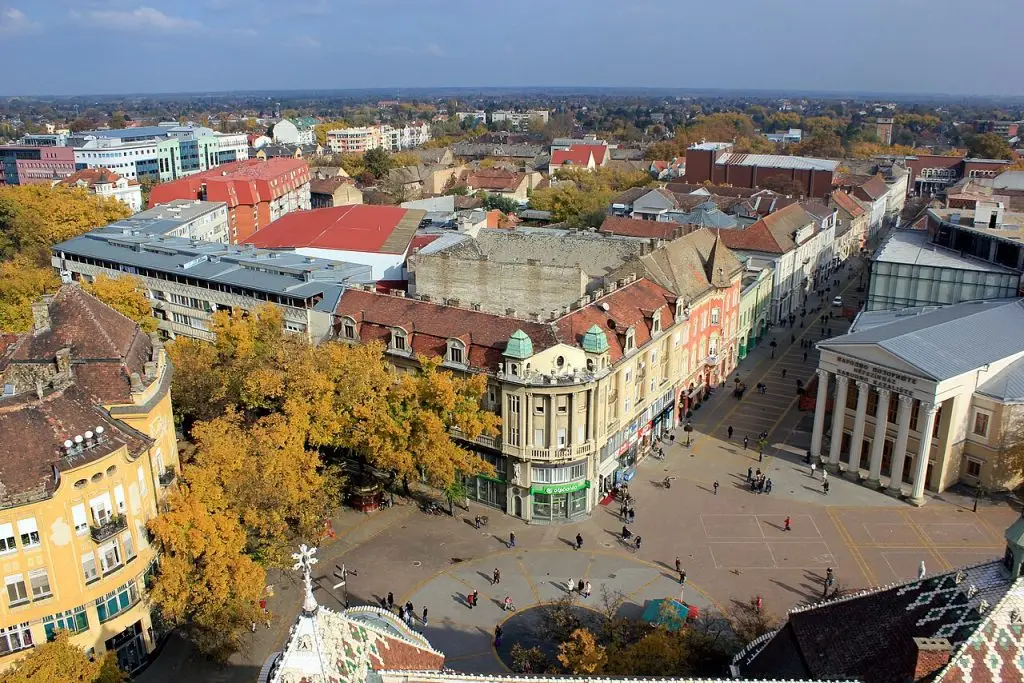
Walk around Korzo, the central pedestrian street, and Trg Slobode, the main square, where many Secession-era buildings stand. Look up. The details are often above the shopfronts.
Palić Lake
About eight kilometres east of the city lies Palić, a small lake resort with a park, a mix of historic buildings and shoreline walks. It has been a spa and leisure destination for more than a century. It is easy to reach by local bus or taxi, and it is a pleasant spot for an afternoon walk or a meal outside. Summer can be busy with festivals and events.
Food and drink
Subotica’s cooking reflects Hungarian, Serbian and Balkan traditions. Expect hearty dishes such as goulash-style stews, grilled meats, paprika-heavy sauces and fresh bread. Pastries and cakes in café windows are common. The wine region of Palić-Horgoš nearby is known for local white and rosé wines. As with all small towns, opening hours can vary, so check before you go and carry some cash in dinars.
What to do in a day
- Morning: arrive, have coffee on Korzo, and visit the City Hall.
- Midday: lunch in the centre.
- Early afternoon: see the synagogue exterior and walk the main streets.
- Late afternoon: bus or taxi to Palić for a lake walk.
- Evening: dinner and a coffee before heading back.
Practical tips
- Currency: Serbia uses the Serbian dinar. Cards are widely accepted in cafés and restaurants, but cash helps in smaller places.
- Language: Serbian is official, and Hungarian is widely spoken. Many younger people speak some English.
- Season: Spring and early autumn are comfortable. Summers are hot, and winters can be cold and grey.
- Border: Check the entry rules for your nationality and any changes in border procedures before you travel.
- Accommodation: There are hotels and guesthouses in the centre and around the lake.
Combining Subotica with other stops
It fits well on a route between Budapest and Belgrade, with Novi Sad as another stop. Novi Sad has the Petrovaradin Fortress and a lively music scene, while Belgrade has a long list of museums, riverfront bars and historic districts. Spending a night in Subotica breaks up the trip nicely.
Is it worth visiting?
If you like architecture, small cities and places that few visitors reach, yes. If you want big attractions and nightlife, it may feel quiet. Go with realistic expectations and enjoy the details.
For wider travel information on Serbia, see the national tourism organisation at serbia.travel. Subotica rewards slow, curious walking more than a checklist, and its Art Nouveau streets are the reason to come.
Photo: Julian Nyča, CC BY-SA 3.0, source.