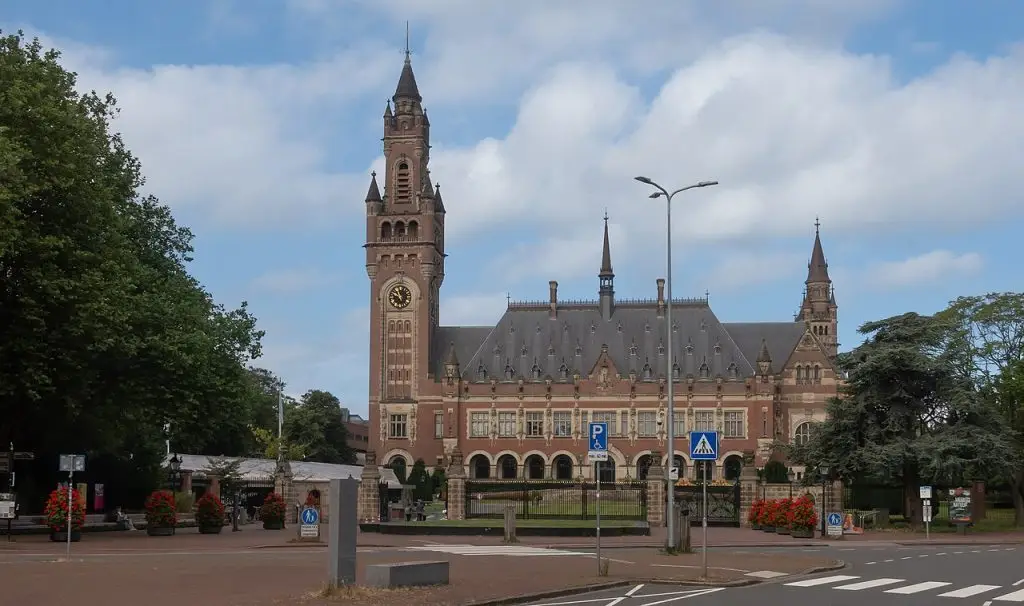
The peace palace hague is one of the city’s best-known buildings, a large neo-Renaissance palace with a tall clock tower, set beside gardens. It is the home of the International Court of Justice and the Permanent Court of Arbitration, which is why many people link The Hague with “international law”. Here is what to know before you visit.
A short history
The palace was built in the early twentieth century to house the Permanent Court of Arbitration, after an international peace conference in The Hague. A large donation from the American industrialist Andrew Carnegie helped fund it, and countries gave gifts for the interior, such as stained glass, marble and tapestries. The building opened in 1913.
What happens inside
Today it hosts the International Court of Justice, which settles disputes between states, and other bodies such as the Hague Academy of International Law. The palace houses a library on international law that is one of the largest of its kind. Many of these activities are not open to casual visits.
How to visit
Access for tourists is limited. The usual route is through the visitor centre, which has exhibitions about the history of the palace and its role. Guided tours may be offered on set days and require booking, often with identity checks. Hours and tour formats vary, so check the official website before you travel. Even if you can’t go in, you can walk to the gates for a good look at the façade and gardens.
What to see outside
The gates, the tower and the garden are impressive, and the area is quiet and tidy. Photos are a popular activity at the fence. The park setting makes it a pleasant stop on a walking route through the city.
Nearby sights
- The Binnenhof and Hofvijver in the city centre
- The Mauritshuis, famous for Dutch Golden Age paintings
- Scheveningen beach, a short tram ride away
- Park Clingendael, a historic estate with a garden
- Museums and cafés around the centre
You can read about low-cost ideas in our post on free things to do in the Hague.
Getting there
From Amsterdam, take a train to The Hague and then a tram or taxi to the palace. Details are in our guide to the train from Amsterdam to the Hague. The Hague also pairs well with a visit to Leiden, which you can read about in pilgrims in Leiden.
Tips
Bring ID if you book a tour, arrive early and check for security rules, since bags and cameras may be restricted. Dress comfortably, since you will walk in gardens.
Summary
The Peace Palace is a symbol more than a typical tourist attraction, but it is well worth the detour. For more background see Peace Palace on Wikipedia. More guides are available at invisionfree.com.