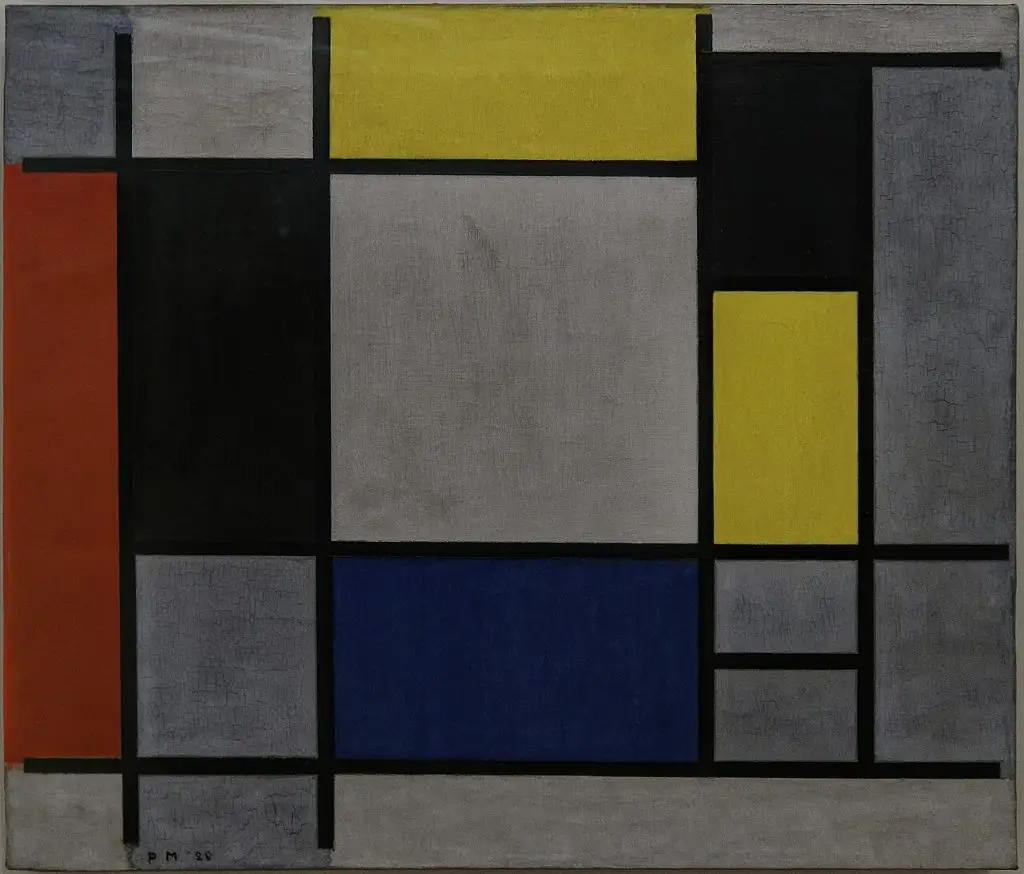
Piet Mondrian is best known for his grids of black lines and blocks of red, yellow and blue. The name is tied to Dutch design, and many travellers search for Mondrian Amsterdam connections hoping to see the work in person. The honest answer is that Amsterdam has some of it, but the best single collection is elsewhere in the Netherlands. Here is how to piece together a Mondrian trip, starting with the capital.
Who was Mondrian?
Piet Mondriaan, as the name was originally spelled, was born in 1872 in Amersfoort. He trained as a painter and studied at the Rijksakademie in Amsterdam, then worked through landscapes, including trees and windmills, before moving towards abstraction. Later he lived in Paris, London and finally New York, where he died in 1944. His late works, such as the lively Broadway Boogie Woogie, reflect his love of jazz and the city grid.
The progression from realistic landscapes to pure geometry is easiest to understand if you see works from several stages side by side. That is why a museum visit is useful: the story is visible on the walls.
Mondrian in Amsterdam: the Stedelijk Museum
The Stedelijk Museum on Museumplein is the main place in Amsterdam to look for modern art, design and the De Stijl movement to which Mondrian belonged. The collection has included works by Mondrian along with other major figures of the twentieth century, and it also displays design objects from the same period. Which pieces are on show changes with rotating exhibitions, so check the museum’s site before you go. The building itself, with its modern extension nicknamed “the bathtub”, is also a landmark.
Other Amsterdam stops
- Rijksmuseum, for the Dutch art tradition that precedes Mondrian, including the landscapes and light he grew up with.
- Van Gogh Museum, useful for seeing how modern painters shifted toward bold colour.
- Museumplein, which holds all three and makes a convenient single-day route.
You may also find Mondrian-inspired design in shops, cafés and souvenirs around the city, from tote bags to tiles. These are not his work, but a fun reminder of his influence.
The best Mondrian collection: The Hague
For a deep dive, the Kunstmuseum Den Haag (formerly Gemeentemuseum) holds the largest Mondrian collection in the world, including late works such as Victory Boogie Woogie, which is unfinished. The train from Amsterdam to The Hague takes roughly under an hour, so it is an easy day trip. If you care about Mondrian rather than modern art in general, this is the stop that matters most. Check availability of works, since some travel to exhibitions.
Mondrian’s hometown: Amersfoort
The small city of Amersfoort, east of Utrecht, has the Mondriaan House, a museum in his birthplace that explores his early life and development. It also has a medieval centre with canals and a gate, which makes it a nice stop. It is a short train ride from Amsterdam, around half an hour or a bit more.
De Stijl, architecture and Utrecht
Mondrian co-founded the De Stijl movement alongside others. Its architectural highlight is the Rietveld Schröder House in Utrecht, a UNESCO-listed building by Gerrit Rietveld. The house is a good way to see De Stijl principles in three dimensions: planes, primary colours and open spaces. Visits are by guided tour and booking is advisable, so check the official site.
A sample Mondrian itinerary
1. Day one in Amsterdam: the Stedelijk Museum in the morning, a walk through Museumplein and an afternoon at another museum. 2. Day two in The Hague: the Kunstmuseum Den Haag, followed by a stroll to the beach at Scheveningen if the weather is kind. 3. Day three in Utrecht or Amersfoort: the Rietveld Schröder House or the Mondriaan House.
If time is short, pick the Stedelijk plus The Hague.
Practical tips
- Buy museum tickets online in advance, particularly in high season.
- The Museumkaart, a Dutch museum pass, may save money if you visit several museums.
- Check whether works are on display, as museums rotate collections.
- Photography rules vary, so ask at the entrance.
- Prices and hours change, so confirm on official sites such as the Stedelijk Museum website.
Mondrian Amsterdam beyond museums
Even outside galleries, the city shows his influence. Dutch graphic design, shop windows and architecture still borrow the grid-and-primary-colour look. Browse design shops near the Museumplein and in the Nine Streets for Mondrian-inspired objects, and notice how clean, geometric modernist buildings from the early twentieth century echo the same ideas. Searching for Mondrian Amsterdam traces this way turns a city walk into a small design hunt.
Understanding the art
You do not need training to enjoy Mondrian. Look at how the lines vary in thickness, how white spaces carry weight and how a small patch of red can unbalance a whole canvas. Try to compare an early tree painting to a late grid painting and notice what was kept and what was dropped. That is often the moment the abstract work starts to make sense.
Final word
A Mondrian Amsterdam trip is less about one definitive gallery and more about a short chain of cities and museums. Start at the Stedelijk, go to The Hague for the main body of work, and add Amersfoort or Utrecht if you want context. The result is a clear picture of how a quiet Dutch painter changed the look of the twentieth century.
More to read
Image credit: Txllxt TxllxT via Wikimedia Commons (CC BY-SA 4.0).