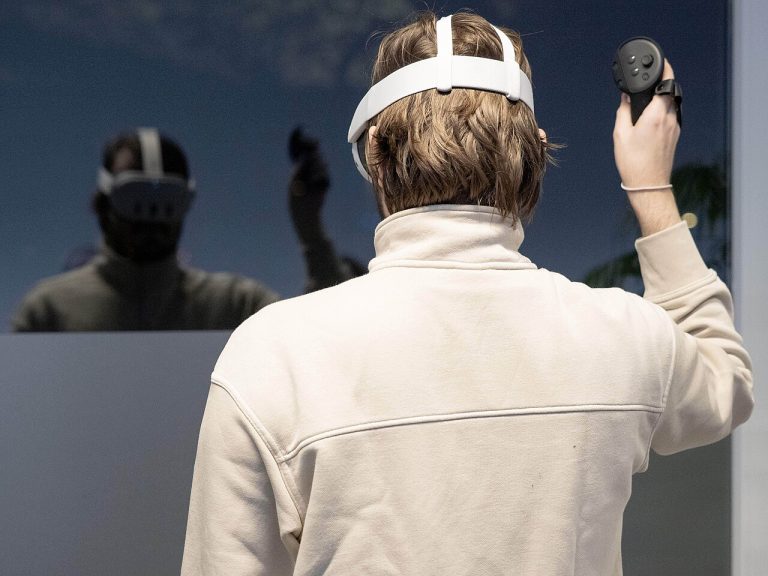
Strapping on a headset and sitting courtside at a basketball game without leaving your couch is one of the more appealing promises of virtual reality. Several leagues and tech companies have experimented with live VR broadcasts. The experience is impressive in places, and frustrating in others.
How live VR broadcasts work
Instead of watching a flat picture chosen by a director, VR viewers get a view from special cameras placed near the action, often in prime seats. Some systems use 180-degree or 360-degree cameras, so you can look around the arena. Others recreate a virtual seat in a stylized stadium and show the game on a big screen in front of you, sometimes with stats floating alongside.
Audio is a big part of the effect. Crowd noise and commentary that seem to come from around you can make a room feel like an arena.
What works well
The sense of presence is the headline. Looking down the court from a courtside spot gives a feeling of scale that television does not. You can see the whole floor, notice how players move without the ball and take in the atmosphere.
Added information is another plus. Because the headset surrounds you, there is room for stats, replays and multiple camera angles. Some people enjoy choosing their own view instead of relying on a producer.
Social viewing is also promising. Watching with friends represented as avatars in a virtual lounge can make up for being in different cities.
What does not work yet
Picture quality is the most common complaint. Streaming a high-resolution, wide view at smooth frame rates demands a lot of bandwidth, and fast action can look soft or blurry. Fixed camera positions limit what you see; you cannot follow the ball the way a TV director does.
Comfort is another issue. Headsets are heavy, warm and tiring after an hour. A full game, with breaks and overtime, can be a long time to wear one. Some people also experience motion sickness, especially if the video moves in ways their body does not feel.
Cost and access matter, too. A good headset is a significant purchase, and many leagues put VR broadcasts behind subscriptions or limit them to certain games.
Why season ticket holders can relax
Being at a real event is more than watching. It is the smell of food, the shared groans, the conversation with the stranger next to you. VR does not replicate that, and it was never likely to. For most fans, VR is a supplement for games they cannot attend, not a replacement for the ones they can.
What would make it better
Several improvements would help: lighter headsets, better video compression, more camera positions, and tools that let you easily switch between a traditional broadcast and an immersive one. Leagues also need to figure out pricing that feels fair to casual fans.
Another direction is mixing virtual and real: a ticket holder at the arena using an augmented view for stats and replays, while remaining in the building.
The verdict
Live VR sports are a fun glimpse of what could become normal, and they already work best as a novelty for fans who love technology. Until comfort, quality and cost improve, most people will keep watching on a regular screen. But if you already own a headset and a favorite team, it is worth trying once, just to see the court from a seat you could never afford.