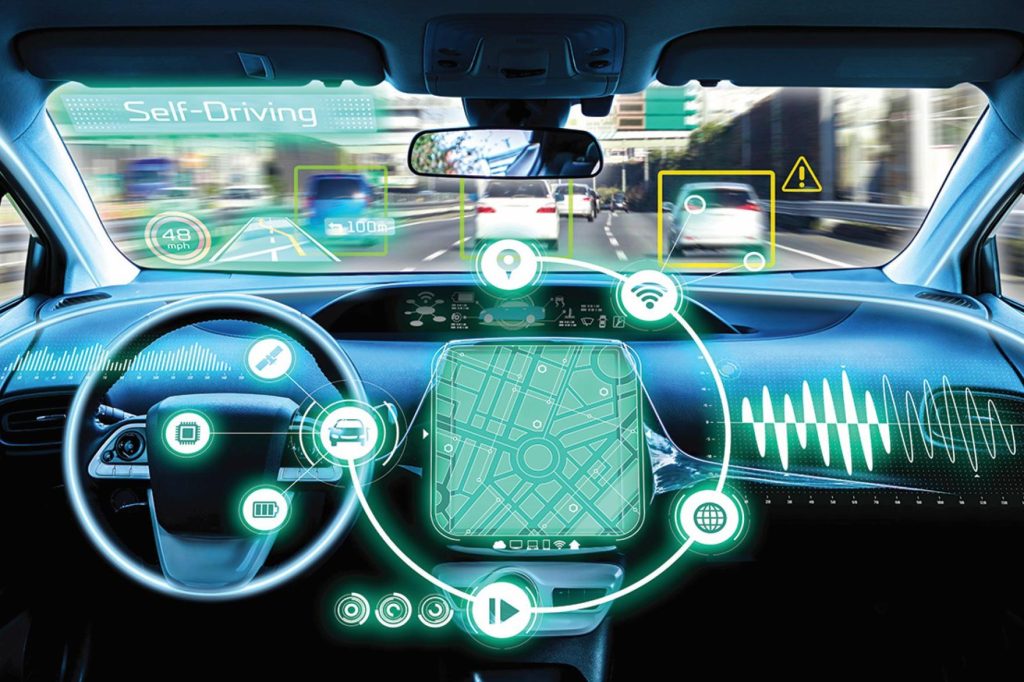
Most folks think self-driving cars are just cruise control with a camera slapped on. They’re not. The real difference is where the tough engineering shows up.
To truly understand how autonomous vehicles work, you’ve got to see it’s not about one big breakthrough. It’s a combination of systems, each tackling different challenges, all operating at highway speeds. If one part fails, the whole thing can go haywire. This makes the field not just expensive, but genuinely tough.
What do the levels mean?
SAE International lays out six levels of driving automation, numbered 0 through 5. Level 0? That’s your standard car without assistance. Level 1 introduces a single function, like adaptive cruise control. Level 2 manages steering and speed together but requires constant human attention. Most new cars sold today are at Level 2 or just shy of it.
At Level 3, it gets legally tricky. The vehicle can handle most driving tasks, but the driver has to be ready to take over within seconds if needed. Only a few manufacturers have rolled out Level 3 systems for public use. For instance, Honda launched one in Japan in 2021, limited to 30 kph on specific highways. Level 4 means the car takes care of everything in designated areas, with no human needed. And Level 5? That’s full autonomy anywhere, which no car on the market has yet.
Key components of AVs
When thinking about how autonomous vehicles work, you gotta consider four main systems at play: sensing, perception, planning, and actuation.
Sensing is done using various hardware. Cameras capture lane markings and traffic signals. Radar measures distance and speed accurately, even in rain or fog. LiDAR sends out laser pulses to create a 3D map of the surroundings, usually accurate to a few centimeters. Reliable AV programs use all three types of sensors, as each one helps cover the others’ weak spots. GPS adds positioning, but it’s often not reliable enough for lane-level decisions.
Perception software takes all that data and figures out what’s really out there: pedestrians, cyclists, parked trucks, or even a stray shopping cart. It’s a machine-learning challenge, trained on millions of real-world miles. Planning decides the next steps: slow down, change lanes, or stop at a light. Finally, actuation sends commands to the steering, brakes, and throttle. This whole process happens dozens of times each second.
How safe are AVs right now?
This is where being honest matters. Waymo has shared disengagement and crash data from its robo-taxis in Phoenix and San Francisco. In 2023, their fully autonomous vehicles were involved in significantly fewer injury crashes per mile than the national average for human drivers, at least in the urban areas they operate. That’s impressive, but it’s important to note that those routes are carefully mapped and chosen because they’re manageable.
Now, Tesla’s Autopilot data is harder to evaluate. Drivers are expected to stay engaged, but let’s face it; not everyone does. There have been several high-profile fatalities where the system was used outside its intended conditions. From what I’ve seen in the safety literature, the tech performs well if it stays within its limits but struggles when pushed too far beyond that, which holds pretty true for many complex systems.
Market experts generally predict AVs will make up a significant portion of new vehicle sales by 2030. Some estimates suggest the global autonomous vehicle market could top $300 billion by then. I’d take those numbers with a grain of salt, though; they seem more directional than exact to me.
Regulations and trust
Regulatory frameworks are really hit-or-miss. The US doesn’t have a single federal law on AVs; rules can vary by state, and some states have hardly dealt with it at all. The EU is aiming for consistent standards, but it’s slow. China, however, has been quicker to allow trials in specific zones. The main regulatory challenge isn’t just making rules for the cars but determining who’s responsible if something goes wrong. That involves insurance law, product liability, and criminal accountability all wrapped into one.
The public perception just hasn’t caught up with the tech. Surveys show most adults in Western countries feel uneasy about riding in fully self-driving vehicles. Younger folks are more open-minded, but even among those under 35, comfort levels drop sharply without a human driver in sight. One widely reported accident can knock acceptance back further than many safe rides can make up for. That’s a big deal for the industry.
Future of the technology
To understand how autonomous vehicles work, you also need to see where the current limits lie. Level 4 robotaxis in geo-fenced urban areas are operational today. Realistically, true Level 5 autonomy is probably farther off than some early estimates suggested. The tough problems left to solve are edge cases: surprising weather conditions, unmarked construction sites, and ambiguous human signals at intersections. These don’t happen often, but when they do, they really matter.
In the near future, freight is the more likely growth area, not passenger cars. Highway trucking offers a steadier environment and good economic reasons for companies to invest. Some firms are already running partially supervised autonomous trucks on highways in Texas and Arizona. Passenger robotaxis will roll out city by city, mapped zone by mapped zone, instead of showing up everywhere all at once.
FAQs
What are the different levels of automation?
SAE outlines six levels from 0 to 5, covering no automation to full self-driving capabilities in any circumstance. Most cars currently operate at Level 2.
How do autonomous vehicles detect obstacles?
They rely on a combination of cameras, radar, and LiDAR sensors along with software that classifies objects and predicts their movement.
What are the safety statistics for AVs?
Waymo’s data indicates fewer injury crashes per mile than the US average for human drivers, but those results apply to well-mapped, controlled operating areas.