Many first-time visitors assume European money means euros everywhere. It doesn’t. The euro is used by most, but not all, countries in the EU, while several popular destinations keep their own currency. Knowing which is which before you land saves both money and confusion.
Where the euro is used
Countries such as France, Germany, Italy, Spain, the Netherlands, Austria, Belgium, Ireland, Portugal, Greece, Finland and Malta use the euro. Several smaller states also use it by agreement. The list has changed over time, so check the European Central Bank or the EU site if you’re visiting a country that has only recently adopted it.
Where it isn’t
- United Kingdom: pound sterling.
- Switzerland: Swiss franc. Some tourist spots accept euros, but give change in francs.
- Denmark, Sweden and Norway: kroner and krona.
- Poland: zloty. Czechia: koruna. Hungary: forint. Romania: leu.
- Several Balkan and eastern countries also use their own money.
Even where euros are accepted unofficially, the exchange rate is usually poor. Pay in the local currency.
Cash or card?
Cards work almost everywhere in northern Europe. The Netherlands, Sweden and the UK, for example, are very card-friendly, and some places only take cards or contactless payments. In parts of Germany, Austria, Italy and Eastern Europe, cash still matters in small shops, markets and rural restaurants. A sensible mix is a card plus a small amount of cash for the first day.
Euro coins and notes
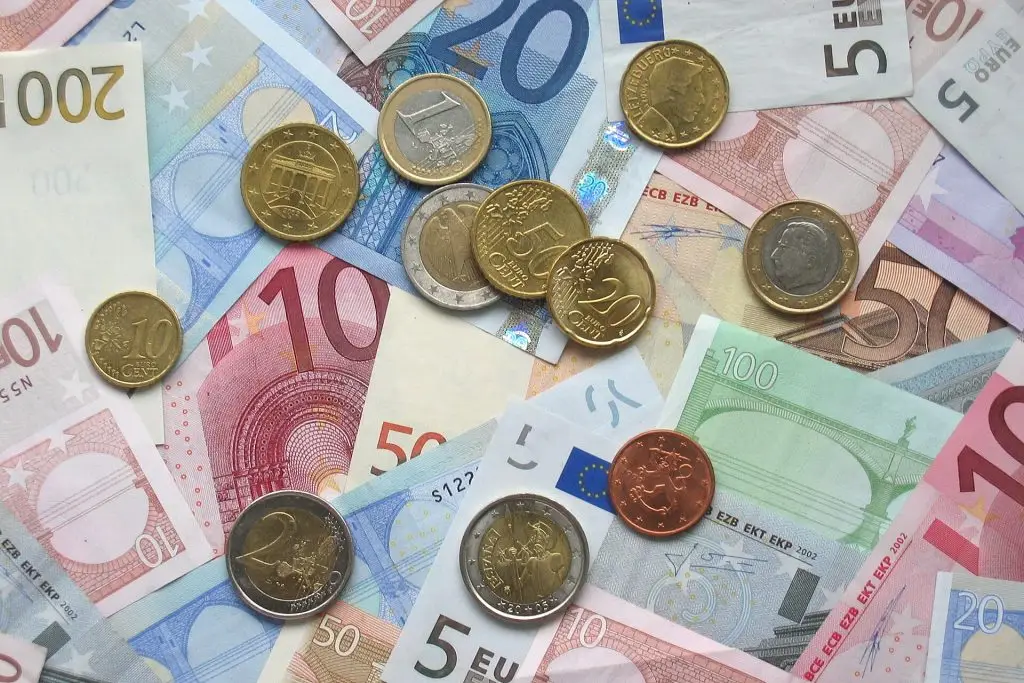
Euro coins come in eight denominations, from 1 cent to 2 euros. Notes come in several values. Each country puts its own design on the reverse of euro coins, but all coins are valid anywhere in the euro area. That’s why you might get a coin with a different national emblem in your change, which is normal.
Getting money without wasting it
- Use an ATM from a bank, ideally inside or beside a branch.
- Choose to be charged in local currency if the machine asks. Accepting your home currency, known as dynamic currency conversion, often adds a poor rate.
- Check your bank’s fees for foreign transactions and withdrawals, then consider a card without foreign fees.
- Skip airport exchange desks if you can, and avoid street exchange booths.
- Notify your bank if it requires travel notices, and keep a backup card.
Tipping and small change
Customs differ. In Germany and the Netherlands, rounding up or leaving a small tip for good service is normal. In France, service is included in restaurant prices by law, but a small extra is a courtesy. Check local advice for each country, as there’s no single European rule.
Travel across several countries
If your trip combines the eurozone with Switzerland or the UK, keep a small float of each currency, and use cards for larger payments. Leftover coins can’t be exchanged back easily, so spend them at the airport.
Staying safe
- Don’t carry all your cash in one place.
- Watch out for card skimmers and cover your PIN.
- Check change, especially in crowded tourist areas.
Common questions
Can I pay in euros in Switzerland or the UK?
Some tourist shops accept them, but the rate is usually unfavourable. Use francs or pounds.
Should I carry large banknotes?
Not really. Small shops and taxis may refuse a 100 or 200 euro note, so ask the bank for smaller notes.
Are contactless payments safe?
Generally yes, and they’re widely used. Set a spending limit on your card app if you’re worried, and report any loss to your bank immediately.
Planning your European money in advance leaves you free to enjoy the trip.
One last point: contactless limits and card rules differ by country, and some terminals ask for a PIN above a set amount. Keep your PIN memorised, carry a second payment method, and keep a small emergency amount of cash in the local currency in a separate place.
If you’re travelling with children or on a long trip, set a daily cash budget and track it in a notes app. Compare the exchange rate shown on your receipt with the rate on your banking app, so you spot hidden charges early. Good habits with European money add up over a two-week trip and leave more room for actual enjoyment.
For the basics, a quick rule: use euros in the eurozone, local currency elsewhere, and cards where you can. The Euro article on Wikipedia lists current members and history if you want the details on European money.
Related reading: What to Pack for Two Weeks in Europe: A Carry-On Checklist and Trinkgeld Zimmermädchen USA: Wie viel und wie du es gibst