The figure most often cited for Elvis Presley networth at death is startlingly small: his estate was reported to be worth roughly $5 million when he died on August 16, 1977, and it was burdened by debts and taxes. For a performer who had sold an enormous number of records and filled arenas for years, that surprises people. The fortune associated with his name today was built largely after his death.
Myth versus fact about Elvis Presley networth at death
Myth: he died with a vast fortune
Fact: the reported estate value was modest relative to his fame. Reports from the period and later biographers describe an estate that was heavily indebted, with limited liquid cash. Figures differ between sources, which is why I use “roughly” and “reported.”
Myth: the money went to a trust for the family and ran itself
Fact: his will left the estate largely to his father, Vernon Presley, as executor, with provisions for his daughter, Lisa Marie, who was nine at the time. After Vernon died in 1979, other trustees, including Priscilla Presley, ultimately took over management on Lisa Marie’s behalf.
Myth: Graceland was always a money maker
Fact: the Memphis mansion cost a lot to maintain, and the estate faced financial pressure in the years after his death. Opening Graceland to the public in 1982 changed that.
Why the estate looked small
- Spending. Elvis was known as a generous spender who gave away cars and gifts, and he supported a large circle of family and staff.
- Management deals. His manager, Colonel Tom Parker, took a large share of income under arrangements that later drew criticism and legal scrutiny.
- Rights sold. In 1973, RCA purchased rights to much of his back catalog in a deal that gave him a lump sum but removed future royalties on those recordings.
- Taxes and costs. Estate taxes and administration costs took a significant share.
How the estate recovered
The turnaround came through careful management after the late 1970s. Graceland opened as a museum and tourist attraction in 1982, and visitor numbers grew over the following decades. Licensing of his name and image, anniversary events and music reissues added revenue. In 2005, entertainment company CKX acquired a majority stake in Elvis Presley Enterprises in a deal reported at around $100 million for 85 percent, and in 2013 Authentic Brands Group took a controlling interest. Those transactions are the real source of the “Elvis is worth a fortune” idea: the value was in the brand and rights, not in a bank balance in 1977.
Net worth then versus brand value now
It helps to separate three numbers that get mixed up:
- Personal net worth at death: reported around a few million dollars, net of debts.
- Annual earnings of the estate in later years: Forbes has tracked top-earning deceased celebrities, and Presley has appeared on those lists with sizeable annual figures.
- Value of the business: set by deals like the 2005 and 2013 transactions.
Putting 1977 dollars next to modern ones also misleads, since inflation since then has been large; a few million dollars then is a bigger sum in today’s terms, though still modest for a star of his stature.
What we can’t say precisely
Exact valuations from 1977 vary by source, and estate inventories aren’t always public. If you read a different figure, don’t assume one is wrong; they may be measuring gross versus net, or including different assets. This is a topic where a wide “reported” range is the honest approach.
Related reading
Another case where fame and balance sheet diverged is covered in our article on Michael Jackson’s estate, debt and catalog. For the history of the site itself, the Wikipedia article on Graceland outlines its opening to the public and ownership timeline.
Adjusting the 1977 figure for inflation
It is natural to ask what the reported figure would be in today’s money. Consumer prices have risen several-fold since 1977, so a few million dollars then would be a larger sum now, though the multiplier depends on which price index you use. The U.S. Bureau of Labor Statistics runs a free inflation calculator you can use to try it. Even after adjusting, the estate remains small compared with the fortunes of modern superstars, which underlines how unusual the later growth was. Remember too that estate valuations can differ from net worth because they may be measured at different dates and may or may not include debts and taxes.
The takeaway
Elvis Presley networth at death, as reported, was a few million dollars against considerable debts: a reminder that fame and wealth aren’t the same. The vast value now attached to his name was created afterward, through management of the estate, the Graceland attraction and licensing.
This article is general information, not financial advice.
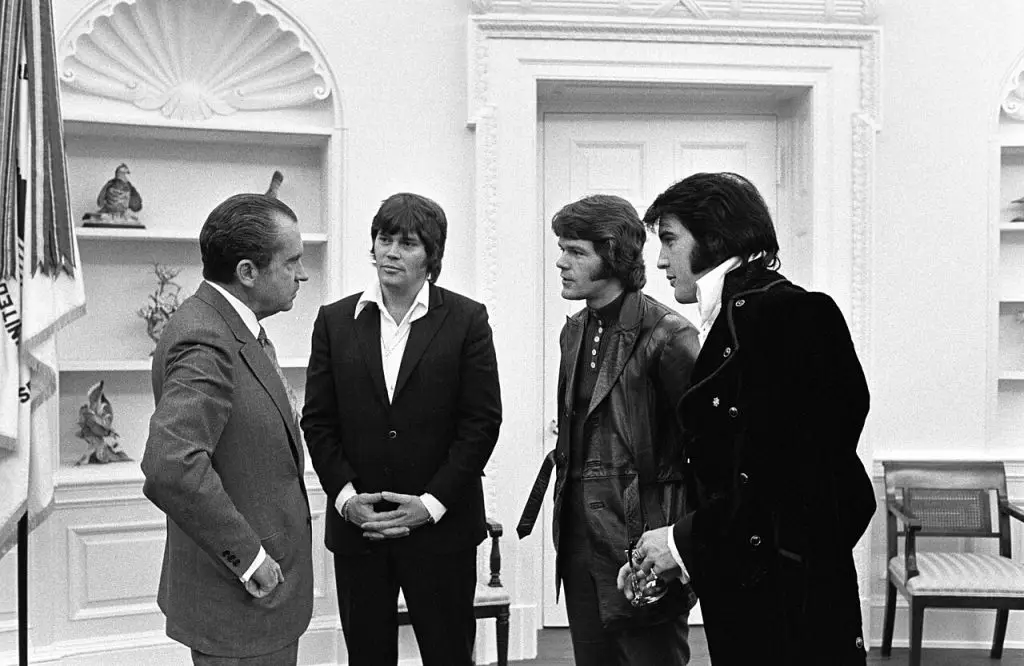
Photo: Ollie Atkins, chief White House photographer at the time. See ARC, Public domain, source.