When people talk about cheese from Netherlands, they usually mean Gouda and Edam, but the country makes far more than those two names suggest. Dutch cheese ranges from young and creamy to hard, caramel-like old wheels. Here is a plain guide to the main types, how age labels work, where to taste and buy, and how to carry cheese home without trouble.
The main Dutch cheeses
Gouda
Named after the town of Gouda, this is the most common Dutch cheese. It is made from cow’s milk and sold in wheels. Young Gouda is mild and soft, while old Gouda becomes firm, sharp and sometimes crunchy with small crystals. “Gouda Holland” is a protected geographical indication in the EU, which means rules on where and how it is made.
Edam
Edam is typically lower in fat and sold in the familiar ball shape with a red or yellow wax coating, especially for export. It tastes mild and slightly salty. “Edam Holland” is also protected. Locals tend to eat it as a sandwich cheese.
Leyden (Leidse kaas)
This cheese comes with cumin seeds mixed in and has a spicy flavour. It is strongly tied to the city of Leiden and sometimes marked with crossed keys, the city’s symbol.
Maasdam and Leerdammer
These are mild, nutty cheeses with holes, similar to Swiss cheese but sweeter. They are popular for family meals and sandwiches.
Boerenkaas
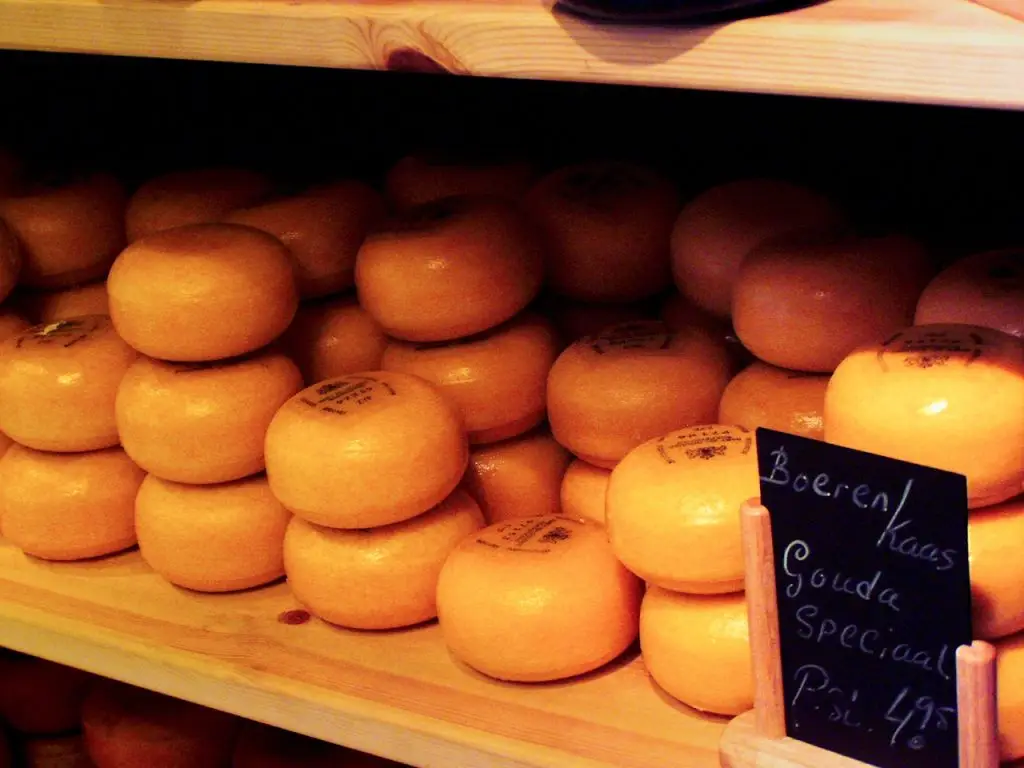
Boerenkaas means farmhouse cheese made from raw milk on the farm. It tends to be more complex and varies by season and maker. If you only buy one cheese on a trip, look for a well-aged boerenkaas from a specialist shop.
Flavoured cheeses
Many shops offer Gouda with herbs, pepper, truffle, mustard, pesto, nettle or cumin. These are good for tasting and gifts, but traditionalists often prefer plain cheese.
How age labels work
Dutch cheese is graded by age, which changes taste and texture. You will often see these words:
- Jong: young, about four weeks. Soft and mild.
- Jong belegen: a bit older, around eight to ten weeks. Slightly firmer and more flavour.
- Belegen: matured, around four months. Medium firm and balanced.
- Extra belegen: around seven to eight months. Stronger and drier.
- Oud: old, about ten months to a year. Hard and sharp.
- Overjarig: more than a year. Very hard, intense, often with crystals.
These numbers are approximate, and each producer has its own style, so ask for a taste at specialist shops.
Where to taste and buy
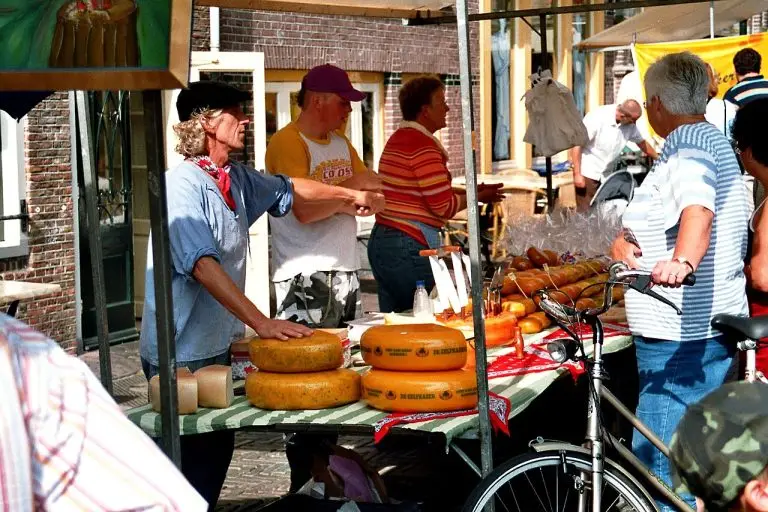
- Cheese markets: Alkmaar’s weekly market (in season) is the best known, and Gouda, Edam and Woerden also hold traditional markets. Check the official tourism pages for dates, since they run seasonally.
- Specialist cheese shops: In Amsterdam and other cities you find shops where you can sample before buying. Staff often explain the differences.
- Farm visits: Some farms around Gouda and Edam open to visitors, sometimes with cheese-making demonstrations. Many require booking, so contact them ahead.
- Supermarkets: Large chains like Albert Heijn sell decent cheese at lower prices, which is helpful if you are on a budget.
- Airport shops: Convenient but usually costlier.
How to serve Dutch cheese
Dutch people eat cheese in many ways: on bread at breakfast and lunch, in cubes with mustard at drinks time, or on a cheese board with fruit. Old Gouda goes well with beer, dark rye bread or a glass of red wine. Young Gouda melts well for toasted sandwiches (tosti) and is good in cooking. Let the cheese come to room temperature before serving, so the flavour opens up.
Bringing cheese home
- Vacuum packing: Many shops will pack cheese for travel. Ask for it.
- Within the EU: Personal quantities for private use are generally allowed.
- To the US, UK or elsewhere: Rules differ for dairy imports and can change, so check the customs or agriculture authority of your destination country before you travel. Hard cheeses are often easier than soft ones, but do not assume.
- Carry-on or checked bag: Cheese is usually allowed in both, but check your airline and airport security rules.
- Storage: Keep it cool, wrap it in paper, and avoid leaving it in a hot car.
What to buy if you are unsure
If you want a safe selection, go for three: a belegen Gouda for everyday eating, an oud Gouda for something special, and a piece of Leyden or a flavoured Gouda for variety. If you have a cheese-loving friend at home, add a boerenkaas.
Why cheese from Netherlands is special
The country’s flat, green pastures, centuries-old trading tradition and cheese markets shaped a culture around cheese. It is as much about the places and people as the product. For wider travel ideas, including cheese-related towns and days out, see holland.com. As of 2025/2026, check import rules and market schedules before your trip, and enjoy tasting your way through the cheese from Netherlands.
Photo: Marek Ślusarczyk (Tupungato) Photo portfolio, CC BY 3.0, source.