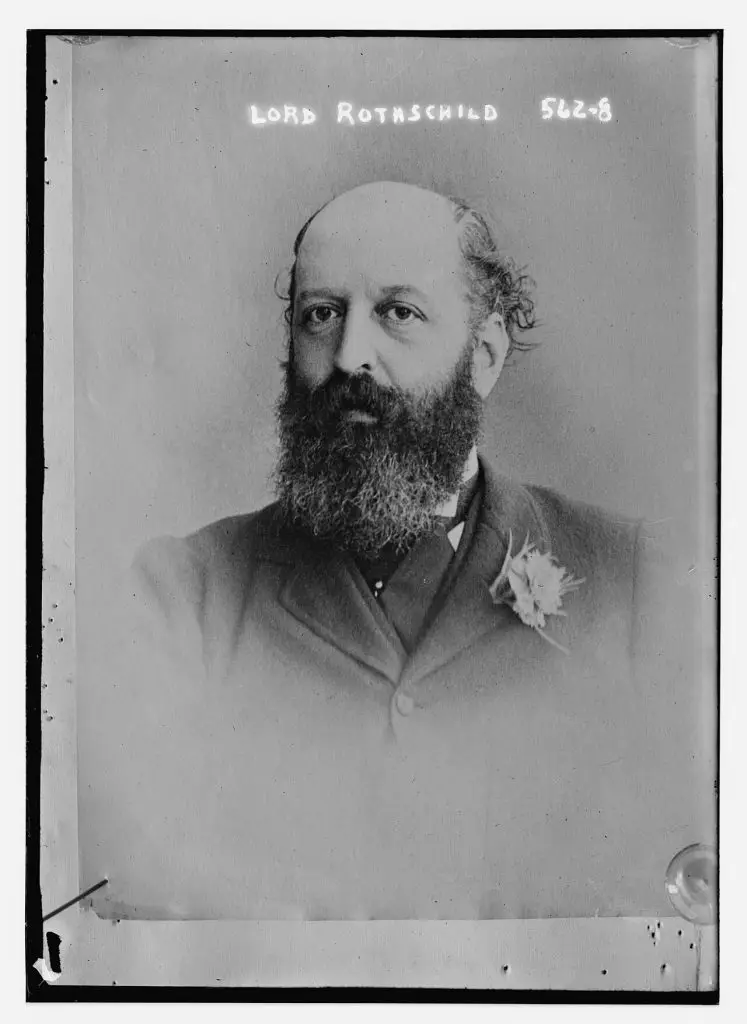
The honest answer to what is the networth of the Rothschild family is that nobody knows, and anyone quoting a precise total is guessing. You may have seen claims of “trillions of dollars”, but those are myths with no solid documentation behind them. The family is wealthy and historically important, yet its holdings are spread across many branches, trusts and private companies, and no one has published a combined figure that holds up.
Myth Versus Reported
Myth: the family secretly controls trillions
This claim circulates widely online, often attached to conspiracy theories. It has no credible source. Forbes and Bloomberg, which track billionaires, don’t publish a family-wide figure, and no regulator or auditor has either. Some of these theories also lean on old antisemitic tropes, which is one more reason to be careful about where such numbers originate.
Reported: the family is a large, dispersed group
The Rothschilds are descended from Mayer Amschel Rothschild, a banker in Frankfurt in the 18th century, whose five sons established banking houses in cities including Frankfurt, Vienna, London, Naples and Paris. Over two centuries those branches split, merged and diversified. Today there are many family members, and they don’t operate as a single financial unit.
Reported: parts of the family are still in finance
Well-known family-linked businesses include the investment bank Rothschild & Co, which is a publicly known firm with a stated family involvement, and various private investment vehicles. Members of the family have also been prominent in wine, with estates such as Château Lafite Rothschild and Château Mouton Rothschild in Bordeaux, as well as in philanthropy and the arts.
What Is the Networth of the Rothschild Family According to the Record?
- Many branches. There isn’t one owner or one ledger.
- Private structures. Trusts and holding companies typically don’t publish accounts.
- Historical distribution. Fortunes get divided with each generation, through inheritance and also through losses and sales.
- Mixed assets. Art, land, vineyards and business stakes are valued by estimate, not by market price.
| Often claimed | What can be said |
|---|---|
| “Worth trillions” | No credible evidence |
| “Own most central banks” | False; central banks are mainly state institutions |
| “One unified fortune” | Not accurate; many separate branches |
| “Wealthy and influential in history” | Well documented |
How the Family Became Prominent
In the early 1800s, the Rothschild banks became major players in government bond markets and in financing large projects across Europe, including loans to governments. The London branch, led by Nathan Mayer Rothschild, played a particularly prominent role. In the 19th century the family was often described as among the wealthiest in the world, but that was at a time when few comparable fortunes were publicly tracked. Estimates for that era come from historians and are approximate.
It also helps to remember that the world economy has grown a great deal since then. A fortune that was extraordinary in 1850 can be modest relative to today’s largest technology fortunes.
What About Today’s Billionaire Lists?
Some individual family members have appeared in billionaire rankings. Where they do, the lists generally rely on identifiable assets such as shares in a listed company. Those figures are for individuals, not for the family as a whole. If you want to see whether a particular member is listed, check the Forbes list, and for history see Wikipedia’s article on the Rothschild family.
How to Spot Bad Claims
- Ask who made the calculation and how.
- Be wary of round, enormous numbers with no source.
- Check whether the claim mixes up historical wealth with present-day figures.
- Treat anything tied to conspiracy narratives as unreliable.
So, to restate the answer: the family is historically significant and still wealthy in parts, but a single net worth figure doesn’t exist in any trustworthy form.
Reading Old Wealth Claims Carefully
Historians sometimes say that Nathan Rothschild’s London bank was among the largest private financial institutions of the early 19th century. Statements like that compare the family’s capital with that of other banks of the time, not with modern billionaire fortunes. Converting old money into today’s dollars is also tricky, because inflation, exchange rates and the growth of the global economy all complicate the math.
Two world wars and changing fortunes
The family’s European branches were affected by political upheaval in the 20th century, including the Nazi period, when family property in Austria was seized. Wealth in later generations was shaped by those events, by nationalization and by ordinary inheritance. That history is one more reason a continuous, growing “trillion-dollar” fortune doesn’t match the record.
To close the loop, what is the networth of the rothschild family has no documented answer, and the safest stance is to doubt any figure presented without a method.
This article is for general information only and is not financial advice.