
When an AI company announces a new chief technology officer with a focus on AI infrastructure, outsiders tend to shrug. It sounds like a routine org-chart update. In practice, AI infrastructure is where most modern AI labs win or lose, and the person in charge of it shapes what the company can build.
In this article
This piece explains what that job covers, using general industry knowledge rather than any one company’s internal setup.
Why AI infrastructure is the real bottleneck
Training a large model means running enormous numbers of calculations across thousands of specialized chips for weeks. Those chips have to talk to each other quickly, stay cool, and keep running when individual parts fail, which they do constantly at that scale. A single bad network cable can stall a job that cost a fortune to start.
So the research team can have a brilliant idea, but if the cluster can’t run it reliably, the idea sits on a whiteboard. AI infrastructure leaders decide what is feasible.
The four layers of AI infrastructure a technology chief tends to own
1. Compute supply
Getting hold of chips and data center space is a negotiation as much as an engineering task. Labs work with cloud providers, chip makers, and sometimes build their own facilities. A technology chief weighs long contracts against flexibility. Commit too much and you’re stuck paying for capacity you don’t need. Commit too little and your competitors train bigger models first.
2. Training systems
This is the software that spreads a model across many chips: scheduling jobs, saving checkpoints so a crash doesn’t erase days of work, and monitoring for silent errors. Small efficiency gains matter here. If you can keep chips busy 5 percent more of the time, that’s real money and real speed.
3. Serving and inference
Once a model is trained, people have to actually use it. Serving means answering millions of requests with low delay and sensible cost. Techniques like batching requests, caching repeated work, and compressing models all help. This layer decides whether a product feels snappy or sluggish, and whether it earns a profit.
4. Reliability and security
Model weights are extremely valuable files. Protecting them, controlling who can access the training environment, and keeping uptime high are AI infrastructure responsibilities too. Customers who build products on an AI service expect it to behave like any other utility.
Why running AI infrastructure is more than technical
A technology chief at an AI lab spends a lot of time on trade-offs that cross departments. Researchers want freedom to run odd experiments. The product side wants stable systems. Finance wants costs under control. Safety teams want time for testing before release. Someone has to turn those competing demands into a schedule that works.
There is also the hiring problem. People who truly understand large-scale distributed systems are rare, and they’re courted by every big tech company. A leader with a strong reputation in this field can pull in engineers that a company would otherwise struggle to recruit.
Common misconceptions
- AI infrastructure is just buying more chips. Chips help, but software efficiency often matters just as much. Two teams with the same hardware can see very different results.
- The CTO builds the models. Usually research leads do that. The technology chief builds the machine that lets research happen.
- Once it’s built, it’s done. Hardware generations change roughly every year or two, and each shift forces rework.
What to watch from the outside
You can’t see inside a lab, but you can read signals. Watch how often a company ships new model versions, how quickly it expands usage limits, whether outages are frequent, and how its pricing changes. Falling prices for the same capability usually point to serving improvements. Frequent capacity limits suggest demand is outrunning supply.
Partnership announcements with cloud and chip providers are another clue. They show which bets a lab is making about the next two or three years.
What good AI infrastructure feels like from outside
When AI infrastructure works, nobody notices. Requests return quickly, outages are rare, and prices drift down over time. When it fails, users see slow answers, strict usage limits or a service that is simply down. Those symptoms are easy to spot even if you cannot see the racks.
The physical side is easy to underestimate. Training and serving models happens in a data center, where power, cooling and networking all become limits in their own right. A leader planning AI infrastructure has to think about electricity contracts and building schedules years ahead of the model release that will need them.
The software side links to other hard problems too. Our piece on why robot software is the hard part makes a similar point from a different industry: the visible machine gets the attention, while the system that runs it decides whether it is useful. The same holds for AI infrastructure.
If you are following a lab from outside, a useful habit is to compare announcements with delivery. A bold plan for new capacity matters less than whether the service stays fast as more people use it. Steady uptime and falling costs are the plainest proof that the work underneath is sound.
The takeaway
A technology chief focused on AI infrastructure is a sign that a company sees scale and reliability as strategy, not background plumbing. As models get larger and more people depend on them daily, the unglamorous work of keeping clusters healthy and costs sane becomes a competitive edge. The flashy demos get attention, but the boring systems underneath decide who gets to keep shipping.
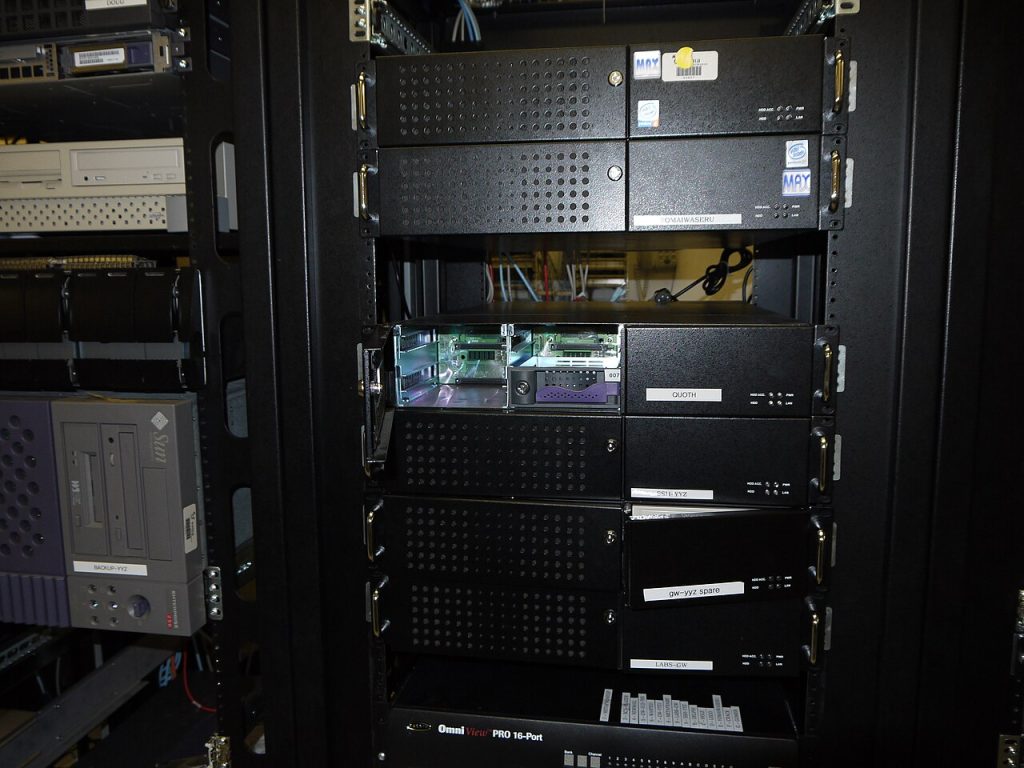
Featured image: 312 Adelaide Street – 6th floor server room (5278379952).jpg by Mike Beltzner, CC BY-SA 2.0, via Wikimedia Commons.



