The nikola badger was supposed to be a pickup truck for people who wanted something quicker and cleaner than a diesel. It never reached buyers. The story of the nikola badger is a good example of how a bold vehicle announcement can run far ahead of engineering and finance, and it is worth knowing before you put money down on any pre-order.
Table of Contents

What the nikola badger was meant to be
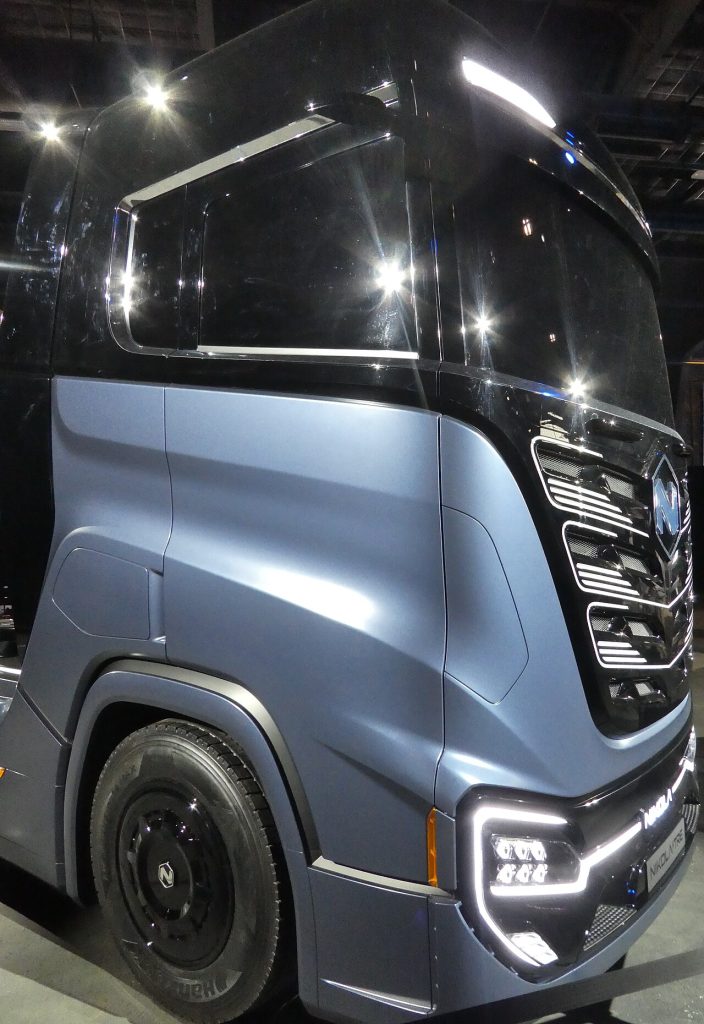
The picture above shows a Nikola Tre, the company’s commercial truck, because no Badger was ever built. Nikola was a US start-up best known for promising hydrogen fuel-cell semi trucks. The Badger was its plan to bring that technology to a pickup. Reports at the time described a truck that combined a battery with a hydrogen fuel cell, with claims of roughly 600 miles of range and very high power and torque figures. These numbers came from the company’s own announcements, and no production Badger ever arrived to test them.
The pitch fit the mood of the moment. Electric pickups were drawing huge interest, and a model that could be refuelled with hydrogen seemed to answer the range worries people had about batteries. For a young company, a consumer truck was also a way to grab attention beyond the freight industry.
The General Motors deal and its collapse
In 2020, General Motors announced a partnership with Nikola that was expected to include a stake in the company and help with building the Badger. That raised hopes that a major manufacturer would supply the manufacturing know-how a start-up lacked. Within weeks, however, the situation changed. A short-seller report accused the company of misleading investors, and its founder stepped down as executive chairman.
By the end of November 2020, GM and Nikola reworked their arrangement. The revised memorandum no longer included GM’s equity stake or development of the nikola badger, and the company said it would begin refunding deposits to people who had reserved a truck. The Drive’s coverage of that moment is at The Drive’s report on the cancellation. For the nikola badger, the cancellation was effectively the end.
What happened to Nikola afterwards
Nikola’s founder, Trevor Milton, was later convicted of fraud in a US federal court in 2022 and sentenced to prison, according to news coverage of the case. The company itself continued to work on its commercial trucks for a few more years, but struggled with cash and sales. In February 2025 it filed for Chapter 11 bankruptcy protection, and reports at the time said the filing ended any remaining chance that the pickup would ever be built.
I have kept the legal details brief and general, since court outcomes can be appealed or changed and are best checked in primary sources. What is clear and uncontested is that the nikola badger was never produced or delivered to customers.
Lessons for anyone watching new vehicles
The Badger story offers some practical lessons. First, a rendering is not a product. Until a company shows a vehicle that has been built, tested by independent reviewers and approved for sale, treat specifications as marketing. Second, partnerships are not guarantees; a big name attached to a start-up helps, but contracts can be reshaped quickly.
Third, pay attention to deposits. Reservation payments are often refundable, but the process can be slow and uncertain if a company runs into trouble. Read the terms, keep records, and consider putting the money elsewhere until a product ships. Our overview of why electric truck startups struggle to deliver on promises lists the common reasons why promising trucks stall, from manufacturing costs to certification.
Is the idea itself dead?
The nikola badger failed as a project, but the questions behind it remain. Can hydrogen play a role in light vehicles? So far, battery-electric pickups have attracted far more buyers and investment, while hydrogen cars remain rare because refuelling stations are scarce. Meanwhile, some companies are asking whether simpler, cheaper electric trucks would sell better than high-spec ones, a question we examined in whether a stripped-down electric truck can work.
For a buyer, the sensible move is to judge any truck by what it can do today: range, price, service network and warranty. A truck that you can drive off the lot beats an ambitious one that exists only in a video.
What the nikola badger tells us about pre-orders
The nikola badger is a clean example of why pre-order culture is risky in the vehicle business. A reservation is usually a refundable deposit, not a purchase, and it creates buzz and demand numbers that the company can show investors. That does not make deposits dishonest, but it means you are lending money at no interest to a firm that has not yet proven it can build the product.
If you do reserve a vehicle, use a payment method with buyer protection, write down the refund terms and keep emails. Treat the nikola badger saga as the reminder to ask, before paying, who has built the vehicle, who has driven it and when the first customer deliveries are scheduled. Real answers to those three questions are worth more than any spec sheet.
The short version on the nikola badger
The nikola badger was announced with large promises, linked to a major automaker, then dropped when the partnership unravelled and deposits were refunded. The parent company later went bankrupt. The vehicle is a reminder to separate announcements from deliveries and to keep your wallet closed until a product is real.