Voorburg sits right against The Hague’s eastern edge, and most day-trippers never stop here. That’s a shame, because this quiet town has an unusually deep history: it started as a Roman settlement, later became a place where wealthy Hague families built country houses, and still has a canalside atmosphere that feels miles from the city.
Roman Voorburg
The Romans dug a canal here in 47 AD, usually credited to the general Corbulo, to link the Rhine and the Meuse. It’s the origin of the waterway now called the Vliet. Beside it stood Forum Hadriani, the capital of the local Cananefates tribe. Sources differ on the founding date: it’s described as established around 69-70 AD, and given market rights under Hadrian around 120 or 121, which gave the town its name. Voorburg is often called the northernmost Roman town on the European continent. The Romans left around 270 AD.
The first scientific excavations were led by Caspar Reuvens in the 1820s and early 1830s. Archaeological sites like this are mostly under the modern town, so don’t expect ruins to wander through. Look for information panels and finds displayed in local museums instead, and check the museum websites for current exhibitions.
Why the Vliet matters
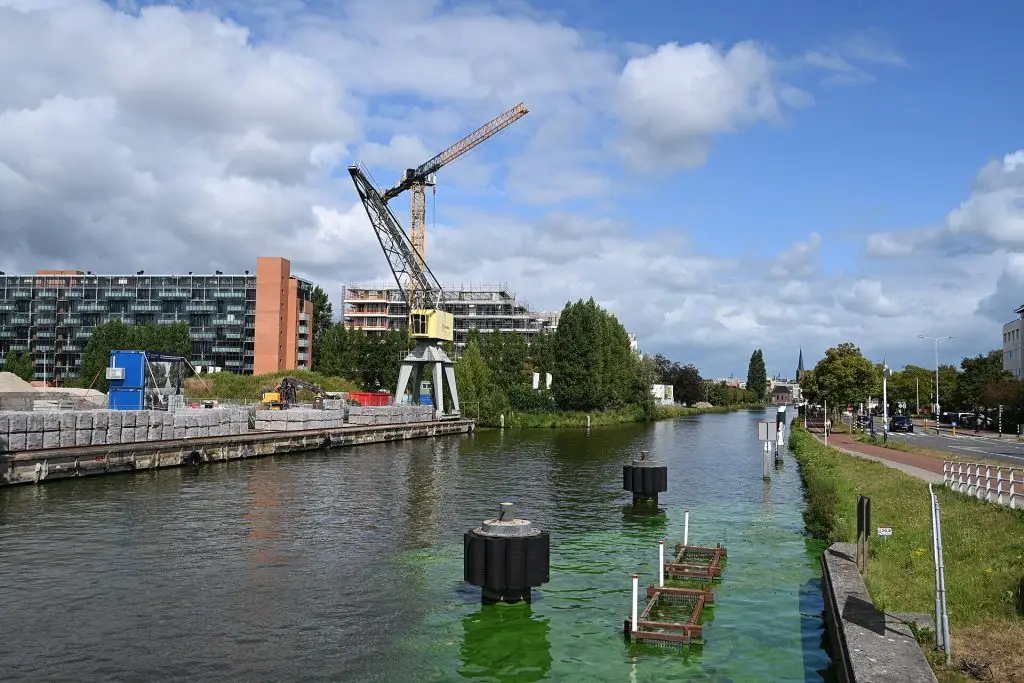
In the Middle Ages the Vliet became a trade route between Leiden, Delft and The Hague. Today it’s a calm canal lined with trees and old houses, good for walking or cycling.
Hofwijck and the Huygens connection
Constantijn Huygens, the poet-diplomat and father of the scientist Christiaan Huygens, built his country house Hofwijck beside the Vliet in the 17th century. It’s now a museum with a formal garden. Opening days and tickets change, so check the official site before you visit. The garden’s layout is part of the story, because Huygens designed it as a symbolic composition, not just a pleasant lawn.
Things to do in Voorburg
- Walk the Vliet: The towpath is a flat, easy route lined with water and houses. Walk toward Leidschendam for locks and a changing view.
- Visit Hofwijck: Combine the museum with a stroll in the grounds.
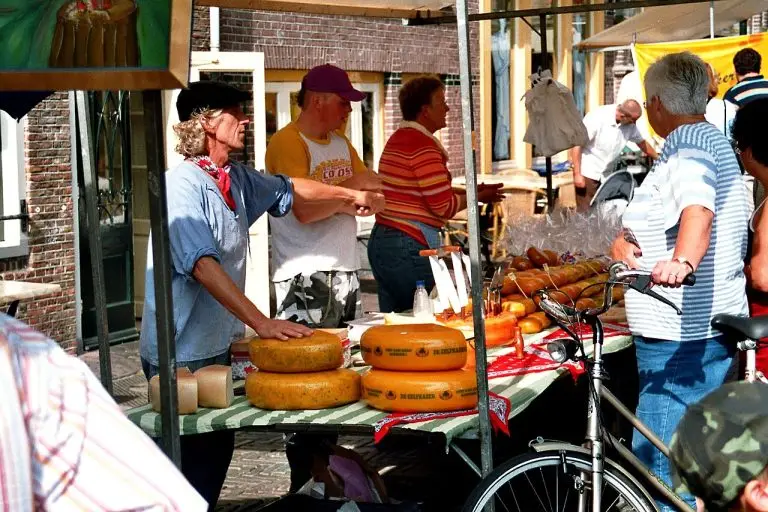
- Explore the old centre: The historic quarter has small streets, a market square and cafés. Market and shop times vary, so check ahead.
- Cycle: You can reach the coast at Scheveningen or the Delft area by bike, using the Dutch cycle network.
- Sit on a terrace: The cafés by the Vliet fill up on warm days.
Quick answers
Is it a separate town? Voorburg merged with Leidschendam into the municipality of Leidschendam-Voorburg, and it neighbours The Hague. It’s still referred to as its own town in daily speech.
Do I need a car? No. Trams and buses link it with The Hague, and trains serve the area as well. Check NS and local transport apps for current routes.
How to get to Voorburg
- Train: Stations in the area connect with The Hague. Check NS for the best stop and times.
- Tram and bus: Several Hague lines run toward the town. Check HTM for the current routes.
- Bike: The easiest option if you’re staying in The Hague. The route follows the Vliet.
When to go
Spring and early autumn are best: the canal trees look good and terraces are open. In winter, you can still walk the Vliet and visit indoor sites, though some gardens close.
Combine it with the rest of the region
It pairs well with a half day in The Hague, or with Delft and Leiden along the same old canal route. The Hague has the Mauritshuis, Peace Palace and Scheveningen beach, so you can make a full day with a quiet start in Voorburg, then head into the city for lunch and museums.
A short walking route
- Start at the Voorburg station or tram stop and walk to the Vliet.
- Follow the canal toward Hofwijck and look at the garden from the outside if the museum is closed.
- Continue toward Leidschendam to see the locks and the water.
- Return along the other bank, with a coffee stop at a canalside café.
The whole loop takes around two hours at a relaxed pace. Voorburg is a good place to see how Dutch towns grew along water, and it makes sense to pair it with a visit to the archaeological finds displayed in regional museums.
For the town’s history in more depth, see Voorburg on Wikipedia. Voorburg isn’t a place of big attractions, which is exactly why it works as a calm contrast to the city next door.
Related reading: Zugverbindungen Niederlande: So reist du bequem mit der Bahn and Brillen in Holland günstiger? Was Deutsche wirklich sparen können