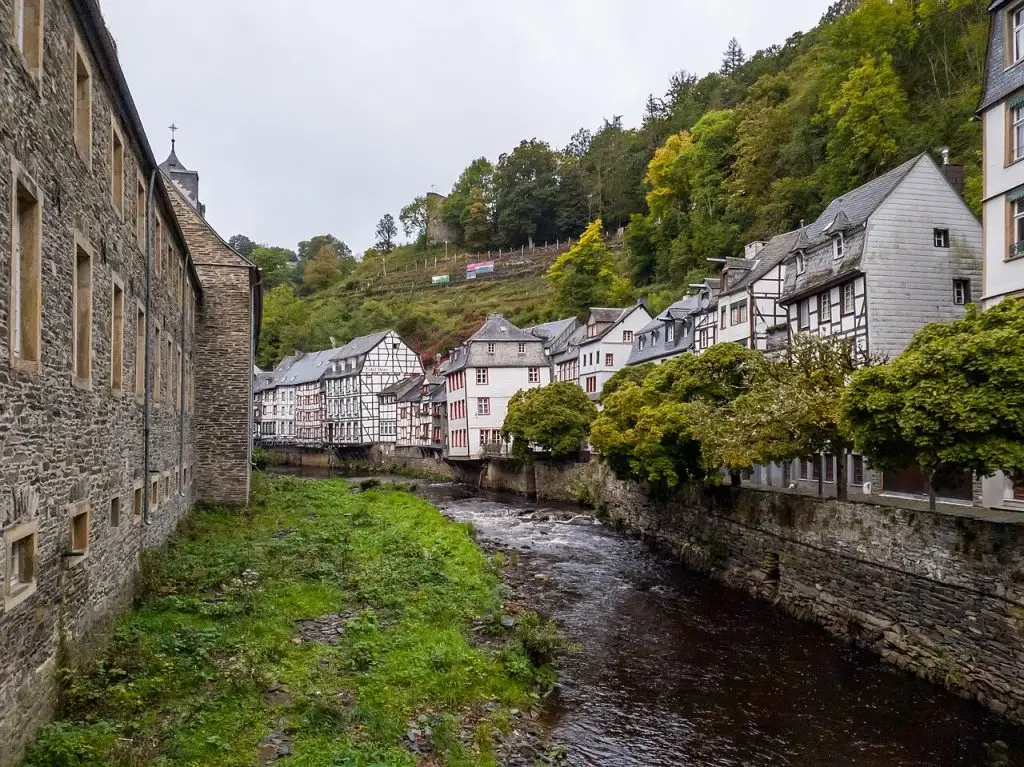
Monschau, Germany, is the kind of town that looks like a postcard before you even park the car. Narrow lanes, slate roofs and black-and-white half-timbered houses crowd along the Rur river in a green valley on the edge of the Eifel hills. It lies close to the Belgian border, which makes it an easy side trip from the Netherlands, Belgium and western Germany.
Where Monschau is and how to get there
The town sits in North Rhine-Westphalia, near the border with Belgium, roughly 30 to 40 kilometres south-east of Aachen. By car, you can reach it from Aachen in about 45 minutes, depending on the route and traffic. From Cologne, plan on around an hour and a half. From Maastricht or Heerlen in the Netherlands, it is a drive of roughly an hour.
Public transport is possible. Buses connect Monschau with Aachen, and the journey takes a bit longer than driving. Timetables change, so check the current schedule with the regional operator before you leave. The old town is pedestrian-friendly, and parking is available on the edge of the centre, where you pay a small fee.
What to see in Monschau Germany
The old town and the Rur
The historic centre is the main attraction. Wander along the river, cross the small bridges and look for the Red House, a well-known merchant’s home with a rich interior that can be visited as a museum. Many of the houses date from the seventeenth and eighteenth centuries, when the town prospered from cloth making.
The castle
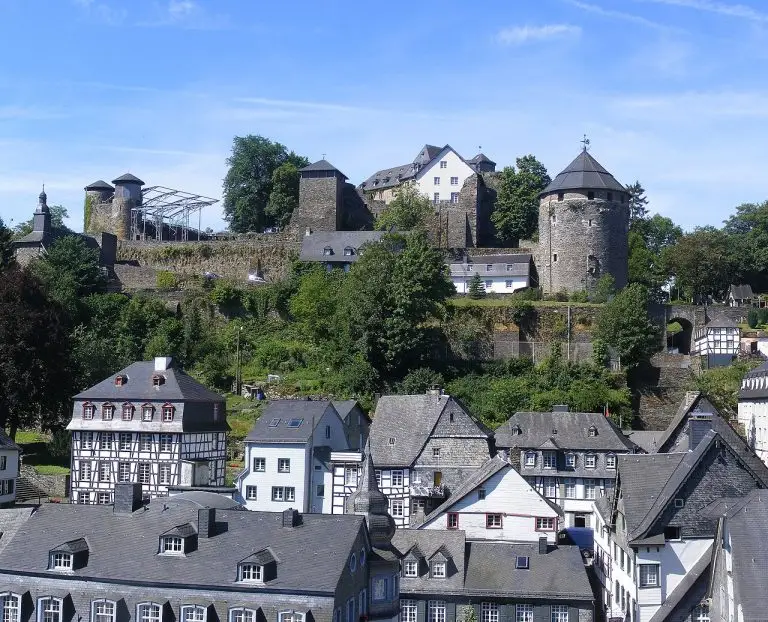
Above the town stands Burg Monschau, a medieval fortress that is now used for events and a youth hostel. The climb is short and rewards you with a view over the roofs. In summer, the castle hosts open-air concerts, so check the programme if you will be visiting then.
Mustard and food
The old mustard mill, Historische Senfmühle, is a popular stop. You can learn how mustard is made and taste a range of flavours in the shop. Local bakeries sell Printen, a spiced, gingerbread-like biscuit that belongs to the Aachen region. Cafés in town serve cake, coffee and hearty German dishes, and many have terraces by the river.
When to go
Summer is pleasant, and the valley is green, but weekends can be busy. Autumn brings colour to the hills and makes for good walking. Winter is the time many visitors prefer, because of the Christmas market, which is known for its setting among the old houses and its small-scale feel. Dates and opening times are set each year, so check the official tourism site.
Because Monschau is a popular day trip, the centre is busiest between late morning and mid-afternoon. If you want a calmer visit, arrive early or stay later in the evening when the lights come on.
Walking in the surroundings
The town lies at the edge of the Hohes Venn area on the Belgian side and the German Eifel National Park nearby. Marked hiking trails lead through forests and moorland. The famous Eifelsteig long-distance trail starts in the Aachen area and passes close to Monschau on its way south. Even a short walk up to a viewpoint above the town gives you a good picture of the valley.
Practical tips
- Shoes: the cobbled lanes can be slippery when wet.
- Cash and cards: most places take cards, but small stalls may prefer cash.
- Time: half a day is enough for the main sights, while a full day allows for walks.
- Combining trips: consider pairing Monschau with Aachen’s cathedral and old town, or with the Belgian town of Eupen.
- Dogs and children: the town is generally friendly for both, though the streets are narrow and steep in places.
Is it worth the detour?
Extra tip for photographers
The classic view of the town is from the hill path above the Rur, where you can see the whole row of half-timbered houses and the castle in one frame. Go early in the morning or near sunset for softer light, and remember that the path can be slippery after rain.
If you enjoy small towns with history, Monschau Germany is worth the trip. It is not a place of long checklists. The pleasure is in walking slowly, sipping something warm and watching the river slide past the old houses. A day here is a good break from big cities, and the surrounding hills offer a chance to stretch your legs. Bring a camera, comfortable shoes and a little patience on busy weekends.
More like this: browse our Germany section.