A startup training an AI model can need thousands of powerful chips for a few weeks, then almost none for a month. Buying that hardware outright would tie up huge amounts of cash and risk leaving it idle. That mismatch is the reason the GPU cloud exists: a service that rents graphics processors by the hour, day or contract, delivering them over the internet as if they were a utility.
In this article
GPU cloud: what you are actually renting
A GPU, or graphics processing unit, was originally built to draw images. Its design, with thousands of small cores working at the same time, also happens to suit the math behind modern AI. Training and running large models relies heavily on that parallel work.
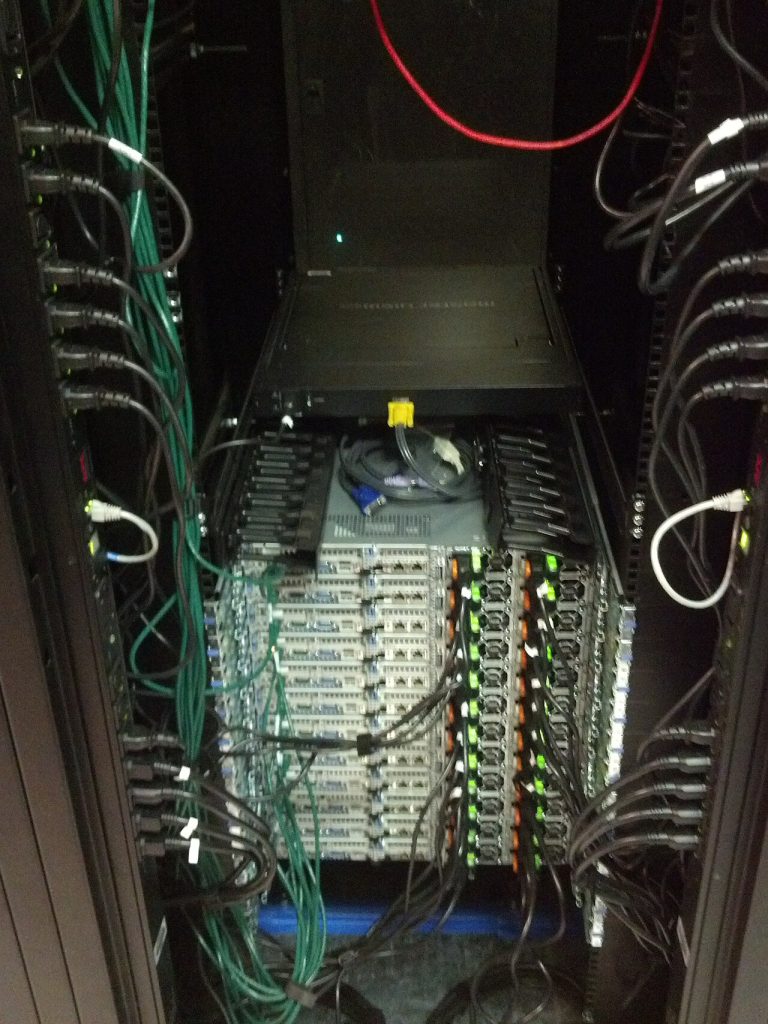
When a company rents GPU capacity, it typically gets access to servers packed with several of these chips, linked by fast connections, sitting in a data center it never has to visit. It logs in, loads its software and starts working. Some providers offer a single machine for a quick experiment; others offer large clusters with the networking needed to train big models.
Why renting beats buying, most of the time
The first reason is cost structure. Buying accelerators means a large upfront payment, plus servers, networking, power, cooling and staff to maintain it all. Renting turns that into an operating expense that rises and falls with need.
The second is access. Demand for top-tier chips has often outpaced supply, and waiting lists for hardware can be long. A cloud provider that has already secured capacity lets a small team start immediately.
The third is flexibility. Hardware generations change quickly. Renting makes it easier to try a newer chip without being stuck with an older purchase. And if an experiment fails, the bill stops when the job does.
Different kinds of providers
The large general-purpose cloud companies offer GPU instances alongside their other services, which is convenient if you already store data and run applications with them. A newer group of specialized providers focuses on AI workloads, often with simpler setups and a strong emphasis on cluster networking. There are also marketplaces that connect people with spare hardware.
They differ in ways that matter. Look at availability, since a cheap listing is useless if nothing is free. Look at networking quality for multi-machine jobs. Look at the software provided, such as drivers and common frameworks. And look at support, because debugging a failed run at midnight is easier with a responsive team.
Think about a small team fine-tuning a language model for a niche use. They might rent a handful of GPUs for a weekend, run their experiments, and shut everything down on Monday. Another team might reserve a large cluster for a month-long training run that needs every chip talking to every other chip. Both are served by the same industry, but their needs, and their bills, look nothing alike.
The hourly price is rarely the whole bill. Moving large datasets in and out of a provider can cost money and take time. Storage adds up. Idle machines that nobody remembered to shut down quietly burn budget.
Commitment is another trade-off. Providers often offer lower prices for reserved capacity over months or years, but locking in means paying even if your needs drop. On-demand pricing is flexible but costs more per hour and may not be available when you want it.
Utilization is the real metric. A chip that sits idle half the time effectively costs double. Teams that watch their usage, schedule jobs well and keep data close to compute tend to get far more for their money.
Reliability and location count too. Some projects need hardware in a specific region for data rules or for lower delay to users. Others care about uptime guarantees. Ask providers what happens when a machine fails mid-job, how quickly it is replaced and whether you are billed for the downtime.
When owning makes sense
Renting is not always the answer. Organizations with steady, predictable, round-the-clock workloads can find that owning hardware becomes cheaper over time, especially at scale. Some have regulatory or privacy reasons to keep everything in-house. Companies with deep engineering teams may value the control.
Many land on a mix: owned or reserved capacity for the baseline, and rented capacity for spikes and experiments.
What it means for everyone else
The rise of rented compute lowers the entry barrier for AI work. A small group can train or customize a model without building a data center. It also concentrates power among those who control scarce chips, and makes the energy appetite of AI more visible, since all that rented capacity lives in real buildings that draw real electricity.
If you are evaluating a provider, start small, measure your actual usage, read the pricing page for data transfer and storage fees, and avoid long commitments until your workload is clear. The cloud did to servers what electricity once did to factory generators. GPUs are simply the latest thing to be rented rather than owned, and for most teams that is a sensible bargain.
GPU cloud services let you rent powerful processors by the hour. The Wikipedia article on cloud computing explains the model, and the right GPU cloud choice depends on how long and how often you need the hardware.
Related reading: From YouSendIt to Today: Why Cloud File-Sharing Companies Keep Changing Their Names and Neoclouds Explained: Why Specialist AI Computing Providers Exist.