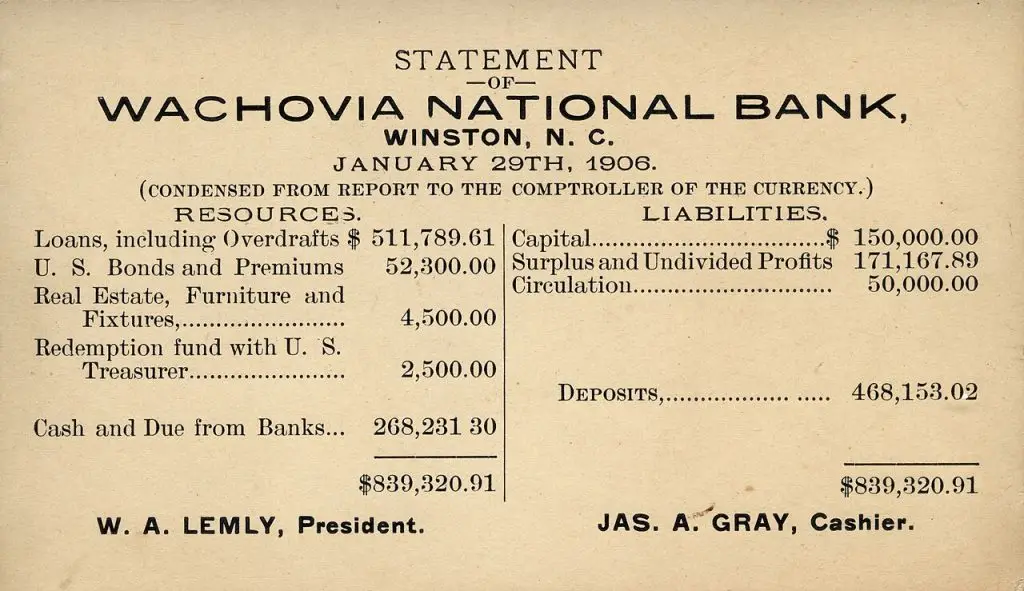
Here’s the quick answer on how to find networth of a company: subtract its total liabilities from its total assets. The result, found on the balance sheet, is also called shareholders’ equity or book value. For public companies, you can pull the numbers for free from annual reports. For private ones, it’s trickier, and you’ll often have to settle for an estimate.
That’s the formula. The useful part is knowing where to look and what the figure does and doesn’t tell you.
Step 1: Get the balance sheet
For a company listed in the United States, financial statements are filed with the Securities and Exchange Commission. The SEC’s EDGAR database is free to search. Look for the annual report (Form 10-K) or the quarterly report (Form 10-Q) and find the balance sheet, sometimes called the statement of financial position.
Two lines matter: total assets and total liabilities. Take the first minus the second. In many reports, the answer is already printed as ‘total stockholders’ equity’ or ‘total shareholders’ equity’.
Example: assets of 500 million and liabilities of 320 million gives a net worth, or book value, of 180 million.
Step 2: Understand book value vs market value
This is where many beginners get tripped up. Book value is an accounting number. Market value, or market capitalization, is what investors collectively think the company is worth. You get it by multiplying the share price by the number of shares outstanding.
They can differ enormously. A tech firm with few physical assets might have a modest book value but a huge market cap, because investors are paying for expected growth. An old industrial company can show the reverse. Neither is wrong. They answer different questions.
Which one should you use?
If you want to know the accounting position, use book value. If you want to know what the business would cost to buy on the stock market, use market cap. When people ask how to find networth of a company in everyday conversation, they often mean one of these, so it’s worth clarifying.
Step 3: Dig into what’s inside the number
A raw figure hides a lot. Check these items:
- Goodwill and intangibles. After acquisitions, goodwill can make equity look bigger than the tangible assets behind it.
- Debt levels. High liabilities against assets can signal risk.
- Asset age. Property and equipment are recorded at historical cost less depreciation, not current market value.
- Share buybacks. Repurchases lower equity, sometimes into negative territory for healthy firms.
What about private companies?
Private firms don’t have to publish accounts in most places, so you’ve got fewer options. Some can be tried:
- Ask for the financial statements directly if you’re a lender, partner or buyer.
- Check government registries. In some countries, such as the UK through Companies House, even small private companies file accounts publicly.
- Look at funding announcements, which sometimes disclose valuations.
- Use credit reports from agencies such as Dun & Bradstreet, bearing in mind they’re estimates.
In the US, private company data is limited, and websites claiming exact private net worth figures are usually guessing. Be skeptical, and note whether a figure came from an audited document.
Common mistakes
The big ones are mixing up net worth with revenue, comparing figures from different currencies or years, and treating a single number as a verdict. Always compare with prior years and with competitors. A rising equity base alongside steady profit is a healthier sign than a one-time jump.
For a clear explanation of the concept of equity and the balance sheet, the balance sheet entry on Investor.gov is helpful for beginners.
If you need a quick sanity check, compare the equity figure with the market cap and with total debt. A company trading at many times its book value is priced for growth, while one trading below book may be either a bargain or a warning. Neither reading is automatic, but the comparison gives you a question to investigate, and good research usually starts with a good question.
Putting it together
To recap: find the balance sheet, subtract liabilities from assets, compare it with market capitalization, and look inside the number for debt and goodwill. For private companies, rely on filings, registries and direct disclosure, and treat anything else as an estimate. That process works whether you’re sizing up an investment, a supplier or a competitor.
This article is for general information only and is not financial advice.
Related reading
- What Percentage of Net Worth Should Your House Be?
- OG from Basketball Wives: Net Worth, Career and How Estimates Work
Photo: Wachovia National Bank, Winston, NC, Public domain, via Wikimedia Commons