Almost everyone has stood at a party, smiling at someone whose name has vanished from memory. Face recognition wearables that quietly whisper a name and where you last met sound like a gift. For people with memory loss, or anyone who meets hundreds of people a year, the appeal is obvious. The same capability, in the wrong hands or the wrong setting, is also one of the more worrying uses of everyday technology.
How face recognition wearables work
Face recognition software doesn’t store photos the way you might imagine. It processes an image of a face, finds landmarks like the position of the eyes, nose and jaw, and converts them into a set of numbers called an embedding. Two embeddings can be compared. If they are close enough, the system treats them as the same person.
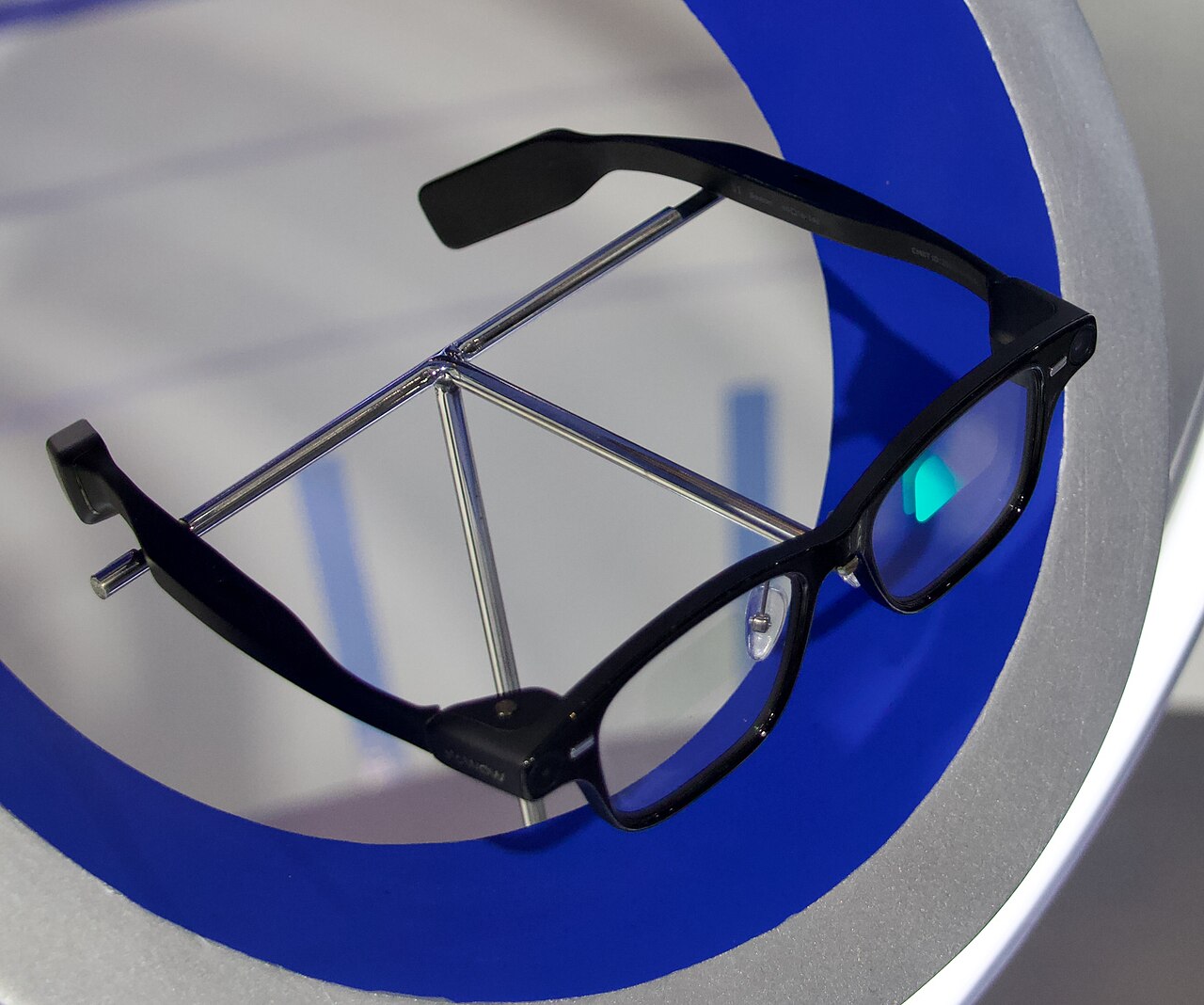
For a personal memory aid, the process has a few steps. A camera, perhaps in a pendant, glasses or phone, captures a face. The software compares it to a stored collection of people you’ve already added. If there’s a match, it shows or speaks the name and any notes you saved. If not, it may offer to add a new entry.
The upside is real, and it helps to be specific about who benefits from face recognition wearables.
- Support for people with conditions that affect memory or the recognition of faces
- Help for professionals who meet many people, like teachers, organizers and salespeople
- Reminders about context, such as how you met and what you discussed
- Reduced social awkwardness for people with anxiety around names
These are real needs, and a tool designed with them in mind, under the user’s control, can be useful.
Where the trouble starts
The person being recognized hasn’t consented. When you meet someone, you probably expect them to remember your face. You don’t necessarily expect a device to log it, tie it to your name and keep notes. Even if the device only stores people you manually add, the data exists, and it can be breached, subpoenaed or misused.
Things get worse if a system links faces to large online databases. Then a stranger on the street could be identified, and their name, workplace and more could appear within seconds. That strips away the practical anonymity that most of us rely on in public life, and it can enable stalking and harassment.
Accuracy is not evenly distributed
Face recognition has historically performed unevenly across demographic groups, with higher error rates for some, and face recognition wearables inherit that problem. A wrong match isn’t harmless: it might label a stranger as someone else, or cause an embarrassing mistake. Accuracy also suffers with lighting, angle, masks and aging.
Consider two versions of the same idea. In the first, a pendant stores a handful of faces you added yourself, such as relatives and colleagues, and everything stays on the device. It tells you a name and nothing more. In the second, a pair of glasses sends every face it sees to a cloud service that searches a huge database. Both count as face recognition wearables, but they carry completely different risks. The first is a notebook that happens to use a camera. The second is a surveillance tool that happens to look like eyewear.
That difference should drive how you judge any product. Ask what the device does by default, not just what it can be configured to do. Defaults are what most people live with, and a feature buried in a settings menu is easy to ignore.
Workplaces add another layer. Employers who allow face recognition wearables on site need to think about colleagues, visitors and customers who never agreed to be scanned. Clear policies and signs are the minimum, and some spaces should simply be off-limits. Wider debates over online content rules and age checks show how slowly regulation catches up, and a high-profile home burglary is a reminder that personal data and physical security are linked.
Rules and norms
Laws differ widely. Some regions restrict biometric data and require consent before collecting or storing it. Others have few rules. A product that is legal in one place may be restricted in another, and a business using it at events or in shops may face extra obligations. If you’re a user, that’s worth checking.
Social norms matter as much as law. Recording or identifying people in private spaces, like homes, clinics or locker rooms, is widely seen as unacceptable. Many people feel uneasy about a visible camera pointed at them at a dinner table, and that unease is a reasonable signal.
Questions to ask before using face recognition wearables
- Is processing done on the device, or are faces sent to a server?
- Is the database limited to people you add yourself?
- Can you delete a person’s record easily, and does deletion remove the stored numbers too?
- Is the data encrypted, and who else can reach it?
- Does the device show clearly when it is capturing?
On-device processing and tight local storage reduce risk considerably, because a database that never leaves your hardware cannot be breached in a company data leak.
The memory problem is real, and a careful tool could address it. Yet the more automatic and invisible such a gadget becomes, the more it shifts power from the person being seen to the person doing the watching. If you try face recognition wearables, tell people. Many are happy to help if you ask, and a simple heads-up turns a surveillance device into a courtesy. If you build one, make restraint a design feature: local by default, transparent about capture, and easy to switch off.
Image: Pete Woodhead / Wikimedia Commons, CC BY 2.0.