The drive from Tel Aviv to Jerusalem is short on a map and quick on a good day, but traffic, parking and security checks can change how it feels. If you are planning to go by car, here is a clear guide to the route, the timing and the details worth checking before you leave.
Drive from tel aviv to jerusalem: distance and time
The two cities are around 60 kilometres apart. On a clear road, the drive typically takes about 45 minutes to an hour. In rush hour, which is usually early morning and late afternoon on weekdays, it can take much longer. On Fridays, many people head to Jerusalem in the morning and return before the Sabbath begins, so traffic can be heavy. Check a live map app before you go.
The main route
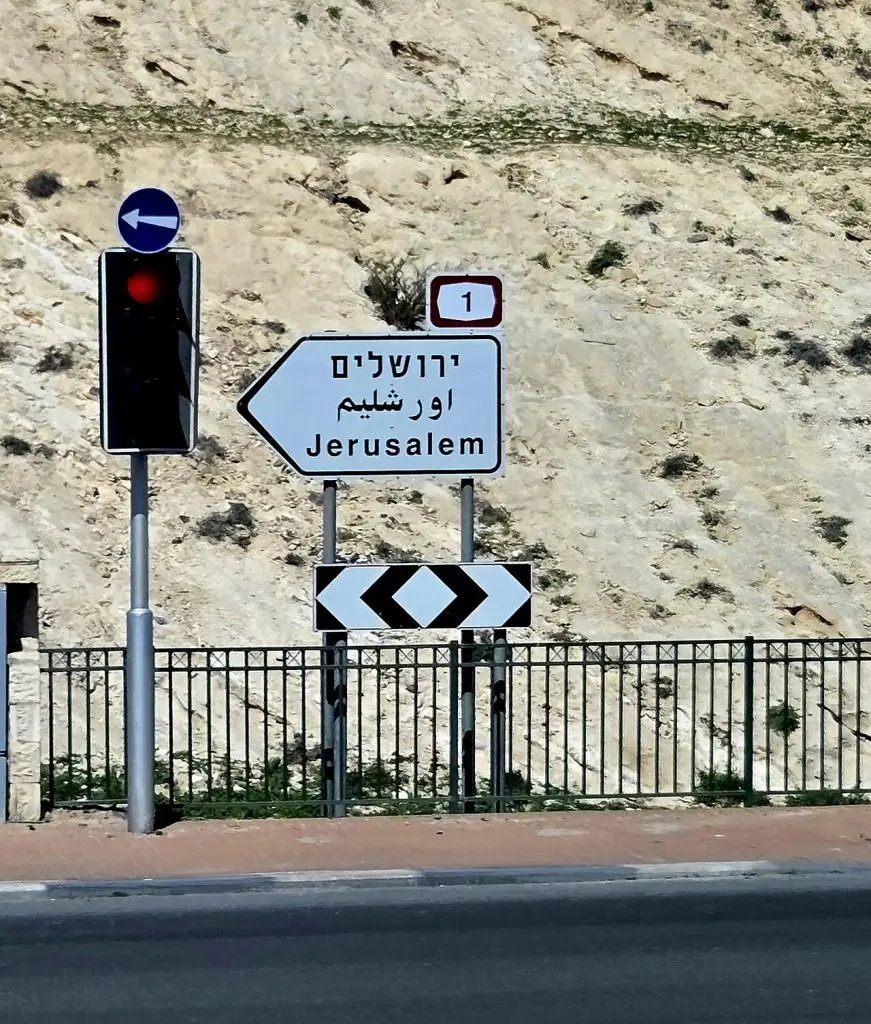
The usual route is Highway 1, which runs from the coastal plain up into the Judean hills and ends near the entrance to Jerusalem. It is a well-maintained, multi-lane road. As you climb the hills, you see pine forests and, in places, wrecked vehicles from 1948 left beside the road as memorials. The road enters Jerusalem from the west, near the Binyanei HaUma convention centre and the central bus station.
An alternative: Route 443
Route 443 is another way to reach Jerusalem, passing near Modi’in. It travels through parts of the West Bank, and rules for its use have changed over the years. Check current travel advice before using it, and note that some rental car agreements limit driving in certain areas. For most visitors, Highway 1 is the simplest and safest choice.
Renting a car
Car hire is available at Ben Gurion Airport and in Tel Aviv. Compare insurance terms carefully, and ask whether the rental covers driving in the Jerusalem area. In Israel, drivers use the right side of the road. Many roads have speed cameras, and fines can be sent to the rental company, who will charge them to you.
Tolls and fast lanes
Some roads near Tel Aviv have electronic tolls or fast lanes that you pay for automatically. Rental companies usually handle this and bill you afterward. Ask about it when you pick up the car so there are no surprises.
Parking in Jerusalem
Parking in the centre is limited. Street parking uses colour-coded kerbs: blue and white usually means paid parking, while red and white means no parking. Apps are commonly used to pay. Many visitors choose a car park outside the Old City and walk in. Large car parks near the Mamilla area and Jaffa Gate exist, but prices and opening times change, so check them.
The Old City itself is closed to most traffic. Plan to walk inside it, and wear comfortable shoes for the cobblestones and steps.
Other ways to travel
If you do not want to drive, there are good alternatives.
- Train: a high-speed line connects Ben Gurion Airport and Tel Aviv with Jerusalem’s Yitzhak Navon station. The ride is roughly 30 minutes, which is faster than the car on a busy day.
- Bus: frequent intercity buses run between the two cities.
- Shared taxis: called sheruts, they depart when full and are cheaper than a private cab.
- Taxi or rideshare: convenient, but the price should be agreed in advance.
Sabbath considerations
From Friday afternoon to Saturday evening, public transport in Jerusalem and many other cities mostly stops. Many shops and restaurants close, especially in religious neighbourhoods. If you are renting a car, you can still drive, but plan ahead for food and fuel, and respect local customs, particularly in religious areas.
Safety and local advice
Travel conditions in the region can change quickly. Check your government’s travel advice before your trip and follow local guidance. Keep your documents and rental papers with you, and expect occasional checkpoints.
Tips for a smooth drive
1. Start early to avoid traffic.
2. Use a navigation app with live updates.
3. Download offline maps in case the signal drops.
4. Keep some local currency for parking.
5. Fill up the tank before returning the car.
A drive from Tel Aviv to Jerusalem can be quick and scenic when planned well. But for many travellers, the train is the stress-free alternative that leaves you more time for the city itself.
More like this: browse our Israel section.