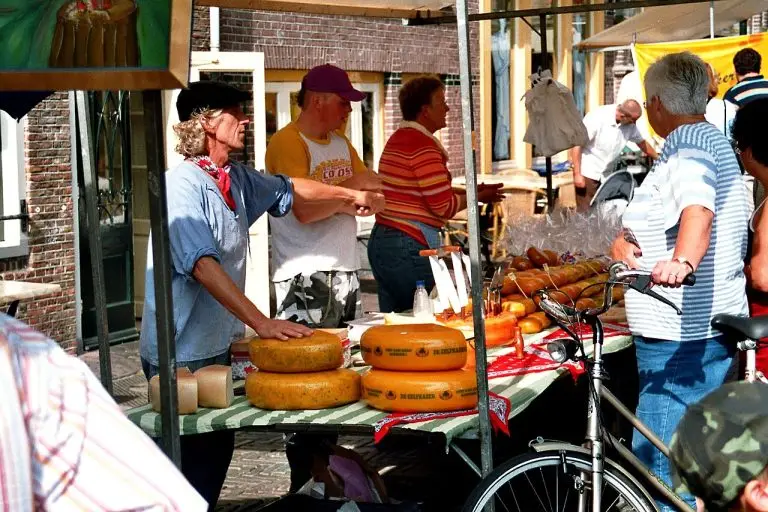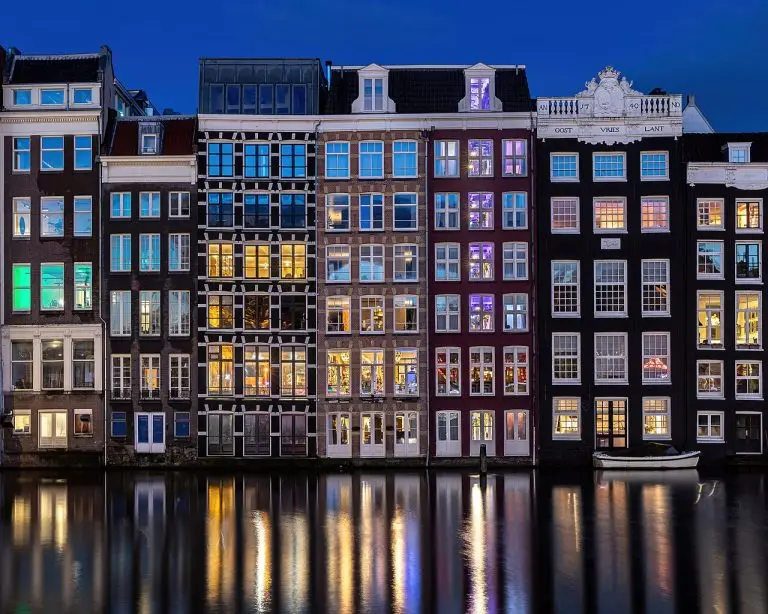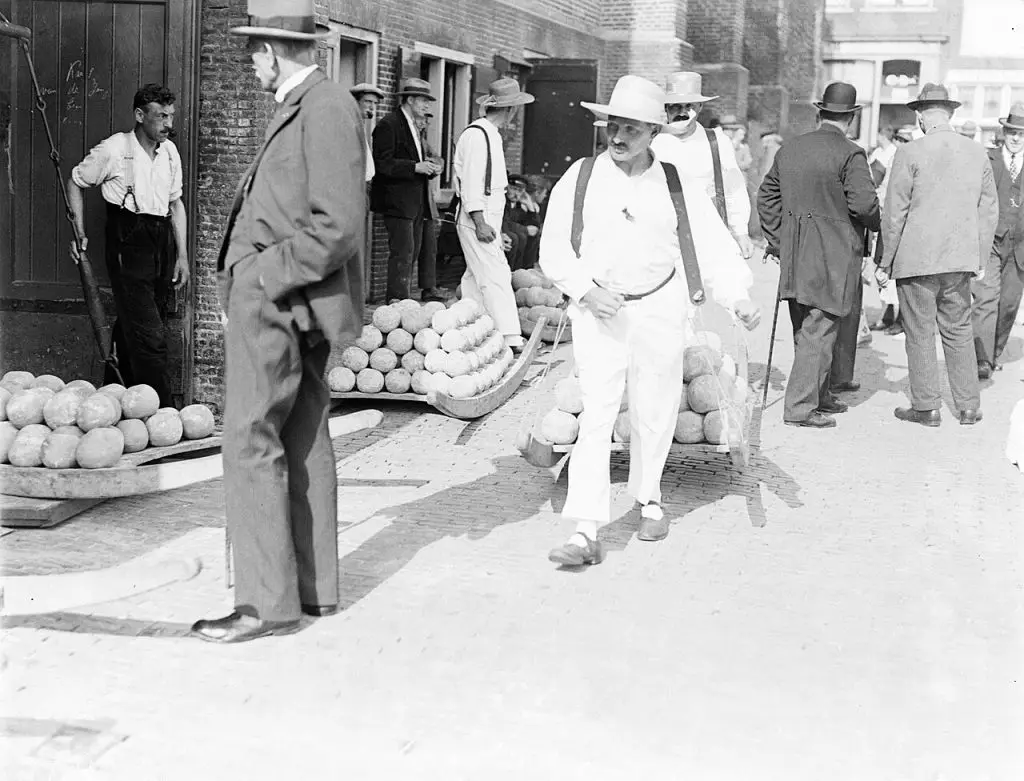
A cheese market in the Netherlands is one of the country’s most photogenic traditions. Porters in white clothing and coloured hats carry wheels of cheese on wooden sledges, buyers tap and sample, and traders slap hands to settle prices. Today these events are mostly performed for visitors, but they preserve a real part of Dutch trade history. This guide explains where the best cheese markets are, when they run, and how to make your visit easy.
A Short History
Dutch cheese towns held weighing and trading markets for centuries. Farmers brought their cheese to a town’s weigh house, where it was weighed and taxed, and merchants bought it for sale elsewhere. Gouda, Edam, Alkmaar and Woerden all had this role. When modern logistics replaced the old system, these towns kept the ritual alive as a tourist attraction and a cultural heritage event.
Alkmaar: The Best Known
The Alkmaar cheese market is the most famous. It is held in front of the historic weigh house, the Waag, on the Waagplein. The market usually runs on Friday mornings from spring to early autumn, with a start around ten in the morning and a finish around half past twelve. Specific dates and times change from year to year, so verify them on the official website before you go.
What You Will See
Cheese carriers belong to a guild, and the colour of their hats shows which team they work for. They carry the cheese on a sledge-like frame called a berrie, which two carriers lift between them and move at a quick, rhythmic trot. Meanwhile traders inspect cheeses by taking a core sample with a cheese iron and testing the smell and taste. Bargaining takes place through a lively clapping ritual known as handjeklap. An announcer explains the process, often in several languages.
Tips for Alkmaar
- Arrive early, at least thirty minutes before the start, for a good place at the front.
- Bring a hat and water in summer, as there is little shade.
- Visit the cheese museum in the Waag building for background on the trade, subject to opening hours.
- Many stalls around the square sell local cheese, so you can taste before you buy.
Gouda: The Cheese Town
Gouda is known worldwide for its cheese name, even though the cheese is made across the country. Its market takes place in front of the town hall and the Waag on Thursday mornings in the summer season, typically from April to late August. The event is smaller and more relaxed than Alkmaar, and combines well with a walk through the historic centre, which has canals, a striking Gothic town hall, and the Sint-Janskerk with famous stained glass windows. Check local listings for dates.
Edam and Woerden
Edam, famous for its round red-waxed cheese, also holds a market in the summer, traditionally on Wednesday mornings in July and August. It takes place in the Kaasmarkt area near the old Kaaswaag. It is a gentler, small-town version of the market that suits visitors who dislike crowds. Woerden has a cheese market on Saturdays in summer, in the town’s centre, and also has a lively farmers’ market tradition. Because these smaller events are scheduled differently from year to year, confirm times locally.
Getting There
All of these towns are reachable by train from Amsterdam. Alkmaar takes roughly 30 to 40 minutes by train from Amsterdam Centraal, and it is a short walk from the station to the market square. Gouda is roughly 50 minutes to an hour away, usually with a change in Utrecht or Leiden depending on the schedule. Edam has no train station but can be reached by bus from Amsterdam or from the town of Purmerend. Woerden has a station on lines between Utrecht and Leiden. Use the national railway journey planner for exact connections.
Tasting Cheese: What to Know
Dutch cheese is graded by age. Young cheese (jong) is mild and creamy, while aged cheese (oud) is hard, crumbly and more intense, sometimes with small crunchy crystals. In between are belegen and extra belegen. At a market, you can usually sample before buying. Look for cheese labelled as farmhouse cheese (boerenkaas), which is made from raw milk on farms and often has more character. If you plan to bring cheese home, ask the seller to vacuum-pack it, and check the customs rules of your destination country.
Cheese Flavours
Besides plain cheese, you will find versions with cumin, mustard seed, herbs, pesto or truffle. These add flavour and are good for sampling. Pair a piece of aged Gouda with a dark beer or a glass of red wine for a typical combination.
Practical Tips
1. Check the date and hour before you travel, because some markets are seasonal and weather-dependent. 2. Wear comfortable shoes, as you will stand on cobbles for a while. 3. Expect crowds. The market is a tourist event, so enjoy it for what it is. 4. Take cash for small purchases, though cards are common. 5. Combine the market with a visit to the town, as there is more to see than the square itself.
Beyond the Market
If you have more time in the region, look at other places linked with dairy. The area around Alkmaar and the polders of North Holland has cheese farms, some of which offer tours. Near Gouda, farms along the river Gouwe and near the Reeuwijk lakes sell cheese directly. You can also visit the cheese museum in Alkmaar or the Edam museum for local history.
For the market’s history and visiting details, see the Alkmaar cheese market on Wikipedia. Dates, times and prices change from season to season, so confirm them on the official websites of the towns before your trip.
Final Thoughts
A Dutch cheese market is part theatre, part living tradition, and entirely accessible for a day trip. Pick Alkmaar for the largest show, Gouda for a relaxed visit with a good town to explore, or Edam and Woerden for a quieter feel. Check the schedule, arrive early, taste generously, and you will leave with a sense of why cheese matters so much in Dutch history.
More to read
Image credit: Willem van de Poll via Wikimedia Commons (CC0).