Amersfoort in the Netherlands is a medieval walled town that many visitors skip, which is a pity. It sits in the province of Utrecht, close to the geographic centre of the country, and has a compact old centre with canals, narrow streets, and a gate that combines land and water defences. For travellers who have already seen Amsterdam and Utrecht, Amersfoort offers a calmer, more local day out. This guide covers what to see, how to get there, and how to plan a visit.
Getting to Amersfoort
Amersfoort is a major railway junction, so reaching it is simple. From Utrecht Centraal the train takes roughly 15 to 20 minutes, and from Amsterdam Centraal it takes roughly 30 to 40 minutes, depending on the train type. Services run frequently. Buy your ticket through the Dutch Railways app or at a machine, or tap in and out with a compatible contactless card where accepted. Check the NS journey planner for current times and fares.
From the station, the old centre is a short walk of around ten to fifteen minutes. If you come by car, use one of the car parks near the edge of the centre rather than driving into the old town, where streets are narrow and access can be restricted.
The Old Town and Its Defences
The charm of Amersfoort comes from its medieval layout. The town received city rights in the 13th century, and parts of its double ring of walls and canals still stand. Walk the inner streets and you will pass old merchant houses, small squares, and modern shops fitted into historic fronts.
The Koppelpoort
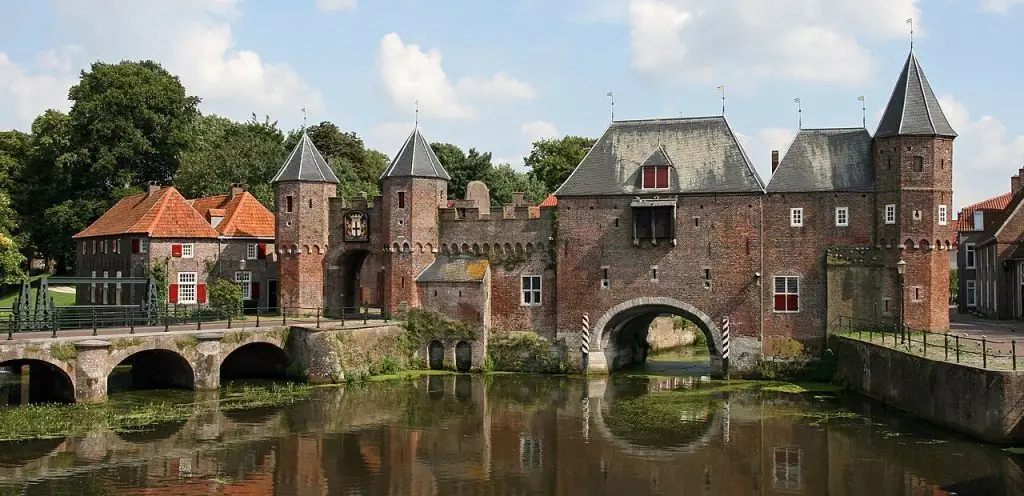
The Koppelpoort is the most famous landmark. Built in the 15th century, it is a combined land and water gate: a road passes through one section while the river Eem flows through another, closed by a barrier. It is best seen from the footpath along the water, and photographers often come in the early morning or at dusk. You can usually walk around it for free, but you should check whether the interior is open on the day you visit.
Muurhuizen and the Eem
Along the inner canal, the Muurhuizen are houses built into the former city wall. A stroll along the Kamperbinnenpoort and the stretch near the water gives a feel for how the town defended itself. A canal boat trip is available in season and shows the walls from the water.
Onze Lieve Vrouwetoren (Lange Jan)
Rising above the centre is the Onze Lieve Vrouwetoren, nicknamed Lange Jan, or Tall John. The tower dates from the 15th century and stands at the heart of the town. The tower and its surroundings are a good orientation point when you wander. Climbing it may be possible during certain periods or guided tours, so check locally for opening times and booking rules rather than assuming access.
Mondrian’s Birthplace
Amersfoort is the birthplace of the painter Piet Mondrian, born here in 1872. The Mondriaanhuis, in the house where he was born, is a museum dedicated to his life and to the De Stijl movement. It offers a way to understand how his work developed from landscapes to the red, yellow and blue grids the world knows. Look at current exhibitions and hours on the official site, because small museums often close on Mondays or in some seasons.
If you enjoy modern art, also look at the nearby gallery spaces. The town has a lively contemporary scene for its size.
Museums, History and Reflection
Museum Flehite, in the historic centre, covers the story of the region, including its role in trade and its heritage. For a more sober visit, there is a national memorial at Kamp Amersfoort, a former Nazi transit camp on the edge of town. It serves as a place of remembrance and education. Visit with respect and allow enough time; consult the official site for opening hours and whether visits need to be booked.
Eating and Drinking
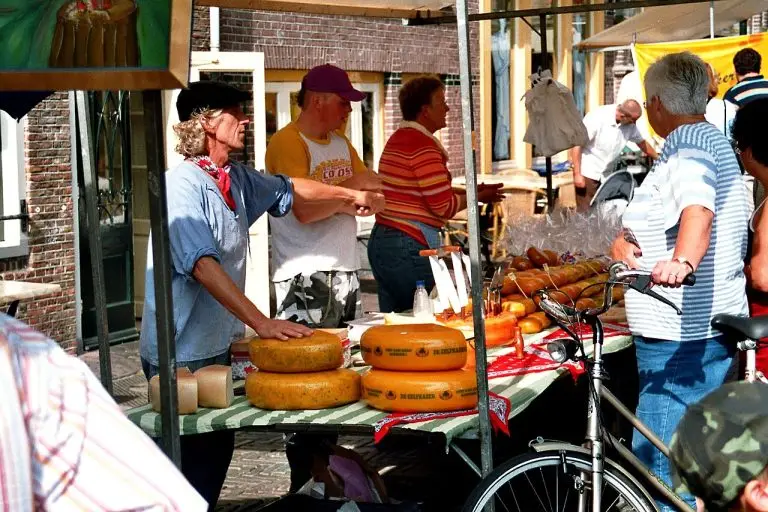
The centre has plenty of cafes and restaurants, with terraces beside the canals. Look for places serving Dutch lunch classics such as a broodje, a pancake, or a bowl of soup, and for local breweries and bars in the evening. The market days in the centre are good for fresh produce, cheese and flowers; confirm the days before you go. Prices are typical for a mid-sized Dutch town, a little lower than central Amsterdam in many cases.
Green Spaces Around the Town
If you have more time, walk or cycle in the area. The Amersfoortse Berg is a wooded hill with trails, and the Eem and surrounding countryside suit gentle bike rides. Cycling is easy in the Netherlands, with excellent paths and rental shops near the station. Ask for a map showing the cycle network so you can create a loop.
Planning Your Visit
One day is enough for the main sights, but add a night if you want to see the town at its quietest in the evening. A simple plan is to arrive in the morning, walk to the Koppelpoort and the old centre, have lunch near the tower, visit the Mondriaanhuis or Museum Flehite in the afternoon, and finish with a drink by the canal.
- Wear comfortable shoes, because the old streets are cobbled.
- Bring a rain layer, as the weather changes quickly.
- Book museum tickets in advance for popular exhibitions.
- Check opening hours, since some places are closed on certain weekdays.
For general background on the town’s history and layout, see Amersfoort on Wikipedia. Prices, hours and train times change, so always check the official websites of attractions and the railway operator before you go.
Final Thoughts
Amersfoort in the Netherlands rewards slower travel. It has a walkable medieval centre, a distinctive gate, a famous tower, and a strong link to modern art through Mondrian, all within a short train ride from the main cities. If you want a Dutch town that feels lived in rather than staged for visitors, this is a good place to spend a day.
More to read
Image credit: Bert via Wikimedia Commons (CC BY 2.0).