There’s a common belief that the tech boom really got going in the mid-2000s, carried along by social media and smartphones. That’s partly right, but 2011 technology gets skipped over more than it should. A lot of what we consider normal today, from talking to our phones to storing everything in the cloud, traces back to decisions and releases that happened that year. It’s worth looking at what actually came out, what changed in how companies operated, and what started going wrong.
Looking at 2011 technology means weighing how these developments landed against each other, not just celebrating them in isolation. The business implications were just as interesting as the gadgets, and some of the emerging threats that year shaped how the whole industry thought about risk going forward.
Major Tech Releases of 2011
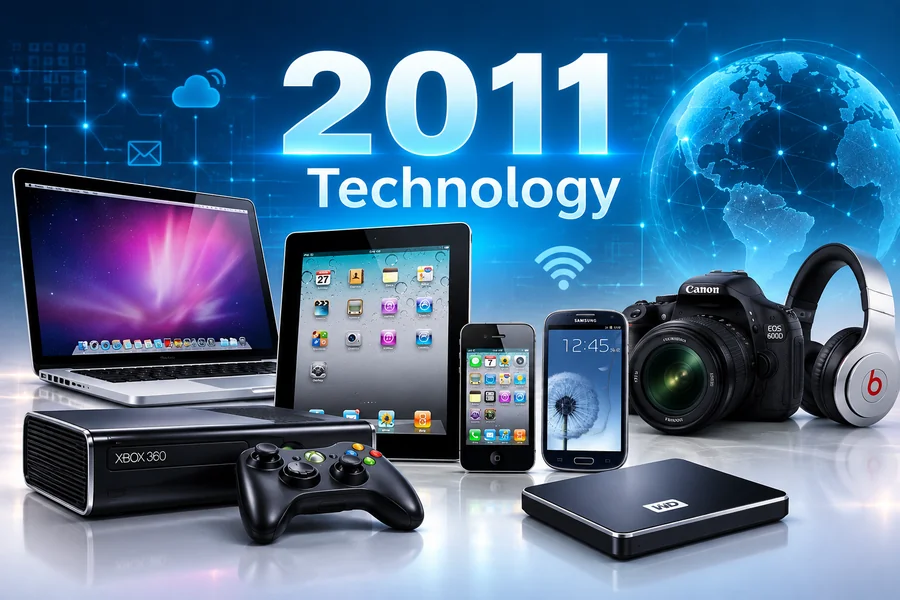
Apple launched Siri alongside the iPhone 4S, and whatever you thought of the voice assistant’s actual usefulness at the time, it shifted expectations permanently. Google released the first Chromebook that same year, a bet on web-first computing that looked odd in 2011 and looks prescient now. Both moved the goalposts on what a personal device was supposed to do.
Samsung’s Galaxy S II made a real argument that Android could go head-to-head with Apple, not just trail behind it. The iPad 2 came out lighter and quicker than its predecessor, which pushed every other tablet maker to stop treating specs as optional. From what I’ve seen working with clients who were buying hardware back then, 2011 technology releases created a kind of arms race that stuck around for years.
The Rise of Cloud Computing
Cloud computing had been talked about for a couple of years before 2011, but that’s the year businesses actually started moving budget toward it. Amazon Web Services was already running, and companies began treating it as infrastructure rather than a novelty. The shift meant you could skip buying a server room and just pay monthly, which was genuinely radical for smaller operations.
Dropbox was picking up serious momentum, and the conversation broadened from storage to running actual applications remotely. Smaller businesses benefited the most, I’d say, because they could access scalable resources without the upfront costs that used to lock them out. That change in who could afford real IT flexibility is one of the less-celebrated things 2011 technology did for the market.
Facebook’s IPO Plans
Facebook announced in 2011 that it was heading toward a public offering, and the $100 billion valuation got everyone’s attention fast. Analysts were split: some read it as confirmation that social media had real enterprise value, others worried the number had no floor under it. Unlike Google’s IPO, which generated excitement with relatively little skepticism, Facebook’s move brought both hope and genuine caution into the same room.
The privacy questions were already there before the paperwork was filed. Ad revenue models were still being figured out, and people questioned whether eyeballs alone could justify the valuation. But the announcement still set a precedent for how tech startups thought about the public market, and social media’s role as a legitimate business model stopped being a debate after that.
Security Threats in 2011
The Sony PlayStation Network breach was the headline incident, exposing personal data for tens of millions of accounts and sitting offline for weeks. It was one of those events that forced a conversation companies had been avoiding. Cloud adoption and mobile computing were growing fast, and security had not kept pace (honestly, I’m not sure the industry fully learned that lesson even after 2011).
IT security budgets started climbing in the back half of the year as organizations realized reactive fixes weren’t cutting it. Attacks were getting more targeted and more patient than the blunt intrusions from earlier years. What began as a response to specific breaches became a structural shift in how companies allocated resources, and the demand for security expertise went up considerably from there.
Why 2011 Technology Still Matters
Most tech timelines treat 2011 as a gap year between the iPhone’s 2007 debut and whatever came next. That’s a mistake. Cloud computing moved from experiment to expectation, voice interfaces became a standard feature, and Facebook’s IPO announcement changed how investors and founders thought about social platforms as businesses.
The cybersecurity surge was just as consequential, pushing the industry toward treating security as a product requirement rather than an afterthought. Each of these threads connected to the others in ways that shaped the following decade. 2011 technology doesn’t get the credit it deserves, but the fingerprints are everywhere if you look.
FAQs
What major tech products launched in 2011?
The iPhone 4S with Siri, Google’s first Chromebook, Samsung’s Galaxy S II, and the iPad 2 all launched that year.
How did cloud computing change in 2011?
AWS and Dropbox moved cloud services into everyday business use, making scalable infrastructure affordable without large upfront costs.
What were the cybersecurity threats in 2011?
The Sony PlayStation Network breach was the most visible incident, exposing millions of accounts and pushing businesses to increase security spending.