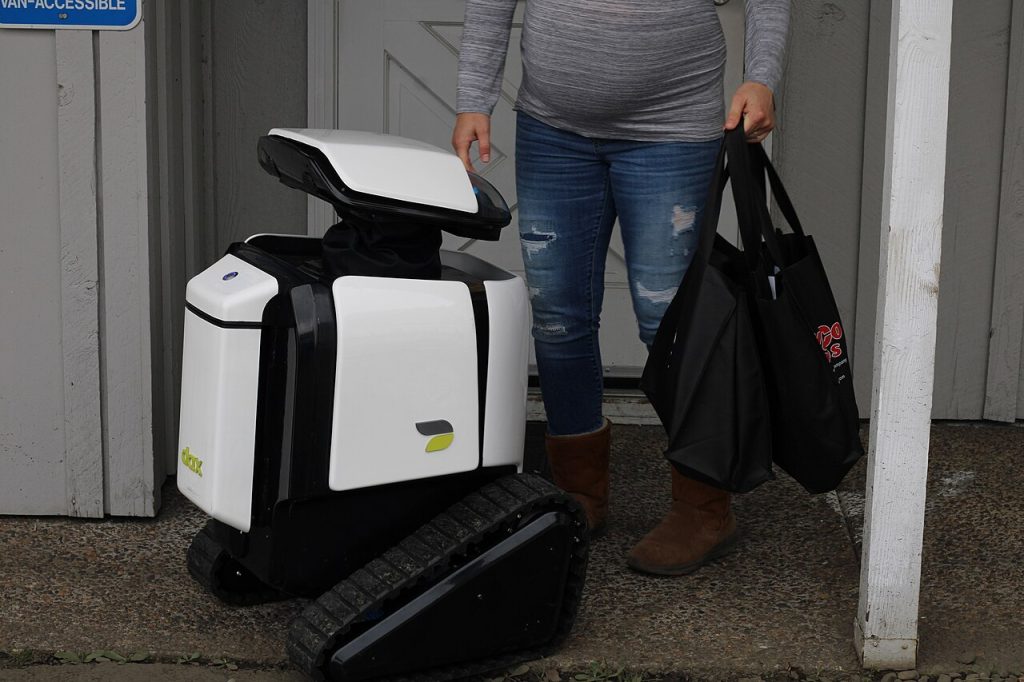
A small wheeled robot rolls down a sidewalk toward a college dorm with a sandwich in its belly. It stops at a curb cut, waits for a gap in traffic and continues. It is charming, and it works. Delivery robots like this have been in trials for years. The trouble starts when you ask whether anyone can make money doing this ten thousand times a day.
Several companies that began with delivery robots have shifted toward industrial settings, where the same underlying technology, a kind of mobile robot, fits better. The reasons say a lot about what autonomous machines need to be commercially viable.
The brutal math of delivery robots on the last mile
Delivering a single meal or parcel is a low-margin act. The average order has a small value, and the customer expects it to be nearly free. A robot has to cover its purchase price, battery replacement, maintenance, mapping, insurance and the staff who monitor it, all against deliveries that bring in a dollar or two each.
Remote supervision is a hidden cost. Many robots operate under human oversight, with an operator who can step in when the machine is confused. If one person can watch many robots, the economics improve, but only if the robots rarely need help.
Then there is utilization. A fleet of delivery robots is busy at lunch and dinner and idle the rest of the day. Idle capital is expensive.
The sidewalk is a hostile environment
Public space is unpredictable in ways that tax any perception system. Pedestrians cross in front, dogs bark, snow covers the curb, construction blocks a route, and teenagers sometimes tip robots over for fun. Rules vary by city. Some municipalities limit or ban sidewalk robots, so a company’s expansion depends on local politics.
Every one of these problems can be reduced with engineering, but each reduction costs money and time, and edge cases never fully go away.
Think about a hospital. A robot that carries lab samples from a ward to the lab saves a nurse a long walk several times a day. Nobody questions the value of that trip, and nobody expects the robot to cost a dollar per delivery. Compared with a sandwich on a sidewalk, the job is simply worth more.
There is also a sales difference. A consumer delivery service needs thousands of customers and an advertising budget. An industrial customer might sign for a handful of machines after a pilot, pay for installation, and renew a service contract. That path is slower to start but easier to forecast.
What changes for delivery robots indoors
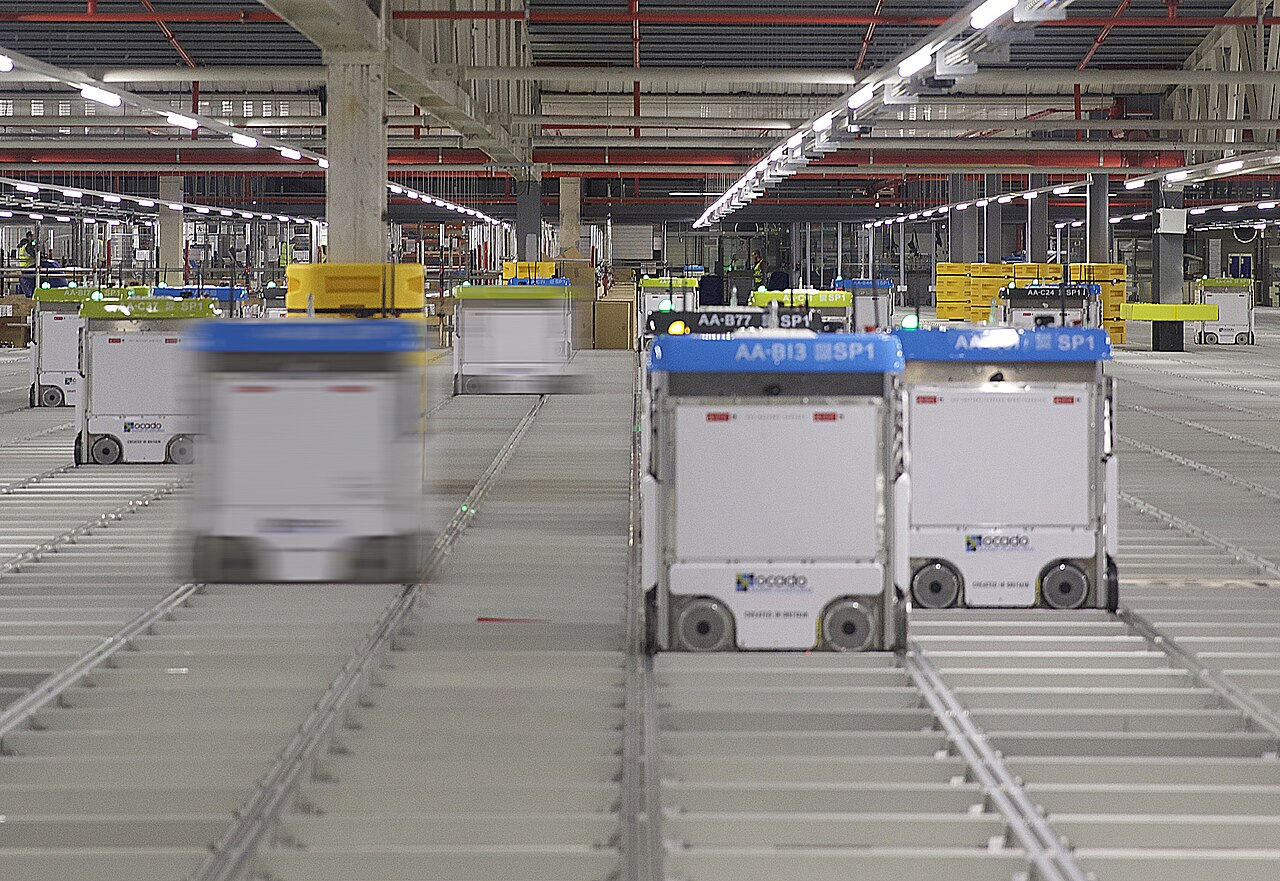
A factory, warehouse, hospital or industrial campus offers a more forgiving world.
- Controlled routes. Paths are mapped, repeated and often cleared of random obstacles.
- Predictable traffic. Workers know robots exist and are trained to share space.
- Clear value per trip. Moving parts between stations, delivering samples, or carrying tools saves skilled workers from walking. The thing being moved is worth more than a burrito.
- Steady demand. Plants run on schedules, so robots stay busy for longer hours.
- Customer willing to pay. Businesses buy equipment on the basis of measurable savings in labor and downtime.
The core skills carry over: mapping, localization, obstacle avoidance, fleet management and remote assistance. A robot that navigates a crowded campus has already solved many problems it will meet in a plant.
What the move means for workers and delivery robots
It is easy to assume delivery robots in industrial settings replace people. In practice, many current deployments take over the tedious transport task, like hauling bins or fetching supplies, which frees workers for tasks needing hands and judgment. Labor shortages in warehousing and manufacturing in many countries make that more attractive than it would be in a surplus labor market.
That said, it is fair to ask how gains will be shared. Companies that deploy these systems should involve workers early, retrain where jobs change and be honest about what the technology is for.
There is a lesson here for hardware founders generally. A demo that wins attention is not the same as a product that wins contracts. Teams that listen to who is willing to sign a purchase order, and how often they ask for a feature, tend to find their real market sooner than teams that insist on the original vision.
Hardware companies face another quiet limit: supply. Specialized sensors, batteries and chips have lead times, and a startup cannot ship more robots than its parts allow. The chip industry’s reliance on a few key suppliers is explored in the machine nobody else can build, and it shapes what small robot makers can promise.
Meanwhile, robots are reaching the home as well, in friendlier forms such as plush robot toys that teach kids science and math. Different markets, same lesson: the product has to fit a real need.
How to judge companies that build delivery robots
If you are looking at the sector, consider a few signs. Is the robot used in a setting where the task is valuable and repeatable? Does the company sell hardware outright or a service with recurring fees? How many robots does one operator support? What happens during a failure: does the whole line stop or does the robot pause safely?
A pivot is not an admission of defeat. Often it is the moment a team stops chasing the demo that photographs best and starts working on the market that pays.
Image: Lizzythetech / Wikimedia Commons, CC BY-SA 4.0.