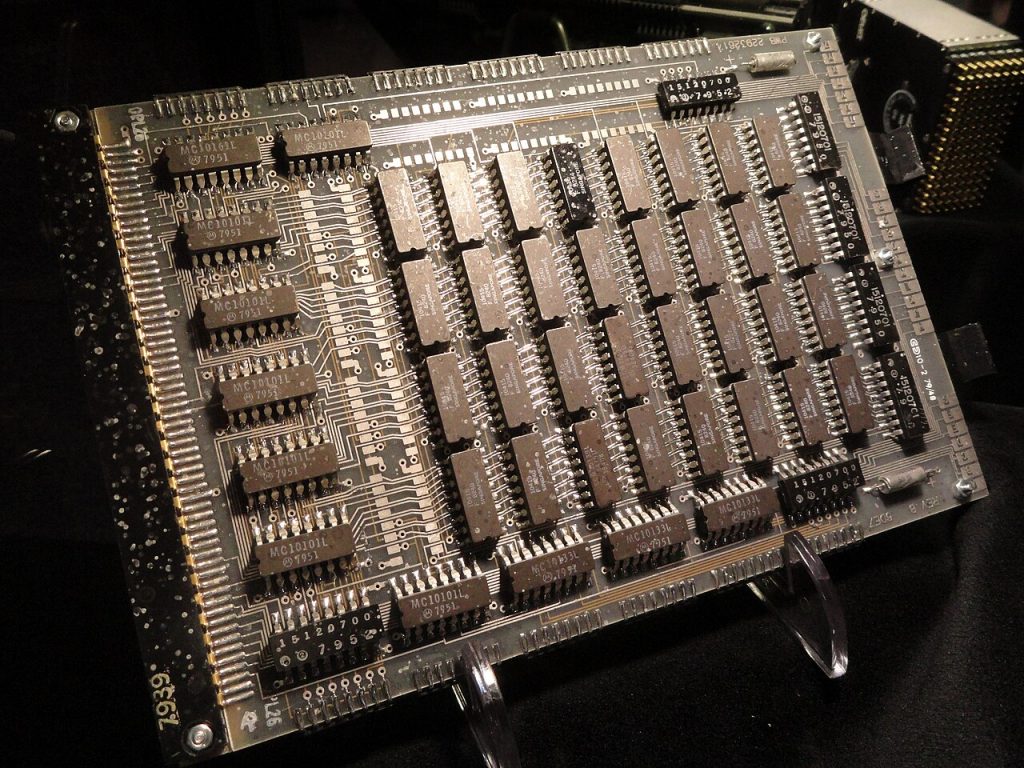
On paper, an AI training chip sounds like a clean engineering problem: do a lot of matrix math very quickly. In practice, the chip is the smallest part of the challenge. Companies that want to move away from buying standard graphics processors discover that the real work lies in everything wrapped around the silicon, from memory and networking to software and supply chains.
In this article
Training is not inference
It helps to separate two jobs. Inference means running a finished model to answer a question. Training means building the model in the first place by adjusting billions of numbers over and over across enormous amounts of data.
Inference can often run on modest, specialized hardware. Training is the heavy part. It needs high numerical throughput, large pools of fast memory and constant communication among thousands of chips working together. A design that excels at one job can be mediocre at the other.
AI training chip: memory is the quiet bottleneck
A processor is only as fast as the data it can reach. Modern training chips pair their compute units with stacked, high-bandwidth memory placed extremely close to the processor. That memory is expensive, complicated to package and available from only a few suppliers.
Many designs hit a wall not because the chip cannot calculate fast enough, but because it cannot be fed quickly enough. Engineers spend a great deal of effort on how data moves, caches and gets reused. Getting this balance wrong leaves expensive silicon idle.
Numbers matter here too. Training typically uses lower-precision number formats to save memory and time, and the choice of format affects both speed and stability. Support for the right formats, and the right balance between them, is a design decision that has to be made years before anyone knows what models will look like.
One chip is never enough
Large models do not fit on a single processor, and training one takes far too long on a single device anyway. The work is spread across many chips in a cluster, and they must constantly exchange results.
That makes networking as important as computing. Fast links between chips, between servers and across racks decide whether a cluster scales smoothly or stalls waiting on messages. A team building its own chip must also design or choose the interconnects, the switches and the topology.
Cooling and power are part of the same puzzle. Racks of accelerators draw a lot of electricity and produce a lot of heat, so data center design becomes a constraint on chip design, and the reverse.
Even a brilliant chip is useless if researchers cannot use it easily. Most AI work today is written with popular frameworks that were tuned over many years for the dominant hardware. A new chip needs compilers, libraries and debugging tools that translate that familiar code into efficient instructions for the new design.
This is often the hardest hurdle. Engineers must support the many operations models use, keep up with rapid changes in model architecture, and make sure results are numerically reliable. A single unsupported operation can force work back onto slower hardware.
Developers also hate switching costs. If a team’s existing tools run well on an established platform, a new one has to be dramatically better or cheaper to justify the effort of rewriting and retesting.
Making the thing
Then there is manufacturing. Cutting-edge chips are produced by a handful of specialized foundries, and advanced packaging capacity can be limited. A design may take years from concept to volume production, and a mistake discovered late can cost months.
Chip design itself is a serious investment, involving teams of specialists, simulation tools and several rounds of testing before anything is built. A flaw in a produced chip, known as a respin, is expensive and slow to fix.
Timing adds to the pressure. By the time a custom chip is ready, the field may have moved on. Model sizes, number formats and preferred techniques shift quickly, so hardware built for last year’s workload can age early.
Reliability is a quiet factor as well. When thousands of chips run together for weeks, some will fail. The system has to detect problems, save progress regularly and resume without losing days of work. That fault-tolerance machinery is rarely mentioned in announcements, but it separates hardware that looks good in a demo from hardware that finishes a real training run.
Why companies try anyway
Given all this, why bother? Reasons include cost at scale, supply security and control. Companies running enormous training workloads may save money by tailoring hardware to their own needs, and they gain some independence from a market where demand for standard accelerators often exceeds supply.
Large cloud providers are the most natural candidates, since they already operate huge data centers and have engineering teams that span hardware and software. Even they typically keep buying standard accelerators alongside their own designs, because customers want familiar options.
For everyone else, renting capacity is almost always the practical choice. The lesson of custom chips is not that they are impossible, but that the winning move usually involves the entire system. The silicon is the headline, while the memory, the network, the software and the factory schedule decide whether it succeeds.
An AI training chip is built for heavy, repeated maths, and memory is a major limit. The Wikipedia article on GPUs explains the hardware, and making an AI training chip is hard enough that few companies attempt it.
Related reading: Can New AI Chip Startups Really Take On Nvidia? A Realistic Look and Where AI Training Data Comes From: Licensed Content, Marketplaces and Contributors.