
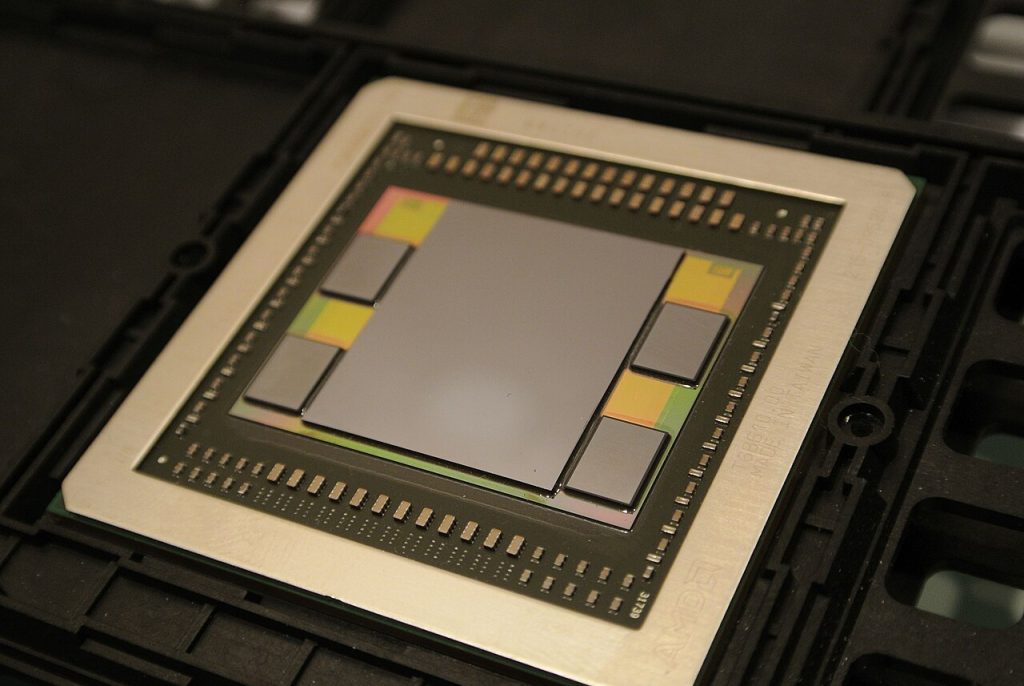
There’s an old romantic picture of research: a few brilliant people, a whiteboard, and an idea that changes everything. For parts of mathematics, that picture still holds. For modern machine learning, it left the building some years ago. Today a lab with a great idea and no computing power is a bit like an astronomer without a telescope. The thinking is real, but you cannot test it. That is why chip partnerships have become a normal part of how serious labs operate.
Why compute became the bottleneck
Training a large neural network means running staggering numbers of arithmetic operations, repeatedly, across thousands of specialized processors. Graphics processing units, originally built to draw video game scenes, turned out to be well suited to the matrix maths at the heart of this work. Companies that make them, and the networking gear and software around them, became central to the field.

The same logic applies to language work, where building models for India’s many languages needs serious computing power too. A consistent pattern in AI research over the past decade is that results often improve with more data, bigger models and more compute, at least up to a point. That doesn’t mean ideas don’t matter. Better architectures and training methods can save enormous amounts of compute. But to find out whether an idea works at scale, you generally have to try it at scale, and that costs real money in electricity, hardware and engineers who know how to keep a cluster stable.
What chip partnerships usually mean
When a research lab announces one of these chip partnerships, the details vary, and outsiders rarely see all of them. Broadly there are a few forms it can take:
- Hardware access. Priority purchasing or allocation of accelerators during times when supply is tight.
- Cloud arrangements. Reserved capacity through a cloud provider, sometimes with the chipmaker’s help.
- Technical collaboration. Engineers working together on software, networking and efficiency, so the lab’s code runs well on the hardware.
- Investment. Hardware companies sometimes put money into customers, which can create a loop where funding returns as chip orders.
The last point deserves caution when reading headlines. Circular arrangements aren’t automatically improper, and many industries do them, but they make it harder to tell real demand from financing structure. When you read about a deal, ask who is paying whom for what.
The trade-offs of chip partnerships for a lab
For a lab, close ties to one supplier bring speed and risk. On the plus side, you get capacity and expert help at a time when both are scarce. On the downside, you become dependent on one vendor’s roadmap, pricing and supply. Labs that care about independence often try to keep options open, testing other accelerators and writing portable software where possible, and some teams use abstraction layers to avoid overpaying for GPUs.
There’s also a cultural dimension. Labs founded on a long-term research mission, with a stated intent to avoid short-term product pressure, have an unusual problem. Compute is expensive, expensive things require funding, and funding has expectations. Staying focused on safety or fundamental research while writing very large checks to hardware vendors is a balancing act that every such organization has to manage.
Picture a mid-sized lab with a few dozen researchers and one promising training method. Without a reliable supply of accelerators, each experiment waits in a queue, and a month of waiting can cost more than a month of salaries. With a steady allocation, the team can run a test, read the results, and adjust within days. In practice, chip partnerships buy research speed, and speed is often the thing a small lab lacks most.
When you read an announcement, look past the adjectives. Does it name a quantity of capacity, a time frame, or a technical goal? Or is it a general statement of friendship? Real chip partnerships tend to produce details that engineers care about, such as software support or networking design, while vague ones mostly produce press coverage.
What to watch from the outside
If you’re trying to judge whether a lab’s compute story is substantial, a few signals are more informative than announcements. Look for published research, even if limited, since it shows whether the team produces real results. Look at whether the lab hires infrastructure engineers, not just researchers; running a large cluster is its own discipline. And look at how efficiently the group seems to use what it has, because efficiency research tends to come from people who can’t afford to waste a single run.
It’s also worth remembering that the biggest compute budgets are not the only route to progress. Smaller labs have contributed important techniques, often by finding cheaper ways to get similar results. The history of the field includes plenty of cases where a clever method beat a brute-force one.
The bigger picture
The reliance on chip partnerships has a few consequences beyond any single company. It concentrates power among those who can afford hardware. It ties AI progress to energy and manufacturing capacity. And it makes supply chain events in far-off factories matter to people who write software.
None of this makes research ideas obsolete. It means the whiteboard now has a power bill attached to it, and anyone serious about the field has to read both the papers and the chip partnerships.
Image: C. Spille/pcgameshardware.de / Wikimedia Commons, CC BY-SA 4.0.



