Peop
In this article
le often search for how many iPhones have been sold since 2007, and the answer, total iPhone sales, is a number so large that it stops feeling real. Instead of chasing an exact total, it’s more useful to look at how the smartphone went from a curiosity to something most adults carry everywhere. The story has a few distinct chapters.
Before the touchscreen
Phones that could email and browse existed well before 2007. They had physical keyboards, tiny screens, and menus that felt like a chore. Business users loved them. Everyone else mostly wanted a phone that made calls and sent texts.
The big shift was the idea that a phone could be a pocket computer with a screen you touch directly. Removing the keyboard gave software designers a blank canvas. Buttons could be anything, and they could change with each app.
The App Store changes the product
The first model could do a lot, but the real turning point came when outside developers were invited in. Suddenly the phone wasn’t a fixed product. It became a platform that improved over time as people built games, maps, banking tools, cameras, and social networks.
That model had a flywheel effect. More users attracted more developers, whose apps attracted more users. Rival platforms learned the same lesson, and competition in operating systems became competition in ecosystems.
Cameras and mobile data
Two things made the phone indispensable for daily life: faster mobile networks and better cameras. Streaming video, navigation, and social sharing all depend on a decent connection. Meanwhile, the camera slowly replaced the point-and-shoot, then moved into territory once reserved for dedicated cameras with computational tricks like night modes and portrait effects.
For many people, the phone became the only camera, the only map, the only music player, and the only wallet they use.
Why cumulative iPhone sales numbers are big
Cumulative sales add up for a few reasons.
- Replacement cycles. People upgrade every few years, so one customer can account for several devices across a decade or more.
- Global expansion. Sales spread from wealthy markets to emerging ones as prices and financing options widened.
- Multiple lines. Different sizes and price points reach different budgets, and older models often stay on sale at lower prices.
- Trade-in and resale. Used phones extend a device’s life and bring new users into the ecosystem.
Keep in mind that units sold isn’t the same as phones still in use. Many older devices sit in drawers, get recycled, or are passed along.
The maturing market for iPhone sales
The early years had huge year-over-year jumps. Today, the smartphone market is mature. Most buyers already own one, so sales depend on upgrades. Annual hardware changes feel smaller: a slightly better camera, a faster chip, longer battery life. That’s normal for any technology that hits saturation, much like what happened to laptops and televisions.
Companies respond by growing in other ways. They sell services, accessories, wearables, and subscriptions to bring in revenue from users who already have the hardware. They also push into new categories such as foldable screens and on-device AI features.
Longer lifespans
Software support has stretched. Phones that once felt slow after two years can now stay current for five or more. That’s good for owners and the environment, though it slows the upgrade cycle that manufacturers depend on.
What iPhone sales actually tell us
A huge cumulative figure shows scale, but not necessarily health. What matters more for the industry is how loyal customers are, how much they spend within the ecosystem, and how well a company keeps them when alternatives get better.
It’s also a reminder of how quickly habits change. In less than twenty years, we’ve gone from phones as optional tools to devices many people feel anxious without. That shift has brought convenience, new businesses, and real concerns about attention, privacy, and repairability.
How to read iPhone sales figures
Headline iPhone sales numbers are usually counted in units shipped or sold to customers and carriers, not in people who currently use the phone. That difference matters. One person may buy several phones over a decade, while an older handset may pass to a relative or end up in a drawer. So a large cumulative total says a lot about the scale of the product line, and very little about how many people hold one today.
Models matter too. A single year of iPhone sales covers different generations, screen sizes and price tiers sold side by side. Older models often stay on sale at lower prices, which widens the audience without needing a new design. For the product itself, the iPhone article on Wikipedia lists the generations in order.
What drives iPhone sales over time
Several forces push iPhone sales up and down. New designs and camera upgrades encourage people to swap early. Carrier deals and trade-in programs lower the visible price. Longer-lasting hardware and software updates do the opposite, because a phone that works well for five years does not need replacing every two. As a result, the upgrade cycle has stretched in many markets, and a flat year does not mean the product has failed.
The same pattern shows up across Apple’s other devices. If you want a close-up of how a companion product works, our guide to Apple Watch Low Power Mode shows how much of the experience now depends on the phone sitting nearby.
What iPhone sales still tell us
Used with care, iPhone sales are a useful signal about how quickly people adopt new hardware, how much they will pay for cameras and software, and how large the app audience has become. They are less useful as a measure of quality, since price, marketing and availability all shape the result. Look at the trend over several years, not a single quarter, and always check whether a figure counts units sold, units shipped or active devices.
Final thoughts on iPhone sales
Whether you’re curious about sales totals or just trying to decide when to upgrade, the pattern is useful. Smartphones grew because they became platforms, not just handsets. The next chapter will likely be defined less by bigger screens and more by what software, sensors, and AI can do on the device you already hold.
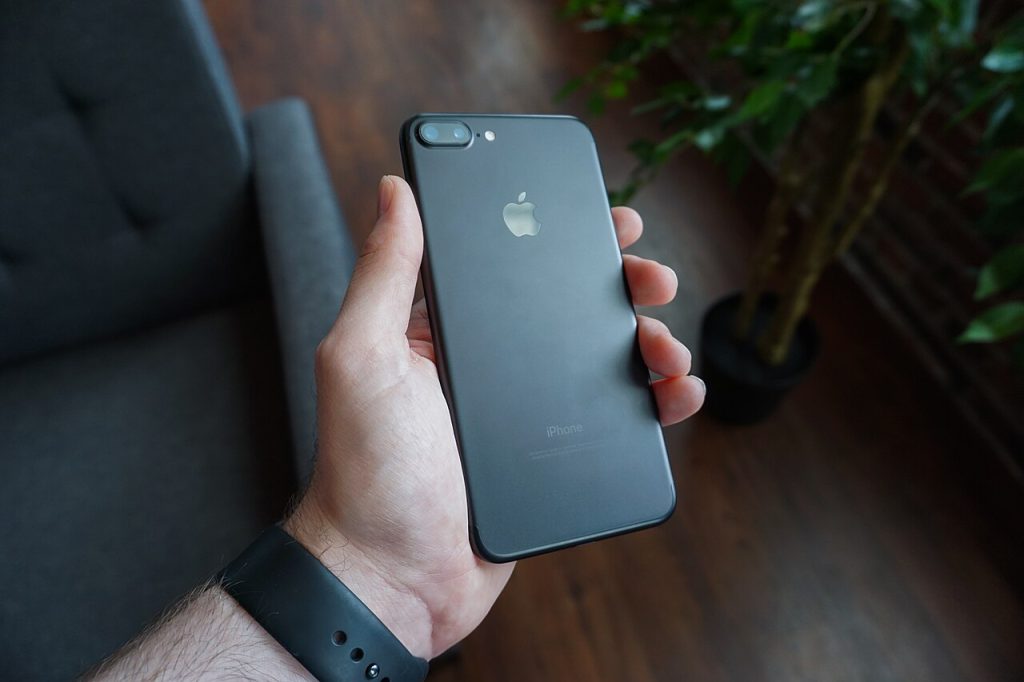
Featured image: Black smartphone in hand (Unsplash).jpg by Dennis Cortés cortes, CC0, via Wikimedia Commons.