Few technologies are explained worse than quantum computing. You hear that it will break all encryption, cure diseases and make today’s machines obsolete, all by next Thursday. The truth is more interesting and more modest. Quantum computers are real devices that work very differently from the laptop on your desk, and experts themselves are unsure about parts of the story.

Here is a plain guide, including the uncertain bits.
The core idea
Ordinary computers use bits, each of which is either zero or one. Quantum computers use qubits. Thanks to quantum physics, a qubit can exist in a blend of states until it is measured, and several qubits can be linked in a way that has no everyday equivalent, called entanglement.
A popular but misleading description says a quantum computer tries every answer at once. It does not. What it can do is set up a calculation so that wrong answers cancel each other out and right ones are reinforced, much like waves that add up or cancel. Designing algorithms that exploit this is difficult, and it only helps for certain kinds of problem.
What makes them so hard to build
Qubits are fragile. Heat, vibration, stray radiation and even the act of looking at them can destroy the delicate state that makes them useful. This loss is called decoherence, and it is the central engineering headache.
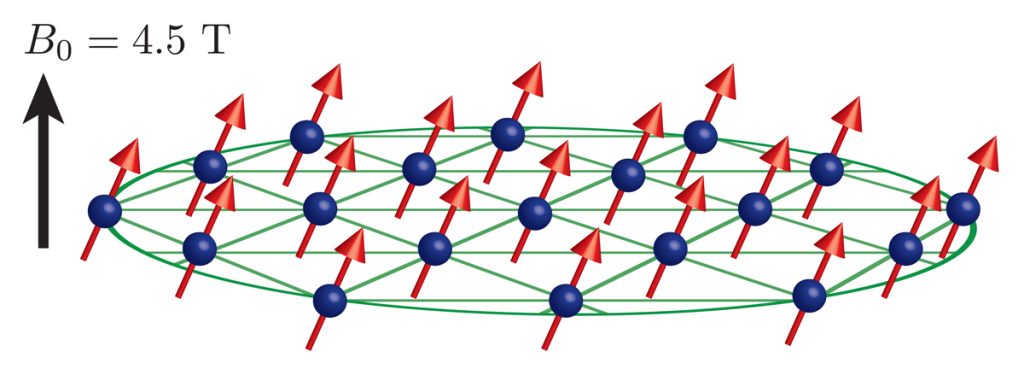
Different teams build quantum computers in different ways. Some cool tiny superconducting circuits to extremely low temperatures. Others trap individual charged atoms with lasers, or use particles of light. Each design has strengths and weaknesses, and nobody can yet say which will win, or whether several will coexist.
Errors are the other obstacle. Today’s machines make mistakes frequently, so researchers work on error correction, which spreads one reliable piece of information across many physical qubits. The overhead is large. Useful machines may need far more qubits than we have now, and getting there is an engineering marathon rather than a sprint.
What they might be good at
The areas most often mentioned are fairly specific.
Simulating nature is the most natural fit. Molecules and materials follow quantum rules, so quantum computers could model them more directly than a classical one. That could eventually help with chemistry, battery materials and drug research, though the timeline is uncertain.
Certain optimisation and search problems may also see gains, although the size of the advantage is debated and often smaller than headlines suggest. And there is cryptography. A sufficiently large quantum computer could in principle break some widely used public-key encryption methods. No machine today comes close to that, but security experts take it seriously enough that new, quantum-resistant methods are being developed and standardised now, since sensitive data stolen today could be read later.
One way to picture the gap: a classical computer is like a very fast reader who checks one path through a maze at a time. A quantum computer is more like someone who can arrange the maze so that wrong turns fade out. That image is imperfect, but it is closer to the truth than the idea of trying every route simultaneously.
Quantum computers: what they are not
A quantum computer will not replace your phone or laptop. For everyday jobs like email, video or spreadsheets, classical machines are faster, cheaper and far more reliable. The likely future is hybrid, with quantum processors acting as specialised accelerators for narrow tasks, accessed through the cloud.
Quantum computers will also not speed up everything. For many problems there is no known quantum advantage at all.
Be careful with claims of “quantum supremacy” or “advantage”. These usually mean that a device completed a carefully chosen task faster than a classical computer could, and the task may have little practical use. Such results are real scientific milestones, and rival teams often respond by finding faster classical methods. Both sides push each other forward, but a milestone is not a product.
How to read the news
When you see a quantum headline, ask a few questions. How many qubits, and how good are they, since quality matters more than count? Was the task useful or a benchmark? Does the claim come with a peer-reviewed paper or only a press release? And what does the team itself say remains unsolved?
You might also notice who benefits from the hype. Funding, stock prices and recruiting all reward excitement, so a dose of scepticism is healthy. That does not mean the field is empty. Serious scientists are making steady progress on qubit quality, error correction and software.
If you want to learn more, several companies offer free cloud access to small quantum devices, along with tutorials, so you can run a simple circuit yourself. It is a good way to replace mystique with understanding.
For wider context on quantum computers, the Wikipedia article on quantum computing is a neutral place to start. To keep reading here, try Quantum Computers in Plain English: Real Uses, Real Limits or AI Customer Service Agents: What They Are and How to Judge Them.
The honest summary is this: quantum computing is a promising and genuinely strange technology, probably useful for a limited set of problems, and still some distance from changing daily life. Anyone who tells you exactly when is guessing, so keep your curiosity switched on and your expectations calm.