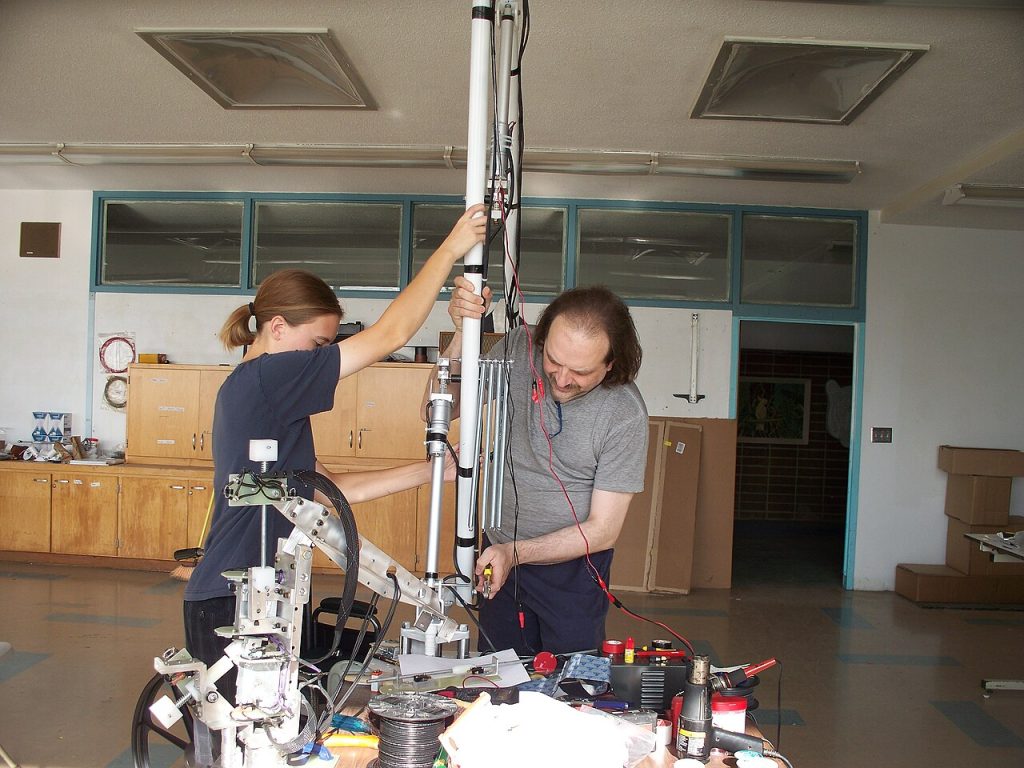
A chatbot can write a poem in seconds. Ask a robot to fold a towel it has never seen, in a kitchen it has never visited, and you may watch it struggle for minutes. That gap is why “physical AI” has become a popular label for research that tries to bring the flexibility of modern language models into machines that move, grasp and navigate real spaces.
In this article
The term is broad and often used with more confidence than the results justify. Here is what it points to and why the problem remains stubborn.
From single-purpose machines to general learners
Traditional robots are brilliant at repetition. A welding arm on a car line does the same motion thousands of times with great precision. But it works because engineers fixed the environment: parts arrive in the same place and the lighting never changes. Move the part a few centimetres and the robot fails.
Foundation models suggest another path. In language, a single large model trained on huge amounts of text can be adapted to many tasks. Researchers wonder whether the same recipe can work for robots: train one large model on lots of data from many machines and tasks, then adapt it to new jobs with limited extra training.
The ingredients are usually a vision component to interpret camera images, a language component to understand instructions like “put the cup in the sink”, and an output that turns all that into motor commands. Some systems learn from demonstrations, where humans guide a robot through a task. Others learn from video of people, from simulation, or from the robot’s own trial and error.
Why the physical world is harder than text
There are several reasons robots lag behind chatbots, and they are worth understanding.
Data is scarce. The internet holds an enormous amount of text. It does not hold an equivalent library of robot actions paired with sensor readings. Collecting that data means running real machines, which is slow, costly and sometimes damaging to the machines.
Mistakes have consequences. A wrong word in a paragraph can be edited. A wrong move by a robot can drop a plate, jam a mechanism or hurt someone. This forces caution and slows how quickly systems can be tried out.
The world is messy. Objects vary in shape, weight and slipperiness. Lighting changes, floors are uneven, people walk into the frame. Small differences in how a hand grips a soft item can change the outcome entirely. Humans handle this with a lifetime of bodily experience that is difficult to reproduce in software.
Hardware matters too. Even a clever model is limited by the sensors, joints and grippers it controls. Delicate touch, speed and strength all depend on the machine, not only the software.
Finally, there is the matter of speed. A robot must react in fractions of a second to stay stable, which constrains how large and slow a model can be.
A kitchen makes the point nicely. Picking up a mug sounds trivial, yet it involves recognising the mug among clutter, judging its handle angle, choosing a grip, feeling whether it is slipping and adjusting the force, all in a moment.
Add a different mug, a wet counter or a person reaching past, and every step can go wrong. Humans do this without thinking. A robot has to learn each piece, and then learn to combine them smoothly.
That is why many teams are cautious in how they describe their work. Calling something a foundation model for robots is an aim, a direction of travel, more than a finished product.
Physical AI: what progress looks like
Gains so far have been real but specific. Researchers have shown robots following spoken or written instructions across a range of simple tasks, reusing skills in new settings, and benefiting from data shared between different robot types. Simulation helps by letting software practise millions of attempts without wear and tear, though what works in a simulator does not always transfer to reality.
It is wise to read demonstrations carefully. A video of a robot completing a task may reflect many tries, a controlled setup, or remote human guidance. A fair evaluation asks how often the task succeeds, in how many different places, and with what level of supervision.
Practical uses are likely to arrive in constrained settings first: warehouses, factories, labs and some kinds of inspection, where the environment is semi-structured and the task list is limited. Homes are far harder, because they are cluttered, varied and filled with fragile things and people.
Why it matters
If robot foundation models mature, the impact could be large. Flexible machines could assist with dull, dirty or dangerous work, support older adults, and help in places where labour is short. They could also change jobs, which raises questions about training, safety rules and who benefits.
Those questions are not for the distant future alone. Standards for testing, liability when something goes wrong, and rules for machines working near people are already under discussion in many places.
For now, a measured view is best. The ambition is real, the research is active, and the obstacles are substantial. When you see a headline promising a robot that can do anything, remember the towel. The distance between impressive and dependable is exactly where physical AI is still working.
Physical AI is about software that has to act in the real world, not only produce text. The Wikipedia introduction to robotics shows how long machines have been learning to move, and physical AI builds on that long history.
Related reading: What an “AI Engineer for the Physical World” Could Actually Mean and World Models in Plain English: How AI Learns to Build and Understand 3D Spaces.