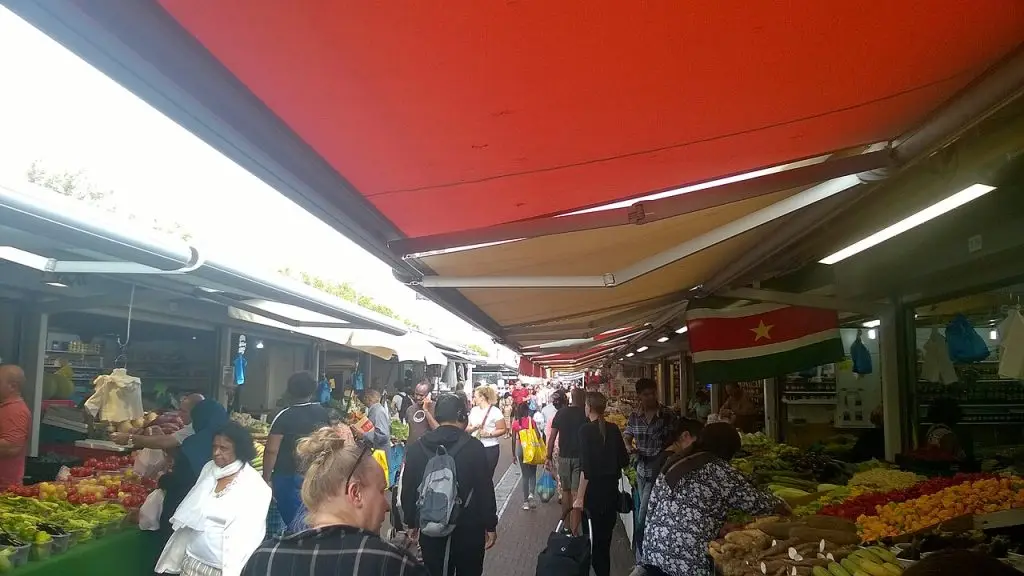
If you want to see ordinary Dutch life at its busiest, go to the Hague Market. Known in Dutch as the Haagse Markt, it is often described as the largest outdoor market in the Netherlands, and one of the biggest in Europe. Hundreds of stalls line the streets near the Herman Costerstraat, selling everything from fresh fish to fabrics.
Hague market: when and where
The market is located in the Schilderswijk and Transvaal area, just west of The Hague city centre, on the Herman Costerstraat and the neighbouring streets. It is open on certain weekdays and Saturdays, with hours that usually run from morning to late afternoon. Opening days and times can change, so look at the official city site before you go. It is closed on Sundays and public holidays.
The market is easy to reach by tram from Den Haag Centraal. Trams stop close to the market area. The station is roughly 15 to 20 minutes’ walk away. Check the public transport planner for the best line on the day.
What makes it special
The Hague Market reflects the diverse population of the city. You will see stalls run by families with roots in Turkey, Morocco, Suriname, Indonesia and many other places. Shoppers speak Dutch, Arabic, Turkish and other languages. Prices are low, and bargaining is not common, but you may find deals if you buy in quantity.
What you can buy
- Fresh produce: fruit, vegetables and herbs sold in big piles, often cheaper than in supermarkets.
- Fish and meat: stalls with halal meat, fish on ice and other specialities.
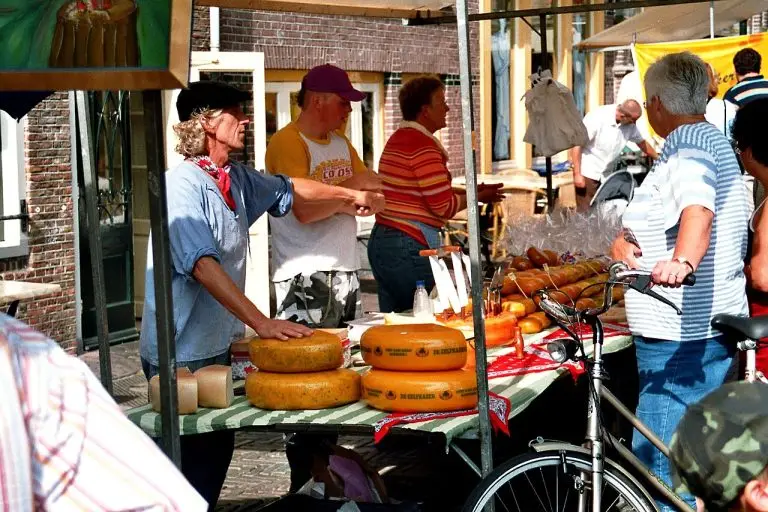
- Cheese, olives and nuts: a good place to stock up.
- Textiles and clothing: fabrics, scarves, household linen and everyday clothes.
- Household goods: kitchen items, toys, bags and cheap electronics.
- Spices and tea: a colourful array for cooks.
What to eat
Street food and market snacks are good value. Look for:
1. Surinamese roti and bakabana: filling dishes from the Surinamese kitchen.
2. Turkish pide and lahmacun: flatbreads with toppings.
3. Moroccan pastries and mint tea: sweet and strong.
4. Dutch classics: a fresh herring sandwich, a warm stroopwafel or fried fish.
5. Fresh fruit juice and dates: good for a quick snack.
Choose stalls that are busy, since locals know where the food is freshest.
Tips for visiting
Go early
The best selection is in the morning, and the crowds grow after lunch. Arrive early if you want the quietest experience.
Watch your belongings
As in any busy market, pickpockets are possible. Keep your bag closed and in front of you, and avoid carrying valuables.
Bring cash and a bag
Many stalls take cash only, although some accept cards. A sturdy shopping bag makes carrying things easier.
Dress comfortably
You will walk a lot, and the streets can be crowded. Wear comfortable shoes.
Be respectful
Photography is fine in general, but ask before photographing people. Stalls are workplaces, not attractions.
Beyond the market
After the market, you can visit the old town of The Hague. The Binnenhof and the Mauritshuis are within reach, and the beach at Scheveningen is a short tram ride away. For something else, visit the Peace Palace or the Panorama Mesdag. The city also has a lively food scene in the Chinatown area near the Wagenstraat.
When to go
The market is open all year, but spring and summer bring more visitors. In winter, stalls sell warm food, and the crowd is smaller. Rain can make the streets busy and muddy, so wear suitable shoes.
Why it is worth a visit
Combining the market with a day in The Hague
Spend the morning at the stalls, then take the tram towards the centre for lunch and a walk past the Binnenhof. In the afternoon you can head to Scheveningen for a walk by the sea. The route gives you a mix of everyday life, politics and beach. If the weather turns, the Mauritshuis, the Panorama Mesdag and several cafés are good places to dry off. Check the opening hours of museums, since some close on Mondays.
The Hague Market gives you a view of the city that you will not get from a museum. It is loud, colourful and generous, and a good place to try food you may not know. Even if you buy nothing, walking through the stalls is an experience that shows how people really live and shop in the Netherlands.
More like this: browse our Netherlands section.