Fusion is the kind of technology that has been thirty years away for about seventy years. Yet interest has surged lately, with startups promising compact reactors and governments funding large experiments. Rather than repeat any company’s claims, this primer explains how fusion power works, where electronics enter the story, and how to read a progress report with a clear eye.
The basic idea behind fusion power
Fusion power starts when two light atomic nuclei merge into a heavier one and release energy. It is what powers the sun. On Earth, researchers usually work with forms of hydrogen, such as deuterium and tritium, and sometimes deuterium with helium-3.
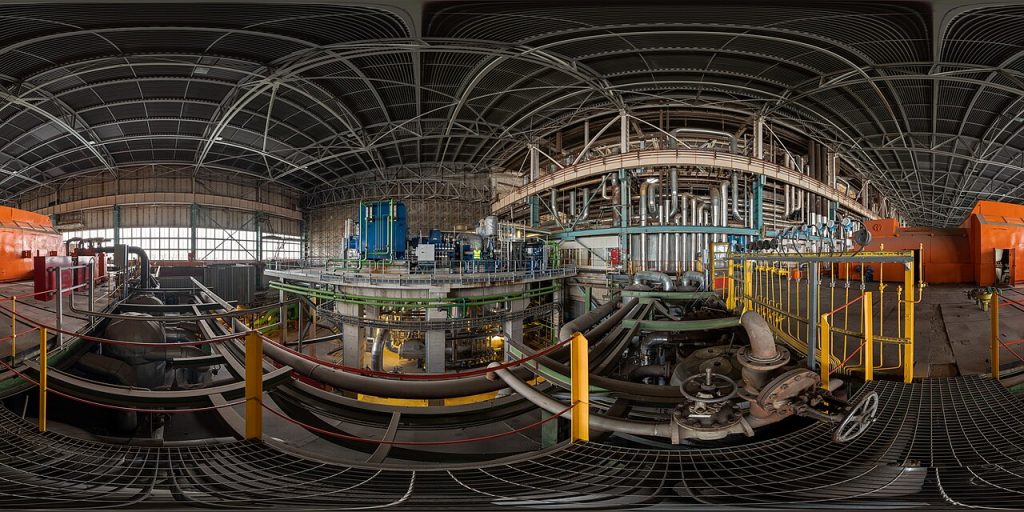
The trouble is that nuclei repel each other. To overcome that, you need extreme temperatures, often above a hundred million degrees, along with enough density and enough confinement time for fusion events to happen frequently. At such temperatures matter becomes plasma, a hot soup of charged particles that no ordinary container can hold.
Two families of approaches
Magnetic confinement uses powerful magnets to hold plasma in a ring-shaped chamber, as in tokamaks. The plasma is heated and kept steady while energy is extracted as heat. Large public fusion power projects have taken this route for decades.
Pulsed and inertial approaches work differently. Instead of holding plasma steadily, they create short bursts. Lasers can compress a tiny fuel pellet, or magnetic fields can squeeze and accelerate plasma. Each pulse releases a small amount of energy, and the machine repeats the cycle many times. Some pulsed designs aim to capture energy directly from the expanding plasma instead of boiling water to drive a turbine.
Why electronics matter so much for fusion power
This is the part that tends to get overlooked. Whatever the approach, the machine consumes and manages huge amounts of electrical energy. Capacitor banks store energy and release it in extremely fast pulses. Switches, often solid-state semiconductors, must handle very high voltages and currents and operate reliably over millions of cycles. Magnet drivers shape the fields that confine or compress the plasma. Energy recovery circuits capture electricity from the machine’s own pulses so it can be reused.
For a pulsed design, the performance, lifetime and cost of these components can decide whether the machine is practical. Imagine a reactor that produces more energy than it uses but needs expensive switches replaced every few days. It is a scientific triumph and a commercial dead end.
That is why advances in power semiconductors can matter for fusion power. Better switches mean higher efficiency, less wasted energy and potentially smaller, cheaper systems. The same family of components runs electric vehicles and grid equipment, so progress in one field can spill into the other.
What “breakeven” really means
You will hear claims about breakeven, and the term has several meanings. Scientific breakeven means the fusion reaction releases more energy than was delivered to the fuel. Engineering breakeven means the whole plant produces more electricity than it uses to run. Commercial viability means the electricity is cheap enough to compete with other sources and the plant runs reliably for years.
A result that hits the first mark can still be far from the third. When you read an announcement, check which one is being claimed, and whether the number refers to the fuel, the machine or the whole plant.
A few more questions help separate patient engineering from marketing. Has the device actually operated, and is there independent verification? What is the plan for fuel supply, given that tritium is scarce and helium-3 is rarer still on Earth? How will materials survive the neutron bombardment that some reactions produce? What are the realistic timelines, and who is paying for them? And does the company publish data for peer review?
A useful mental exercise is to ask where the energy goes. In a pulsed machine, a large bank of capacitors charges slowly, then dumps its stored energy in a tiny fraction of a second. Everything between the wall socket and the plasma has to survive that violence, over and over, without wearing out. The glamorous part of fusion power is the plasma. The part that quietly decides the price of electricity may well be the hardware that feeds it.
It also explains why fusion power news can feel contradictory. One week a laboratory reports a record, the next a skeptic points out that the record excluded the energy needed to run the lasers or magnets. Both can be telling the truth, because they are counting different things.
Why it still matters, and a balanced view
Fusion power could provide large amounts of low-carbon electricity with no long-lived high-level waste and no meltdown risk like conventional fission. Fuel is abundant. If it works, it would complement solar, wind and storage, especially for steady power demand. But it is not going to rescue climate goals in the next few years. Other clean energy sources are available now and should be built now.
It is healthy to hold two ideas at once. The science is real, progress has been genuine, and private investment is speeding up experiments. At the same time, the hardest problems are engineering and economics, and those take time.
When a company says it has a new component that could improve performance, treat it as one piece of a long puzzle. Good for them if the numbers hold up, but wait for data, independent review and a working demonstration before getting excited about fusion power near you.
Related reading: Data Centers in Orbit: What Would It Really Take? and How AI Surrogate Models Are Speeding Up Engineering Simulations.
Photos: Radomianin (CC BY-SA 4.0, Wikimedia Commons); Lauri Veerde (CC BY-SA 4.0, Wikimedia Commons).