
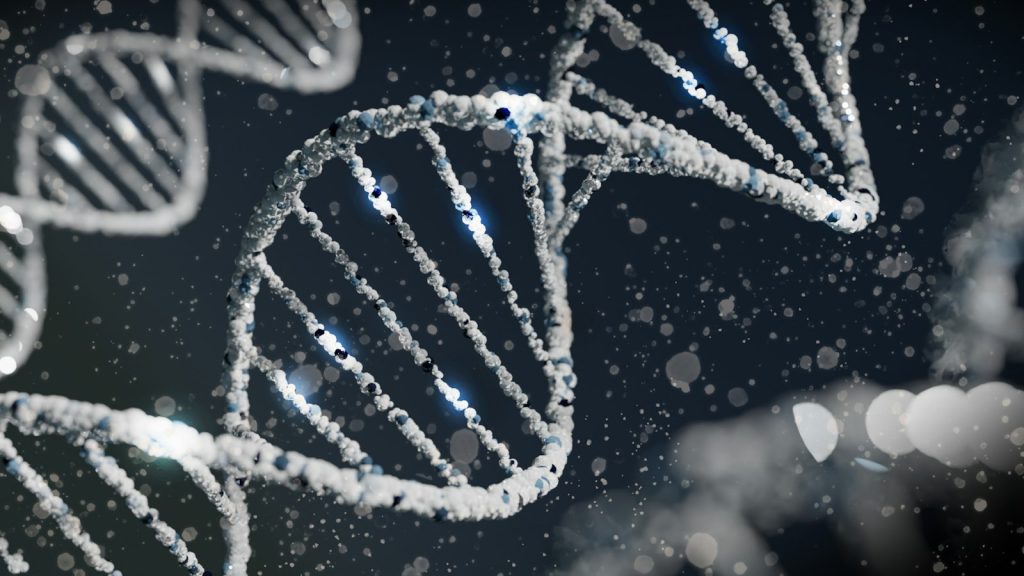
A strand of DNA is a long string of four letters. A protein is a string of twenty kinds of building blocks. Strings of symbols with structure, pattern and context are exactly what language models were built to handle, and researchers noticed. Over the past several years, teams have applied the core ideas behind chatbots to biology, and biology language models are now a serious research tool.
It is an exciting area, and also one where hype can run ahead of evidence. Here is a plain guide to what is going on.
Sequences as text
A language model learns by reading enormous amounts of text and predicting what comes next or what is missing. Do that long enough and it picks up grammar, facts and style without being told any of them.
Biology language models use the same recipe on different data. Instead of sentences, they train on protein sequences, genomes or collections of molecular measurements, and learn which patterns appear together. Certain stretches of amino acids tend to fold into particular shapes. Certain DNA motifs tend to regulate nearby genes. After training, a model can score how plausible a new sequence is, fill in missing parts, or propose variants.
The analogy is useful but imperfect. Human language was made to be understood by humans. Biology was shaped by evolution, with no author and no intention, and much of its logic is still unknown. A model can find statistical patterns in it without anyone fully knowing what they mean.
What biology language models are used for
Protein structure prediction is the best-known success. Systems such as AlphaFold showed that predicting a three-dimensional shape from a sequence could work remarkably well, and it changed how many labs begin projects.
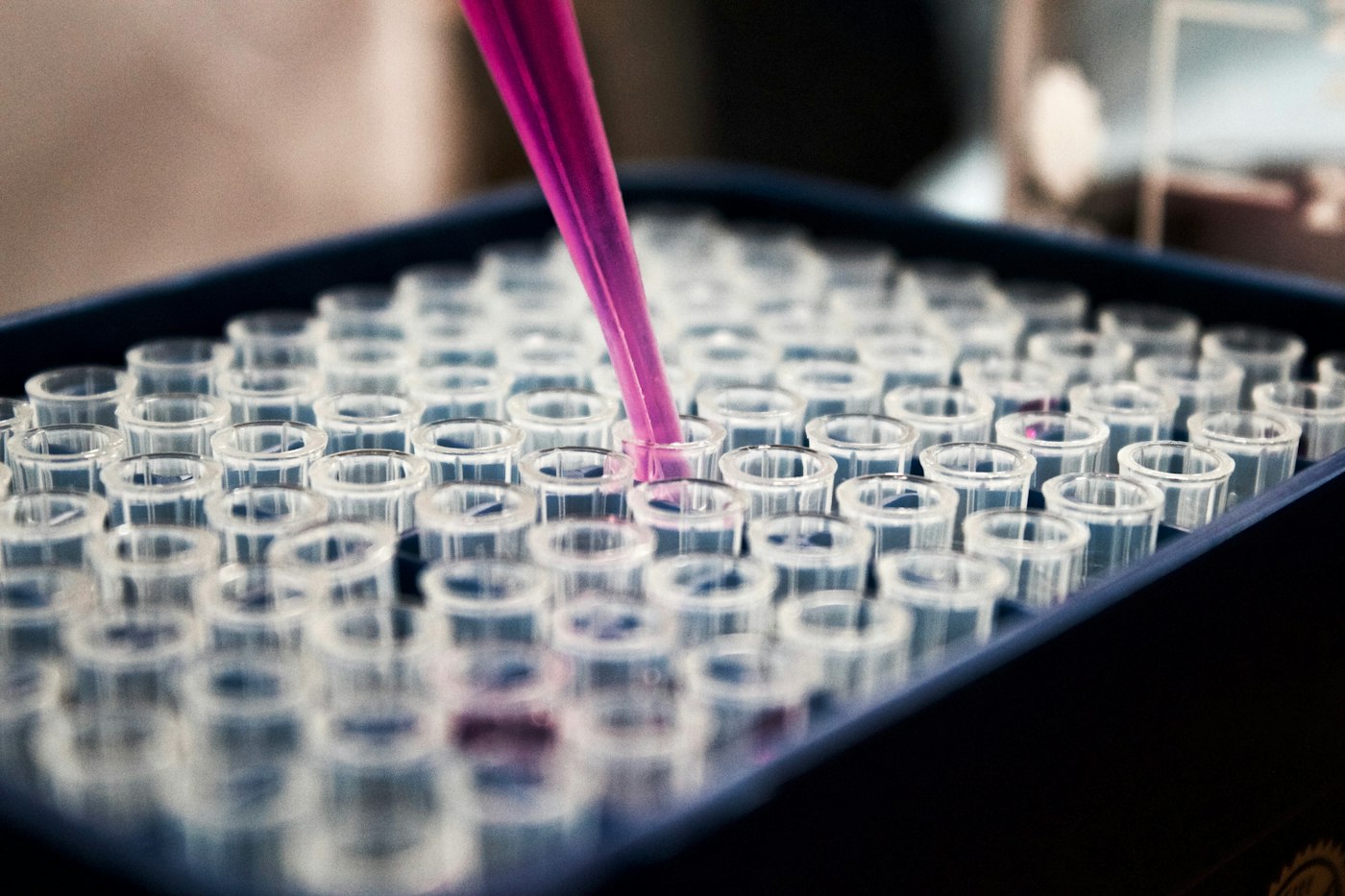
Other uses are growing. Protein design aims to generate new sequences intended to bind a target, work as an enzyme or serve as a therapy. Variant interpretation estimates whether a mutation in a gene is likely harmless or harmful, which helps doctors and researchers sort rare findings. Genomics models try to predict regulatory behavior, meaning which segments switch genes on or off. And in drug discovery, models help narrow a huge field of candidate molecules to a manageable shortlist for lab testing.
In each case the model proposes and the laboratory decides. Predictions still need experiments, because a molecule that looks right on a screen may fail in a cell, in an animal or in a person.
Why biology language models are harder than chatbots
Chatbots have the internet to train on. Biology has less clean data. Experiments are expensive, results vary between labs, and databases contain biases. A model trained mostly on well-studied organisms may do poorly on strange ones. Rare diseases and under-studied populations are underrepresented, so predictions can be less reliable exactly where they are needed most.
There is also the problem of checking answers. If a chatbot writes a bad paragraph, you notice. If a model suggests a protein that folds badly, you may need weeks of lab work to find out. Evaluation therefore depends on careful benchmarks and independent testing, a theme we raised in how to judge a new AI model release.
Finally, models can be right for the wrong reasons. They may latch onto quirks of the training data and appear to generalize when they only memorized. Researchers address this by holding out whole families of proteins during testing, to see whether the model works on things it has never seen.
Where biology language models might help people
The hope is faster, cheaper steps in research. Used well, biology language models act as a filter that saves bench time. A lab might use biology language models to rank a thousand candidate enzymes and test the best twenty. A clinician might use a variant model to flag which unusual genetic result deserves a closer look. Medical technology offers a parallel; our explainer on retinal implants restoring vision shows how years of basic science eventually reach patients.
Realistic expectations help. Drug development remains slow because trials take time and safety matters. Better prediction at the start can reduce wasted effort, but it does not remove the later stages. Expect incremental gains, not overnight cures.
Questions to ask about any claim
When a company announces a breakthrough built on biology language models, a few checks help.
- Was the model tested on data it had never seen?
- Were the predictions confirmed in the laboratory?
- Is the result published or reviewed by independent researchers?
- Does the claim describe a research tool or a finished medicine?
- What are the known failure cases?
Safety matters too. Tools that design proteins could, in principle, be misused, and researchers and policymakers are discussing sensible safeguards, such as access controls and screening of synthesis orders.
The short version: biology language models are a genuine advance for reading and proposing biological sequences, and they will likely become routine lab equipment. They are not oracles. They offer educated guesses at a scale humans could never manage alone, and the value comes when those guesses meet careful experiments. Read the next announcement with that in mind, and you will separate real progress from marketing quickly.



