
Training a large AI model gets the headlines. It takes months, huge clusters and an electricity bill nobody wants to see. But once the model exists, a different problem takes over: serving it to real people. Every time you send a prompt and watch the reply appear word by word, you are seeing the AI inference bottleneck in action, and it shapes what AI products cost and how they behave.
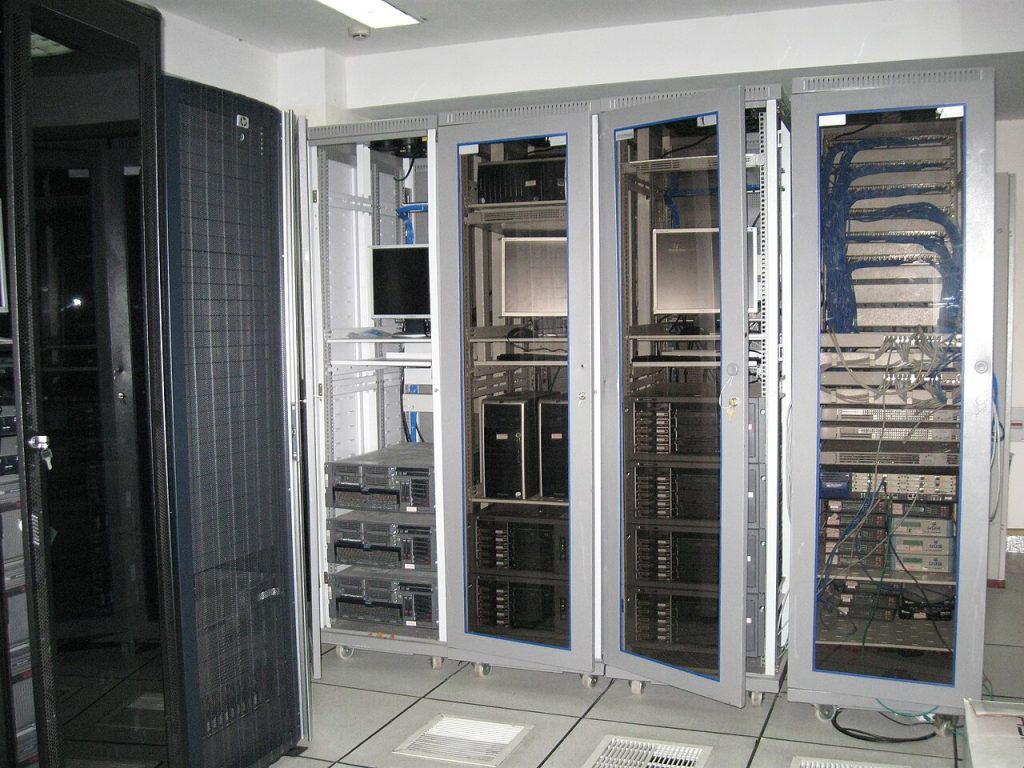
Training versus inference
Training is the learning phase. A model sees vast amounts of data and adjusts billions of internal numbers until its predictions improve. It happens once, or a few times, and it is done by the company that builds the model.
Inference is everything that happens afterwards. You give the trained model an input, and it produces an output. That might be a paragraph of text, a translated sentence or an image. Inference happens every time anyone uses the product, which means it happens constantly and at enormous scale.
A useful comparison is a restaurant. Training is designing the menu and building the kitchen. Inference is cooking each plate while customers wait. The kitchen was expensive, but the daily pressure comes from serving the queue.
This is also why the first word of a reply can arrive quickly while the rest trickles in. The system starts producing output as soon as it has something, rather than waiting to finish the whole answer, which makes the wait feel shorter even though the total work is unchanged.
Where the bottleneck comes from
Large language models generate text one small piece at a time. Each new piece depends on everything before it, so the process cannot easily be split across many workers the way some tasks can. The model has to produce piece one before piece two.
On top of that, the model’s numbers must be fetched from memory over and over. Often the limiting factor is not how fast the chip can calculate but how fast it can move data in and out of memory. A powerful processor can sit idle, waiting for its next batch of information.
Then there is size. Bigger models tend to give better answers, but they need more memory and more work per word. Long conversations add to the load, because the system has to keep track of everything said so far. The result of the AI inference bottleneck is a tension between quality, speed and cost.
Hardware makers are responding as well. Newer accelerators come with faster memory and designs aimed at serving rather than training. Meanwhile, researchers keep finding ways to make models skip unnecessary work, activating only the parts needed for a given input. These ideas are promising, though real-world gains vary by task.
How engineers try to ease the AI inference bottleneck
There is no single fix for the AI inference bottleneck, but several approaches help. One is compression, often called quantisation, which stores the model’s numbers with less precision so they take up less memory and move faster. Done carefully, quality drops only slightly.
Another is using smaller models for simpler jobs. Not every task needs the largest system, and routing easy questions to a lighter model saves a great deal of effort. Related tricks include distilling a big model’s knowledge into a smaller one.
Batching helps too: handling many users’ requests together so the hardware stays busy. Caching saves repeated work when the same context appears again. And specialised chips, designed around memory movement rather than raw arithmetic, aim to reduce the waiting time directly.
Each method involves trade-offs, which is why providers rarely get to say they have simply solved the AI inference bottleneck. Improvements tend to arrive gradually, as a mix of software tricks and better hardware.
A practical takeaway for anyone building with AI: test with realistic usage, not a single demo prompt. Measure how long responses take with long inputs and many simultaneous users, because that is where the AI inference bottleneck shows up most clearly.
AI inference bottleneck: why this matters beyond the engineers
For ordinary users, the bottleneck explains why free tiers have limits, why some tools feel sluggish at busy times and why the most capable models cost more. It also explains why running AI directly on a phone or laptop is such an active area of work: local processing avoids the queue and keeps data on the device, but it requires smaller, leaner models.
For businesses, inference is a running cost, not a one-off. A feature that looks cheap in a demo can become expensive when thousands of people use it daily. Smart teams measure cost per request early and design products around it.
When you see a claim about faster or cheaper AI, ask which part was improved: the speed of the first word, the speed of the full answer, the cost per request, or the quality of the output. They are different measurements, and a gain in one may come at the expense of another. Healthy scepticism, plus a basic grasp of the training and inference split, will help you read these announcements with clear eyes.
For wider context on ai inference bottleneck, the Wikipedia article on machine learning is a neutral place to start. To keep reading here, try Curbside Pickup, Explained: How Stores Make Drive-Up Orders Actually Work or Why AI Labs Keep Raising Billions: It Mostly Comes Down to Compute.
None of this is cause for alarm. It is simply the reality of running a very large piece of software for a very large audience, and it is the reason so much engineering effort is going into making each request cheaper.



