Carbon fiber has a reputation as the material of the future. It shows up in race cars, aircraft, bicycles, rockets and expensive golf clubs. It’s stronger than steel for its weight and doesn’t rust. So why isn’t everything made of it? The answer isn’t the fiber. It’s the way you turn a roll of fabric into a finished part, which is still surprisingly slow, manual and finicky. That gap is the heart of composite manufacturing, and it is where most of the cost hides.
What a composite actually is
A composite combines two materials to get properties neither has alone. In carbon fiber parts, thin strands of carbon give strength and stiffness. A polymer resin, usually epoxy, holds the strands in place and spreads loads between them. Think of reinforced concrete, where steel bars and concrete do different jobs together.
The magic is that you can point the fibers in the directions where the part needs strength. A wing spar can be tuned differently from a bicycle frame, using the same basic material.
The layup process in composite manufacturing
Making a part usually starts with layup. Workers cut sheets of fiber fabric, often pre-impregnated with resin, and place them one by one into a mold. Each layer has a specific orientation. A single part might need dozens of plies stacked in a precise order.
After layup, the part needs to cure, which means the resin hardens through heat and pressure. Aerospace parts often go into an autoclave, a large pressurized oven. Others use vacuum bags, presses or out-of-autoclave methods. The curing step can take hours, and the equipment is expensive.
Why composite manufacturing is hard to scale
- Labor intensity. Placing fabric by hand requires skill. Wrinkles, gaps or misaligned plies can weaken the part.
- Material handling. Pre-preg material must be stored cold and has a limited working life.
- Tooling cost. Molds must be accurate and withstand heat cycles. A new part shape means new tooling.
- Long cycle times. Cure time limits how many parts a factory can make per day.
- Quality control. Defects inside the laminate can be invisible, so inspection uses ultrasound or X-ray techniques.
- Waste. Cutting shapes from flat sheets leaves scrap that’s hard to recycle.
Compare composite manufacturing with stamping a steel part in seconds, or injection molding a plastic one. Composites can’t match that speed yet, which is why they stay in premium products where the weight saving justifies the price.
The automation attempts
Manufacturers have tried to automate in several ways.
- Automated tape laying and fiber placement. Robots lay narrow strips of material along programmed paths. These are common in aerospace, though the machines are costly and best for large parts.
- Robotic pick-and-place. Vision systems and grippers handle flat plies. Fabric is floppy, making it surprisingly hard for robots to grab and position without distortion.
- Faster-curing resins. Chemistry that hardens in minutes instead of hours opens the door to automotive volumes.
- Digital design tools. Software that predicts how fabric drapes over complex shapes helps avoid trial and error.
Newer composite manufacturing companies are combining several of these ideas: software-driven design, robotic cells and flexible tooling, so that small batches of custom parts don’t cost a fortune. If you can make a hundred parts affordably instead of ten thousand, a lot of aerospace, defense, motorsport and industrial customers become reachable.
How composite manufacturing compares with metal and plastic
It helps to put composite manufacturing next to the processes people already know. Metal parts are usually cut, cast, forged or stamped, and the material starts out uniform. A block of aluminum behaves the same in every direction. Plastic parts are typically injection molded, which is fast and repeatable once the mold exists.
Carbon fiber parts, formally called carbon-fiber-reinforced polymer, are different because the material and the part are created at the same moment. You are not shaping a finished material. You are building the material layer by layer, and the fiber direction you choose becomes part of the design. That is powerful, but it means the factory floor is making engineering decisions, not just copies.
This is also why composite manufacturing sits closer to other hard building problems than to ordinary mass production. Readers curious about a similar tension between clever materials and slow, careful construction can look at how 3D printed homes work and why building is hard. In both cases the idea is easy to sketch and the process is where the difficulty lives.
Repair is another difference. A dented metal panel can often be hammered out. A damaged composite panel may look fine on the surface while hiding cracked layers inside, so it is usually inspected, patched with bonded material or replaced. Planning for that is part of any serious composite manufacturing program.
Why investors and customers care
For anyone funding composite manufacturing companies, the appeal is simple. Lighter vehicles use less fuel or energy. Lighter drones fly longer. Lighter rockets carry more payload. For hardware companies in space, defense and electric transportation, every kilogram saved has real value. Yet supply chains for composite parts are often slow and concentrated among a few suppliers, with long lead times. A manufacturer that can quote and deliver in days instead of months would earn attention.
That is why this unglamorous corner of industry keeps attracting capital. Hardware, and composite manufacturing with it, has been out of fashion at times, but the combination of reshoring, defense demand and the push for efficiency has brought it back.
What to watch
Be skeptical of promises. Questions worth asking of any composite manufacturing newcomer:
- Which certifications can they achieve, especially for aerospace?
- How consistent is part quality across batches?
- What happens to scrap and end-of-life parts?
- Can the process handle real design variety, or only a demo part?
Composites will not replace metal everywhere. But where weight and strength matter, anything that makes them faster and cheaper to build opens new products. The next big leap in composite manufacturing probably won’t be a new fiber. It will be a factory that finally makes the old fiber easy to use.
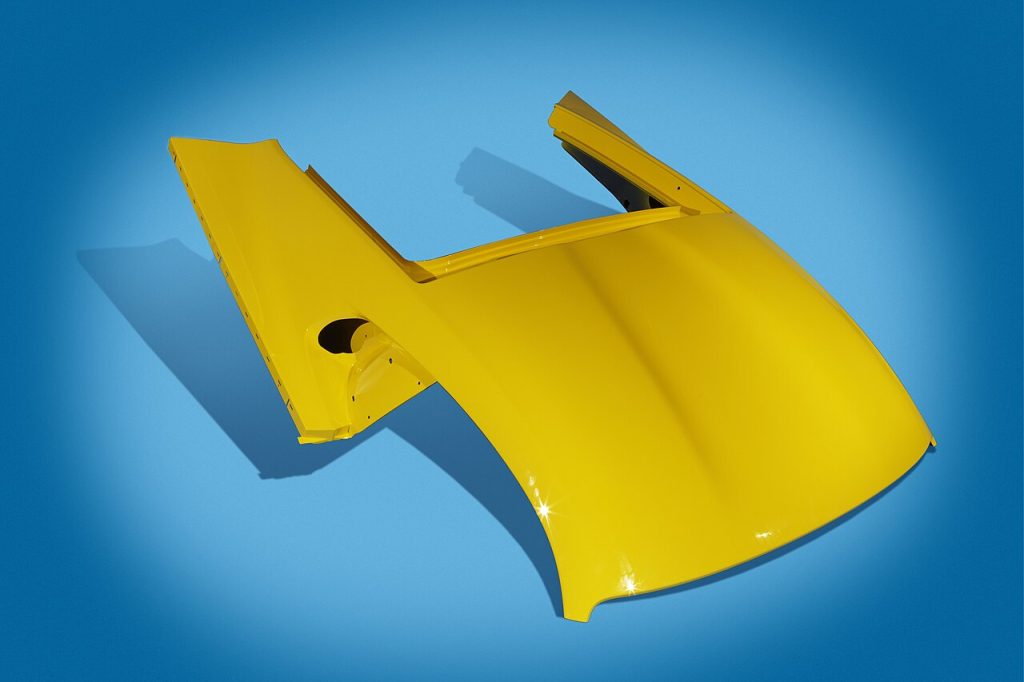
Featured image: ” 13 Fiat-Chrysler – Safety – Carbon Fiber Composite Roof Assembly SRT Viper capote.jpg by spe.automotive, CC BY 2.0 it, via Wikimedia Commons.