The electric grid has an unusual constraint: supply and demand have to match almost exactly, every second. For most of history, power plants were adjusted up and down to follow what customers used. Now we have solar and wind, which produce power when the sun shines and the wind blows, not necessarily when we need it. Grid battery storage helps fill that gap, and understanding how it works makes the energy news a lot easier to follow.
What grid battery storage is, in plain terms
At a basic level, a utility-scale battery is the same idea as the one in your phone or an electric car, just far larger. Thousands of lithium-ion cells are wired together in racks, packed into shipping-container-sized enclosures, and connected to the grid through equipment that converts between direct and alternating current. Cooling systems keep temperatures in a safe range, and software manages charging and discharging.
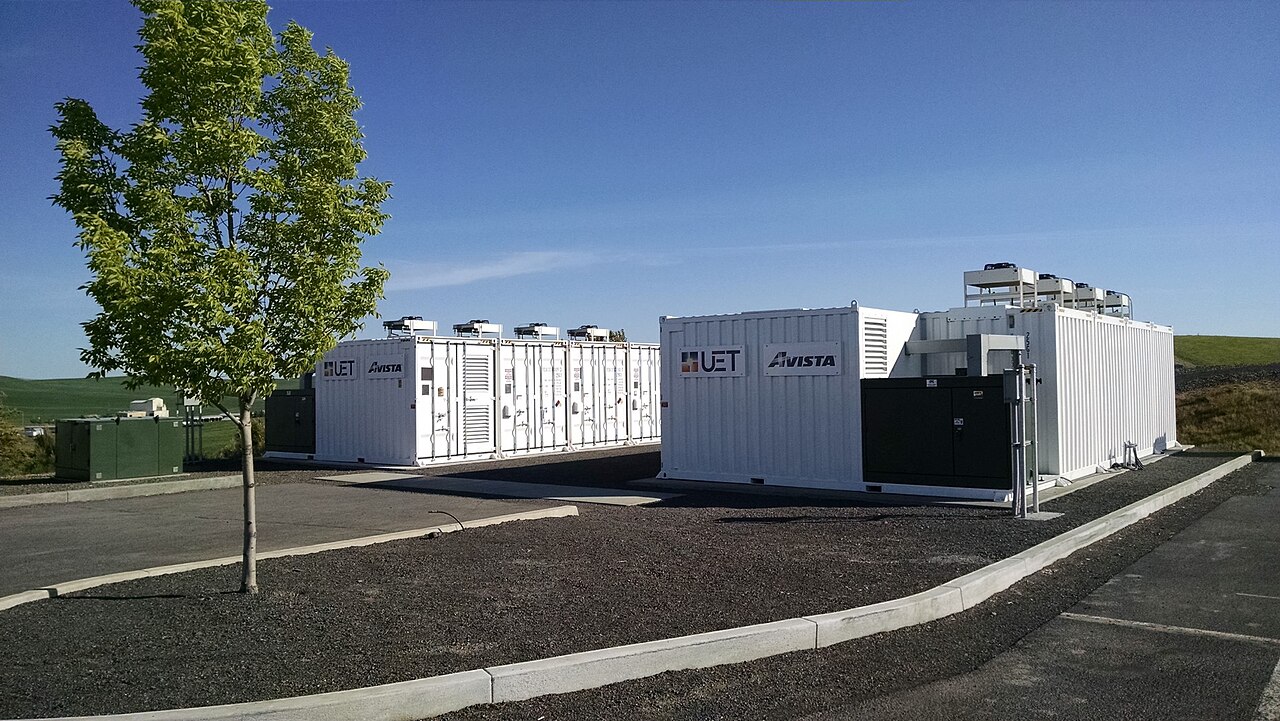
When power is plentiful and cheap, the battery charges. When it is scarce or expensive, the battery discharges and feeds electricity back to the grid. Everything about grid battery storage follows from that simple cycle.
What grid battery storage is used for
Grid batteries do several jobs, and a single installation may do more than one.
Shifting energy in time
Solar farms produce a lot of power in the middle of the day, often more than is needed. A battery can soak up that excess and release it in the evening when people get home and switch on lights and appliances. This is the most talked-about use of grid battery storage.
Smoothing short fluctuations
Grids need their frequency to stay very steady. Batteries can respond in fractions of a second, much faster than a traditional power plant, injecting or absorbing power to keep things stable. This service is called frequency regulation.
Reducing peak demand
On hot afternoons, demand spikes and utilities may have to fire up expensive peaking plants. Batteries can cover part of that peak, which reduces costs and the use of the dirtiest generators.
Backup and resilience
Paired with local equipment, batteries can keep key facilities running during outages. They can also help restart parts of a grid after a failure.
Delaying grid upgrades
Sometimes a local line is congested only a few hours a year. A battery can handle that, avoiding the cost of building new wires.
Why utilities keep buying them
Battery costs fell substantially over the past decade, helped by growth in electric vehicles and mass manufacturing. At the same time, more renewable energy created more demand for ways to balance it. Grid battery storage also installs faster than most power plants, often within a year or two, and it can be placed in many locations, including right beside the solar farm it supports.
Another reason is flexibility. Grid battery storage can also be built in small steps. A utility can add a unit, see how it performs, and then add more, which is easier to plan than a huge plant that takes years before it delivers anything. A battery earns value in several ways at once, which helps the economics. A system that shifts evening power and also provides fast frequency response can be worth more than one doing either job alone.
What grid battery storage cannot do
It is easy to oversell batteries, so a few honest limits are worth knowing:
- Duration. Most grid batteries today discharge for a few hours. They are good for evening peaks, not for a week-long lull in wind and sun.
- Not a generator. A battery stores power made elsewhere. It only helps if there is enough clean energy to charge it.
- Materials and supply chains. Mining and manufacturing have environmental and social costs, and supplies can be tight.
- Aging. Cells lose capacity over time and repeated cycling, so operators plan for replacement or refurbishment.
- Safety. Large batteries need careful design, monitoring and fire protection. Incidents have happened, and standards keep evolving.
Heat is another factor. Batteries perform best within a modest temperature band, so large sites rely on air or liquid cooling, and in very hot or cold climates that equipment uses some of the stored energy. Engineers account for this when sizing a project, which is why quoted capacity and usable capacity are not always the same.
Other technologies work alongside batteries for longer durations, such as pumped hydro storage, where water is lifted uphill and released later through turbines. Different tools suit different timescales, and a well-run grid will probably use several.
What to watch in the news
It also helps to remember that storage sits alongside other tools like better transmission lines, flexible demand and a mix of generation types. When you read about a new project, a few details help you judge its significance. Look at both the power rating, which shows how fast it can deliver, and the energy capacity, which shows how long it can keep going. Ask where it is located and what problem it solves. And notice whether it is paired with solar or wind, which usually means it is there to shift energy, not just to react to emergencies.
Grid battery storage is not glamorous. It sits in fenced yards, humming quietly. But it is one of the main reasons a grid with more solar and wind can still keep the lights on after sunset, and that makes it one of the more important, if unsung, pieces of the energy transition.
For a neutral background reference, the Wikipedia article on Grid energy storage is a useful place to start.
Related reading: How Online Marketplaces Work, and Why Big Retailers Buy Them and Buying a Home Network Storage Box: What Really Matters.