The banner is always the same sort of thing: a stark graphic announcing that a domain has been seized by law enforcement, with agency logos lined up across the bottom. Within days, sometimes hours, a lookalike site appears elsewhere, claiming to be the original reborn. Anyone who follows cybercrime has seen the cycle many times, and hacking forum takedowns have become a routine part of it.
It prompts an honest question. If hacking forum takedowns happen so often, why do they keep returning, and are the operations pointless? The answer is more interesting than yes or no.

What hacking forum takedowns physically mean
When police announce they have taken over a criminal website, several different things can have happened, and the wording rarely makes clear which.
Most commonly, authorities obtain a court order and redirect the domain name so visitors reach a notice page. That is cheap and fast, but the underlying servers and database may still exist somewhere else.
In deeper cases, they seize the servers themselves through cooperation with hosting providers in other countries. This gives investigators the user database, private messages, payment records and logs of connections. That material is the real prize, because it identifies people.
Sometimes the site stays up under police control for a period, quietly collecting information before the announcement. The notice page then marks the end of the covert phase.
Why the forum itself is the easy part to replace
A forum is just software and a database. Anyone with modest skills can install forum software on a rented server in an afternoon. What cannot be rebuilt quickly is reputation and membership. Criminals trade on trust: who delivers real data, who scams, who is an informant. A new site starts with none of it.
So when a successor appears, the first problem its operators face is persuading the community to come back. Seizures make that harder than it sounds, because every user now knows investigators may hold the old member list. Some stay away for good. Others migrate to encrypted chat apps and invite-only channels, which are more fragmented and harder for newcomers to find.
That fragmentation is arguably the real effect of hacking forum takedowns. It does not end the market, but it adds friction.
Consider what a successor site has to do. It needs a new domain, new hosting that will not cooperate with police, a way to take payments, and moderators who can tell buyers from undercover agents. Each requirement is a place where a mistake can happen. Operators who ran the old site often get more careful, but also more suspicious, and suspicion slows down any marketplace that depends on strangers trusting each other.
There is a practical cost on the defender side as well. Every time a takedown exposes a user database, investigators and companies can check which stolen credentials appeared, notify victims and block reuse. That is slow, unglamorous work, but it is where much of the lasting benefit of the cybercrime response comes from.
How investigations actually proceed
Behind most hacking forum takedowns, detection of forum administrators and heavy sellers usually comes from ordinary mistakes, not exotic hacking. A reused username. An email address tied to an early registration. A payment that passed through an exchange that keeps identity records. Photographs with metadata. A slip in a private message. Investigators compile these small errors over months or years, then act on warrants in several countries at once.
Prosecutions then rely on charges such as computer misuse, fraud and trafficking in access credentials. The legal term varies by country, but the pattern is similar: the forum operator is charged both for what they did and for facilitating what others did on their platform.
What reduces the harm after hacking forum takedowns
Arrests of administrators and prolific sellers have a stronger deterrent effect than domain seizures alone, since people are harder to replace than websites. Disrupting the infrastructure around the trade also helps: cutting off payment routes, pressuring hosting providers, and sharing indicators between companies and agencies so stolen credentials can be invalidated sooner.
Notably, the defensive side matters at least as much. A leaked database loses most of its value when affected companies force password resets, enable multi-factor authentication and monitor for misuse. Criminals sell data because it works, which is why credential hygiene, including machine identities and service accounts, matters as much as arrests, and each defensive fix lowers the price it can fetch.
What ordinary people should take from this
After hacking forum takedowns, the data does not vanish. If your information was in a breach posted on one of these forums, the takedown does not remove it. Copies persist. Assume exposed data is permanently available and act accordingly:
- Use a unique password for each account, kept in a password manager.
- Turn on multi-factor authentication, preferably with an authenticator app or security key rather than text messages.
- Watch for phishing that references details only a breach would reveal.
- Consider a credit freeze if financial identifiers were involved.
If you want a calm, step-by-step plan for the first day after you learn your details were exposed, this guide on what to do after a data breach is a good starting point.
Hacking forum takedowns make for satisfying headlines and they do cause real damage to the people involved. But the market for stolen data will only shrink when stolen data stops being useful, and that part is up to the rest of us.
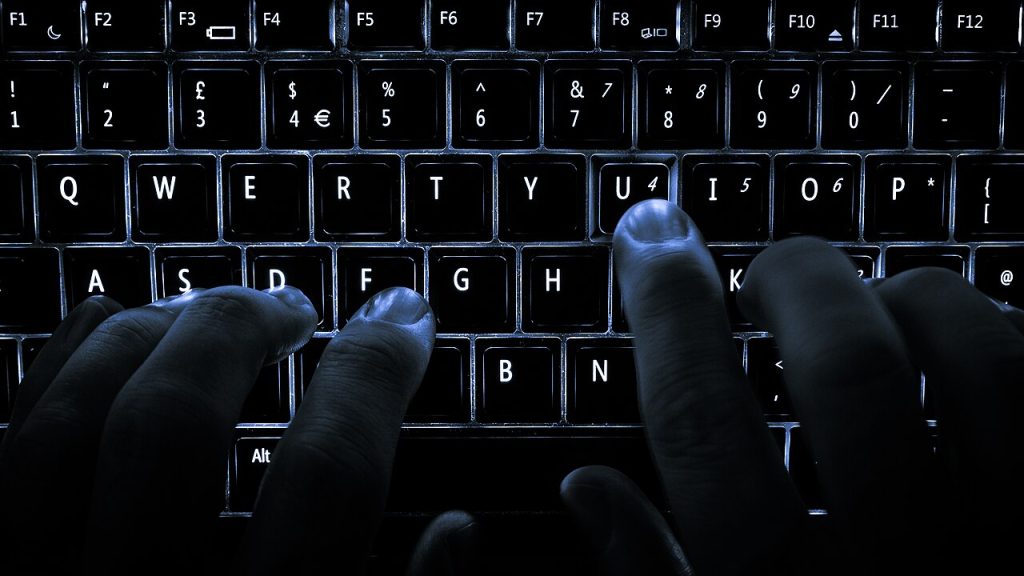
Image: Colin / Wikimedia Commons, CC BY-SA 4.0.