
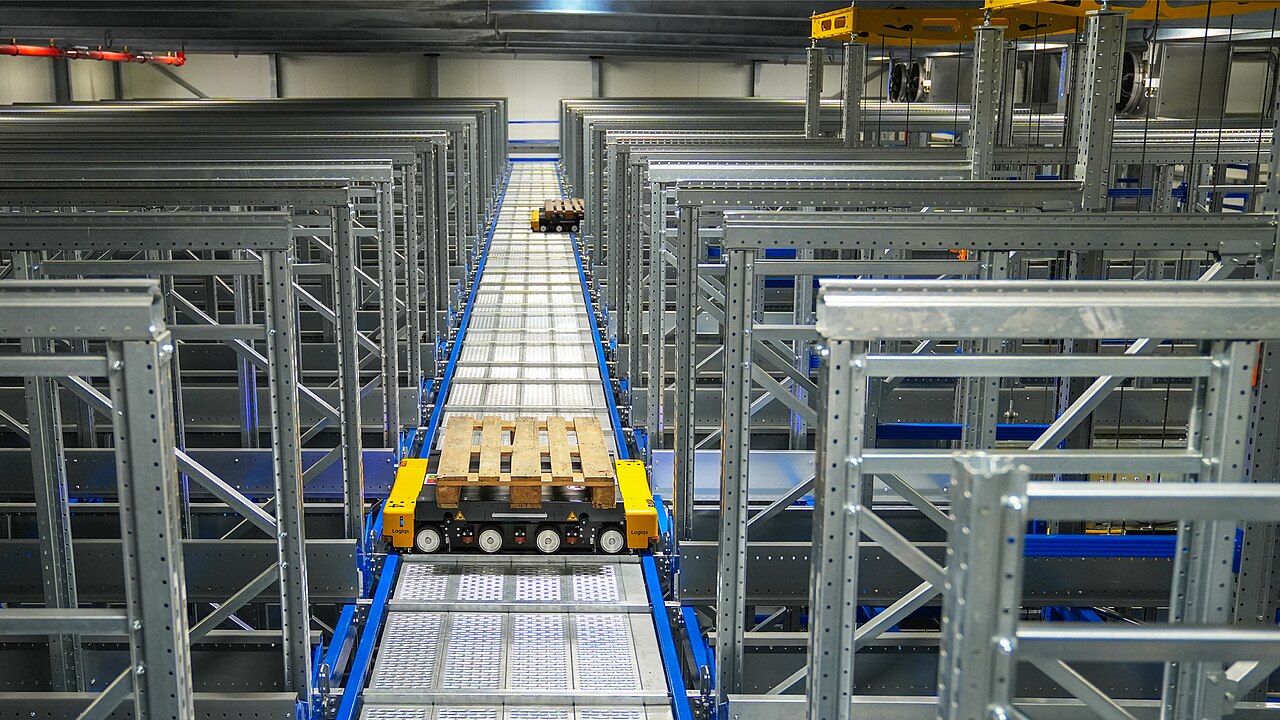
Consider a warehouse robot rolling down an aisle at walking pace. A person steps out from behind a shelf. The robot has a fraction of a second to notice and stop. If its decision had to travel to a remote data center and back, a hiccup in the wireless connection could be the difference between a pause and a collision. That is the plain, physical case for edge computing for robots.
What edge computing for robots means in practice
Edge computing simply means running the computation close to where the data is produced, on the device itself or on a nearby unit, instead of sending everything to the cloud. A robot’s cameras, lidar sensors and motion controllers generate a stream of data far larger than it would make sense to upload constantly. Edge computing for robots means processing it onboard, which turns raw signals into decisions in milliseconds.
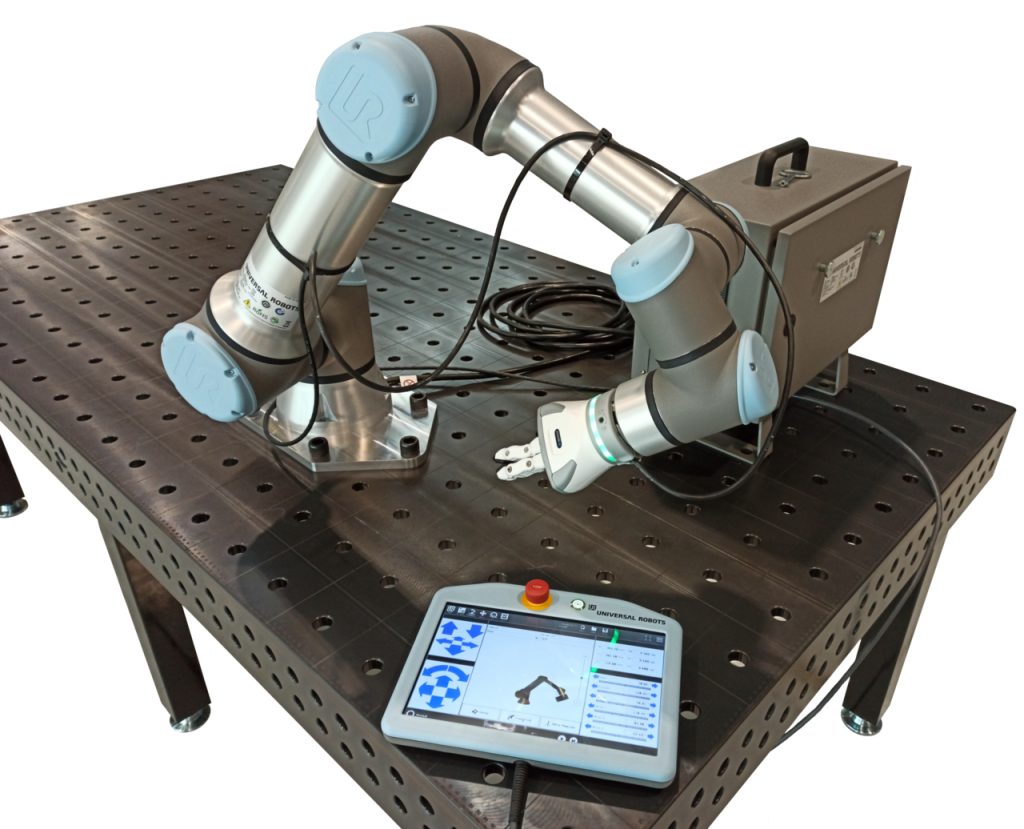
The device in question is usually a compact computing module that combines a general-purpose processor with a graphics or neural accelerator, designed to run machine learning models within a tight power and heat budget.
Three reasons for edge computing for robots
Latency. Control loops for movement, balance and obstacle avoidance run many times per second. Network delay isn’t just slow here, it’s unpredictable, and unpredictability is worse than slowness for safety.
Reliability. Factories, farms, mines and hospital basements have patchy connectivity. A robot that stops working when the signal drops is a poor employee. Local processing lets it continue its task and sync later.
Bandwidth and privacy. Streaming high-resolution video from many machines is expensive. And in places such as hospitals or homes, keeping images on the device avoids sending sensitive footage anywhere.
The engineering trade-offs of edge computing for robots
Putting a powerful computer into a moving machine brings constraints that cloud engineers rarely face. Power is the first: a battery-powered robot has to balance computing capability against runtime, because every watt spent thinking is a watt not spent moving. Heat is next. A small enclosure with limited airflow can throttle a processor that runs hot. Size, weight, vibration and dust all matter.
Then there is the model itself. A neural network trained on big servers is often too large for an embedded module. Engineers use techniques to shrink it, including quantization, which stores numbers with less precision, and pruning, which removes parts that contribute little. These approaches usually give up a bit of accuracy to gain speed, and the team has to decide what loss is acceptable.
A practical split of work
Real deployments of edge computing for robots rarely choose between edge and cloud. They divide tasks by urgency. Time-critical functions such as perception, path planning and safety stops run on the robot. Heavier or less urgent jobs run remotely: retraining models on collected data, fleet-wide analytics, map updates, scheduling. Data gathered by robots in the field flows back, improves the model, and a new version is pushed out to the fleet.
This loop is one of the quieter advantages of connected robots. A rare situation encountered by one machine can help all of them, provided the updates are tested carefully before rollout.
Choosing hardware for edge computing for robots
- How many camera or sensor streams must be processed at once, and at what frame rate?
- What is the power budget, and how does performance change when the module is capped?
- Is the software ecosystem mature enough that your team can use common frameworks and libraries?
- How long will the module be available and supported? Robots have long product lives.
- What safety certifications does the application require?
The software question is often underestimated. A chip that is slightly faster on paper but lacks good tools can cost months of engineering time. Teams tend to favor platforms with strong documentation, community examples and tested drivers for the sensors they plan to use.
Testing is the other half of the job. Teams usually try new perception software in simulation first, then on a closed test area, and only then on a live floor with people around. Each stage catches different mistakes, and skipping one is how a clever demo turns into an unreliable product. Logging what the robot saw and decided at each moment is just as important, since that record is what lets engineers understand a near miss afterward.
The same split between local and remote work appears in cars, where an in-car AI assistant must decide what to handle on board and what to ask the cloud. Data collected from machines in the field is only useful if it is tidy, a point made in this piece on why clean data is the hard part. Anyone new to the idea can start with the general article on edge computing.
Where edge computing for robots is going
As embedded accelerators improve, tasks that once needed a server, like understanding speech or tracking dozens of moving objects, are moving onto the machine. That makes robots more capable in places without good connections and more responsive in busy ones. It also raises new questions about updating and securing thousands of computers that are physically out in the world. A robot with a powerful brain needs equally careful patching, authentication and logging, because a compromised machine is also a moving one.
Image: Auledas / Wikimedia Commons, CC BY-SA 4.0.



