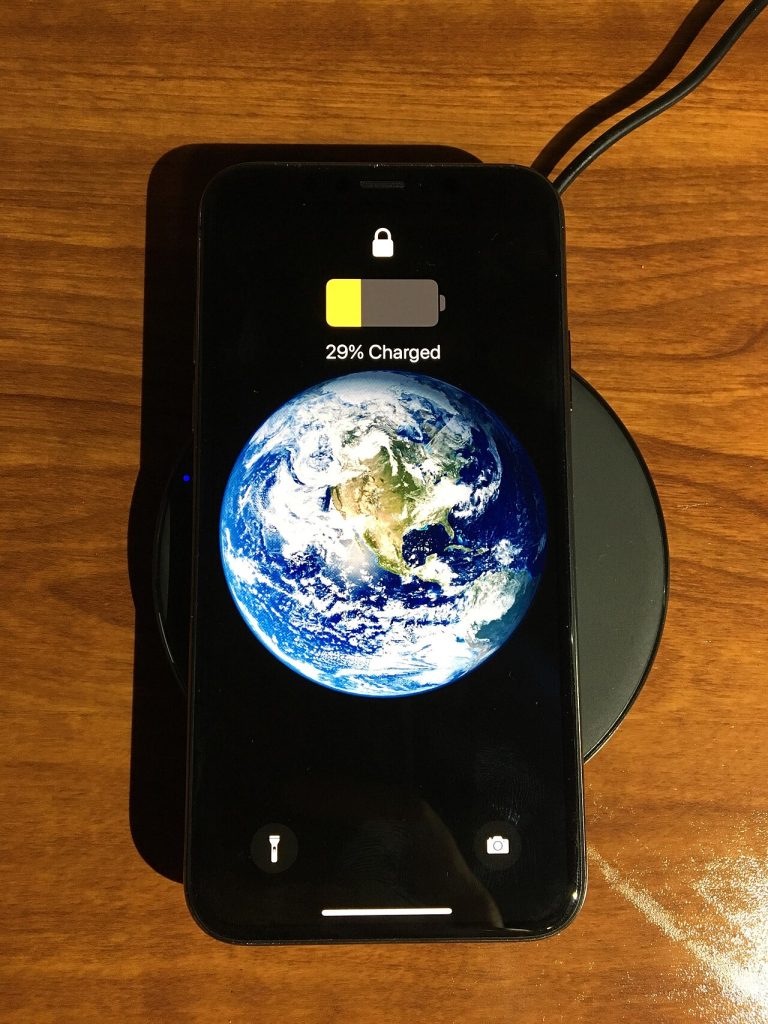
Wireless charging is now common on phones, earbuds, and watches. You set the device on a pad and it begins to charge without a cable. A bigger promise has often been floated too: power that reaches your phone anywhere in the room, with no pad at all. Startups have chased that dream for years. To see why it has been so hard, it helps to understand how today’s pads work and what limits them.
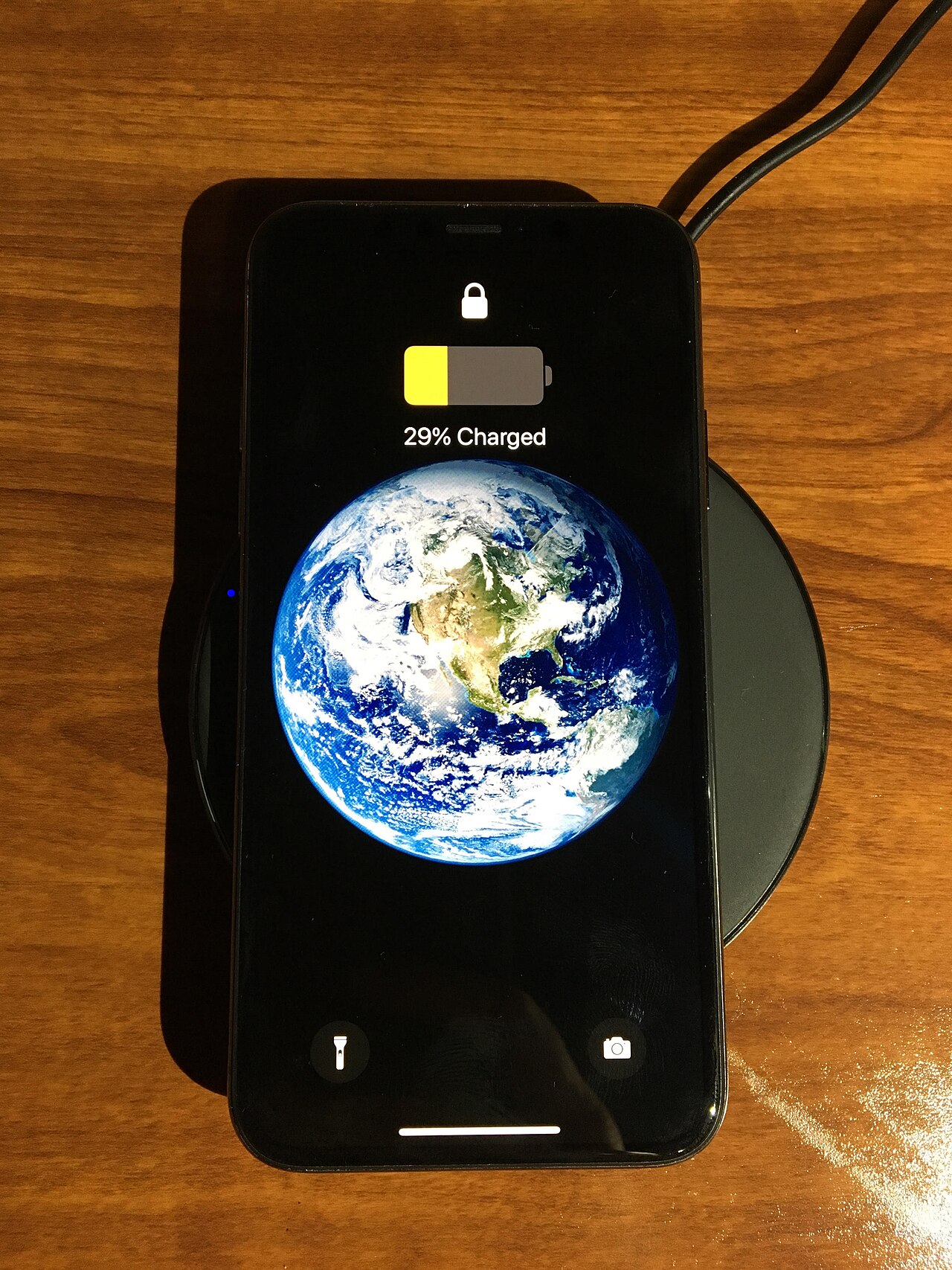
How a charging pad works
Most phone chargers use magnetic induction. The pad contains a coil of wire. When alternating current flows through it, it makes a changing magnetic field. A matching coil inside the phone sits within that field, and the changing field induces a current in the phone’s coil. A circuit converts it into the direct current that charges the battery.
This is the same principle used in electric toothbrush bases and transformers. It works well over very short distances, because the magnetic field weakens quickly as the gap grows.
What Qi is
Qi (pronounced “chee”) is a common standard for this type of charging. A standard matters because it lets a pad from one brand charge a phone from another. Qi defines how the devices communicate, how much power is sent, and safety checks such as detecting a foreign object like a coin on the pad.
Newer versions improved alignment with magnets around the coil, which help the phone snap to the right place, and increased power for faster charging.
Why alignment and contact matter
Because induction needs coils to be close and lined up, a phone placed off-centre can charge slowly or not at all. Thick cases, metal plates, and wallets with metal cards can block or heat up. Some pads have several coils to be more forgiving, and magnetic rings help you place the phone correctly.
Efficiency and heat
Wireless charging loses more energy than a cable, since part of the power turns into heat in the coils and circuits. The loss is small for a single phone, but across millions of devices it adds up. Heat can also stress batteries, so phones slow charging when they get warm. If your phone feels hot on a pad, take off the case or try a cooler spot.
Wired charging is usually faster at the same price level. Wireless is more about convenience: drop the phone on the pad at night and forget about it.
Resonant charging
A related method uses resonance, where the transmitter and receiver are tuned to the same frequency. This allows a larger gap and a bit more freedom of position than plain induction. It has been used in some furniture charging surfaces and in a few products that let you charge through a thin desk top.
The dream of charging across a room
Several companies have tried to deliver power through the air. Ideas have included ultrasound that is converted into electricity, radio waves collected by an antenna, and focused beams of infrared light. The appeal is obvious: a device that charges wherever you are in a room.
The obstacles are physics and safety. Energy spreads out as it travels, so very little reaches a distant receiver unless the beam is focused. Focusing power on a moving target means tracking it, and regulators want assurance that people and pets are safe in the path. Efficiency is another problem: sending a watt and receiving a fraction of it is wasteful and generates heat.
For this reason, long-range charging has found more success in small, low-power uses, such as sensors and tags, than in phones that need several watts.
Practical tips
- Use a certified charger and a good power adapter to get the best speed.
- Remove thick or metal-laden cases if charging is slow.
- Centre the phone on the coil or use a magnetic model.
- Do not put anything metallic between the phone and the pad.
- Keep the pad ventilated.
Looking ahead
Wireless charging will likely keep growing in cars, furniture, and public spaces such as cafes, mostly using the pad concept. Longer-range power for tiny devices might spread first. For phones, a cable will probably remain the fastest option for some time.
Bottom line
Today’s wireless charging is induction: two coils that must be close. It is convenient, though a bit less efficient than a cable. True room-scale charging faces hard physical and safety limits, which explains why it stays a promise more than a product.
Further reading
Related on this site: Chrome OS in Hindsight: What the First Cloud Laptops Got Right and Buying a Tablet With a Built-In Voice Assistant: A Checklist. For general background, see the Wikipedia overview.