
When a financial technology startup files for bankruptcy, the first reaction is often surprise. It had a polished app, a customer list and a funding announcement not so long ago. How does a business like that run out of road? Understanding why fintech startups fail helps customers, employees and founders alike.
The answer lies in the odd economics of putting software on top of money. A fintech is not only a technology company. It holds balances, extends credit, depends on banks and answers to regulators. Each of those adds a way to fail that a typical software startup does not have.

The thin margins behind why fintech startups fail
Many fintech products earn money from small slices of large flows. A business card startup, for example, might make revenue from interchange, the fee merchants pay when a card is used, shared with a partner bank. Those fees are fixed as a percentage and cap what the startup can earn from each customer.
Costs are less forgiving, which is one reason fintech startups fail even while growing. Customer acquisition is expensive in a crowded market, fraud losses are real, compliance staff are not optional, and support for financial issues cannot be skimped. If growth slows or a competitor offers rewards the startup cannot match, the numbers stop working.
The funding model is its own risk
Lending-related businesses need capital to lend. That capital often comes from debt facilities provided by banks or funds under conditions. If loans perform worse than agreed, lenders can tighten terms or demand repayment, and a startup that was fine one quarter is starved the next.
Equity funding has moods too. In times of cheap money, investors reward growth. When rates rise or sentiment shifts, they want profits, and companies built for the first environment struggle in the second. A funding round that fails to close on schedule can be fatal for a company with a high monthly burn.
Here is a simple illustration. A startup offers a cash-back card and promises generous rewards to win customers. Each purchase earns it a small interchange fee, but the rewards cost more than that fee on heavy spenders. Early on, investor money covers the gap. When funding slows, the startup cuts rewards, customers leave, and volume falls further. That spiral is one of the most common ways fintech startups fail.
Why fintech startups fail when partners change
Many fintech brands do not hold banking licenses themselves. They work with partner banks that hold the deposits and run the regulated activities. That arrangement is efficient but creates concentration risk. If the partner bank faces regulatory action, changes strategy or drops the program, the startup may have to scramble.
The same goes for payment processors, data aggregators and card networks. When fintech startups fail, a single contractual change is often the trigger, since it can alter the unit economics overnight.
Warning signs worth watching
If you are a customer or an employee, some signals appear before fintech startups fail.
- Frequent changes to fees, rewards or limits without clear explanation.
- Delays in withdrawals, support responses or statement delivery.
- Leadership departures in finance, compliance or risk roles.
- Pauses in new customer signups or a sudden pivot in product focus.
- Quiet layoffs and a hiring freeze.
- Regulatory notices or public warnings involving a partner bank.
None of these proves a failure on its own, but a cluster deserves attention.
Regulators are part of the picture too. When a firm’s partner or backer comes under official scrutiny, trouble can spread quickly to everyone connected to it, a situation explored in what backers and founders should do when a fund is under federal investigation.
If you are a customer, here is how to protect yourself. Know where your money actually sits. If your balance is held at a licensed bank, check whether deposit insurance applies and under what conditions, since coverage details differ by country and by the structure of the account. Avoid keeping more than you need in any single app. Keep records of statements and transaction history, and download them regularly.
For businesses using a fintech for payroll, cards or payments, maintain a backup arrangement with a traditional bank. Having a second route to pay employees and vendors turns a crisis into an inconvenience.
Moving money out early is often the safest response when warning signs pile up. Payment apps can make that harder than it should be, as this look at sending money between payment apps explains, so test a small transfer before you need to move everything.
What happens in bankruptcy
In a bankruptcy process, a court-supervised procedure sorts out who is owed what. Customer funds held properly in segregated or trust accounts are generally treated differently from the company’s own assets, but the details depend on how accounts were structured and on local law. Customers are often advised to follow instructions from the administrator and file claims promptly.
The lesson across these cases is not that fintech is doomed, only that fintech startups fail for reasons that are mostly visible in advance. It is that the products are built on regulated plumbing, and good intentions and good design cannot replace sound economics. Companies that last tend to be the ones that treated the boring parts, such as capital, compliance and partners, as the main event.
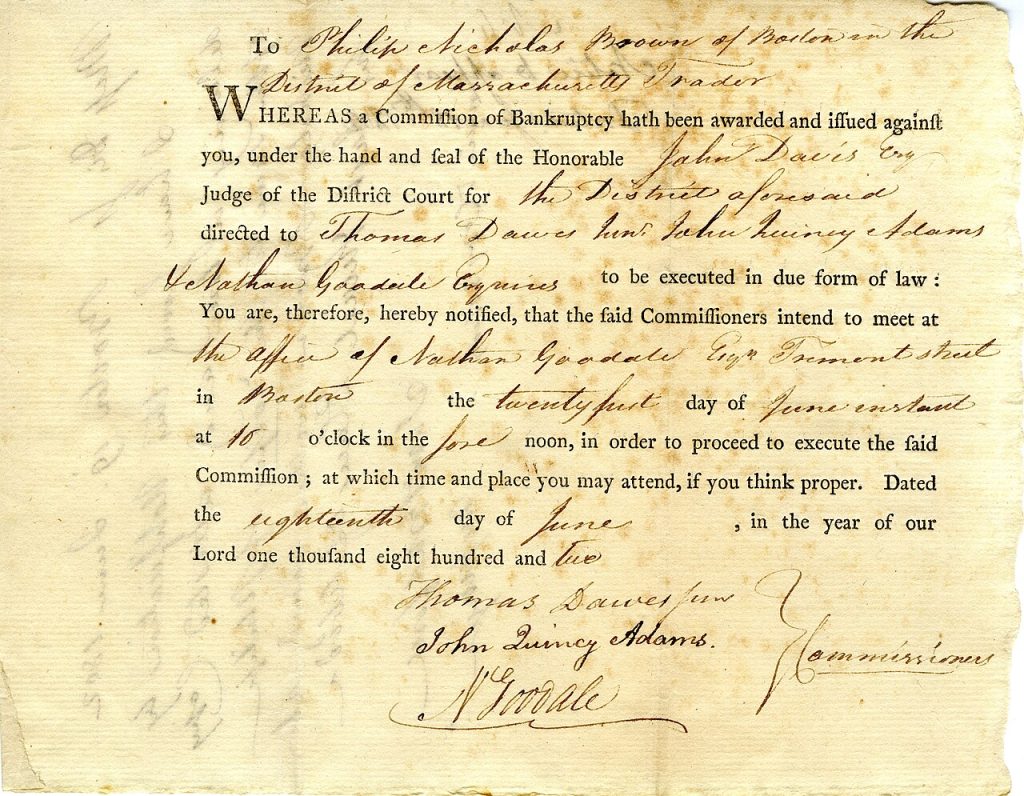
Image: John Davis, John Quincy Adams (Commissioner) / Wikimedia Commons, Public domain.


