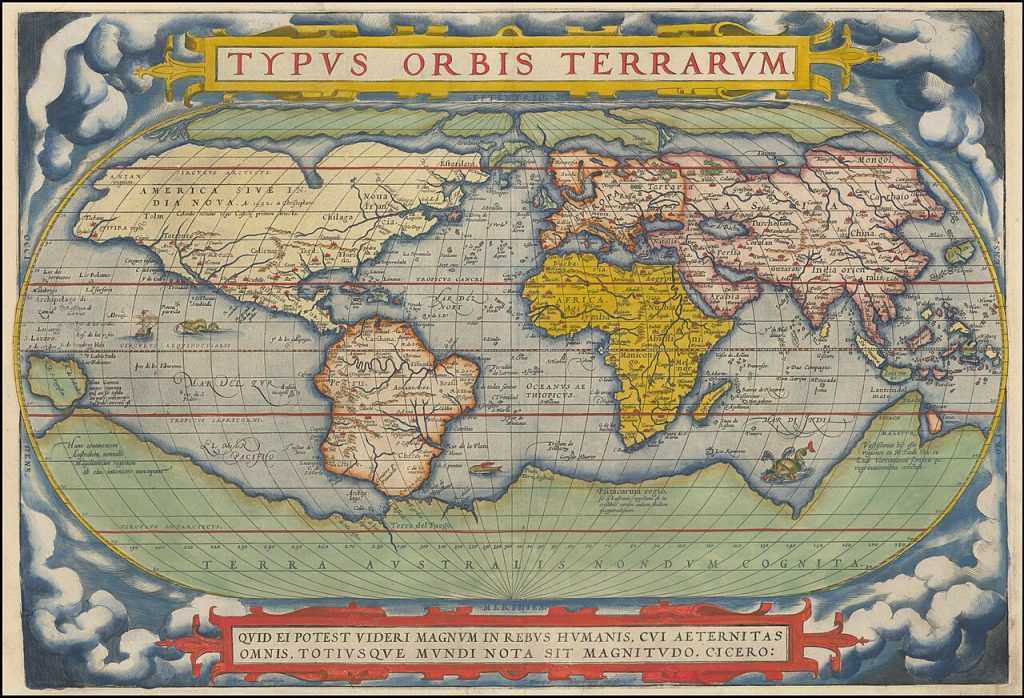
Nobody sets out to build a morning ritual around guessing which country has a particular border shape. Yet that is what happens to a surprising number of people the first week they try a daily geography game, and by the second week they are annoyed if they miss a day.
The pull is real, and it is not an accident. These small puzzles line up with several well-understood quirks of how people learn and form habits.

One puzzle, once a day
The first trick is scarcity. Most games want as much of your time as possible. A daily geography game does the opposite: you get one attempt, it takes a minute or two, and then it is gone until tomorrow. That limit makes it feel like a small appointment rather than a time sink, and it removes the guilt that comes from losing an hour to a game.
Because everyone gets the same puzzle, there is also a shared experience. Friends and coworkers compare results, usually through a compact grid of symbols that gives nothing away. Saying “I got it in three” costs nothing and starts a conversation. The game becomes a way to say hello.
Streaks add a gentle pressure to any daily geography game. Seeing a number that counts consecutive days makes skipping feel like a small loss, which is a very effective nudge, though it is worth noticing when the streak starts to matter more than the fun.
Why a daily geography game works so well
Geography is an unusually good subject for this format. Everyone has some knowledge to start with, since most people can place a few countries, and no one knows all of them. That gap is exactly where a puzzle is satisfying: close enough to feel winnable, far enough to feel like an achievement.
Maps are also visual and spatial, and the brain tends to remember shapes and positions better than abstract lists of names. Seeing the outline of a small island nation and then learning where it sits relative to its neighbors tends to stick in a way that memorizing a table of capital cities rarely does.
Feedback arrives immediately. Many of these games tell you how close a guess was, or in which direction to look, so each wrong answer teaches something. You are effectively learning from a sequence of hints rather than failing at a test.
How to play smarter
Once the novelty of the daily geography game wears off, a few simple habits improve your results and your learning at the same time.
Start with reasoning rather than guessing. If the clue suggests a coastline, rule out landlocked countries first. If the first guess shows that the target lies far to the east, stop considering the western half of the world. Each step should narrow the field, not just try something new.
Learn the large regions before the small details. Knowing roughly where the continents, major seas and big mountain ranges sit gives you a frame, and individual countries then fall into place. Players who skip this step tend to rely on luck.
Use the result afterwards. When you miss, spend thirty seconds looking at the answer on a normal map. Notice its neighbors, its size, what it borders. That short pause turns a lost round into a lasting memory, and over a few weeks you will see your average attempts drop.
Here is a small example. Say the clue points to a country in the south of a continent, and your first guess lands too far north. Instead of picking a random neighbor, think about the lines you already know: rivers, deserts, the shape of the coast. Two minutes of reasoning like that teaches more than ten quick guesses, and you will recognize the same pattern next time.
Playing the daily geography game with someone else also helps. Two people disagreeing about a border will often check the map and remember the answer for good.
Keeping it fun
It is easy to let a streak turn a daily geography game from a pleasant pastime into an obligation. If you notice yourself playing in a hurry while standing in a queue just to protect a number, that is a signal to step back. Missing a day is fine, and most people are surprised by how little it matters.
It can also help to vary the experience. Many players mix the daily geography game with an occasional longer session on a flag or capital quiz, or try a version focused on a region they know less about. Teachers and parents sometimes use a daily geography game as a warm-up for a lesson, because it takes only a minute and gets everyone looking at a map.
The deeper lesson is that small, regular, low-pressure practice often works better than occasional heroic effort. Geography is just a pleasant place to see that principle in action. A minute a day will not make you an expert by next week, but a year of it will leave you with a mental map that many adults never develop.
So if a daily geography game has become part of your routine, there is no reason to feel silly about it. You are doing something that educators have long recommended: showing up briefly, regularly, and paying attention.
Related reading: When Your Music App Shuts Down: How to Save Your Library and Why Streaming Prices Keep Rising and How to Cope.
Photos: Abraham Ortelius (Public domain, Wikimedia Commons); Hugo LUC (CC BY-SA 4.0, Wikimedia Commons).