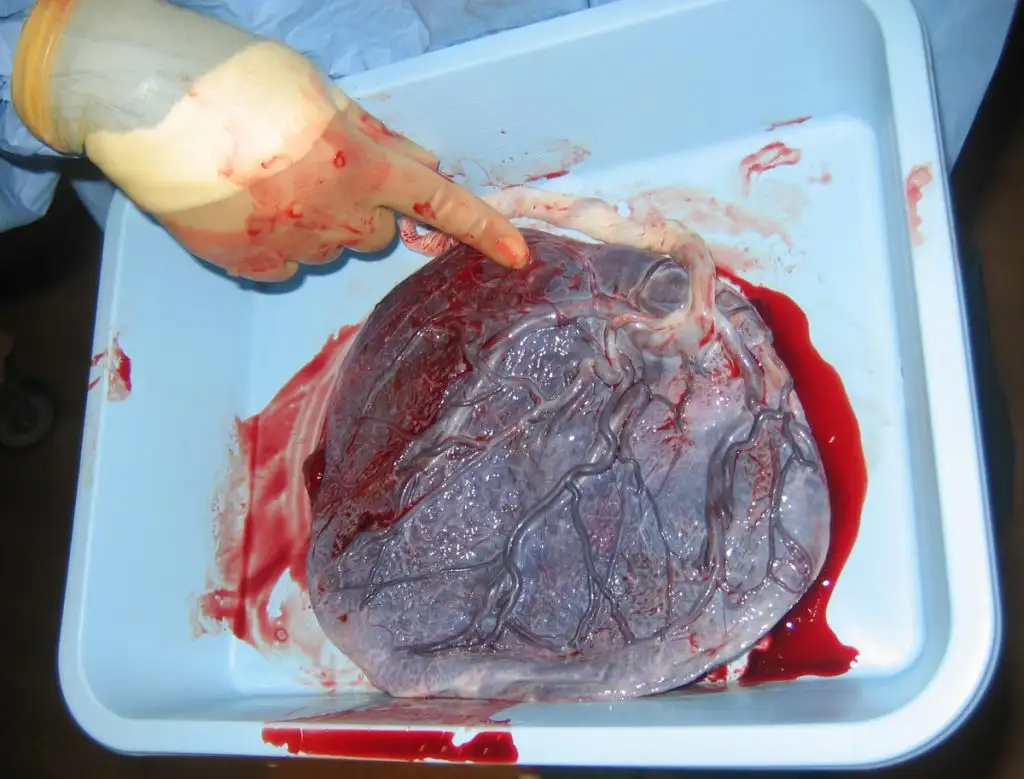
What is the networth of a placenta? Strictly speaking, zero. A placenta has no market price, and in most countries it is illegal or tightly regulated to sell human tissue. It is an organ that grows with a pregnancy, weighs roughly a pound at birth, and is normally treated as medical waste unless a parent asks for it. Still, the question is more interesting than it first sounds, because parts of the placenta do have real economic value in medicine, research and, less reliably, wellness businesses.
Why there is no sale price
The idea of a placenta’s networth is mostly a thought experiment. Still, people ask it for real reasons, from curiosity to wondering whether a parent could be paid for donating one. Here is the realistic answer.
Hospitals do not auction placentas. Donated tissue is usually handled under consent rules, and laws in many places limit payment for human organs and tissue to costs, not profit. So the number you want does not exist as a price tag. What does exist is a series of services and products built around the tissue.
Where value actually shows up
Here are the main ways the placenta, or tissue linked to it, generates money.
- Amniotic and placental tissue products. The membranes of the placenta are processed into grafts used in some wound care and eye surgery. Companies that process donated tissue and sell these products are real businesses, but the donor does not get paid.
- Cord blood banking. Blood from the umbilical cord, which is related to but different from the placenta, can be stored privately for a fee or donated to public banks. Families pay set-up and annual charges. Prices differ by company and country.
- Research. Placental cells and tissue are studied to understand pregnancy complications and develop treatments. Funding comes through grants and institutions, not through payments for the placenta itself.
- Cosmetics and extracts. Some skincare and hair products advertise placenta-derived ingredients, though the source and regulation vary a lot by country.
- Encapsulation services. This is where private money changes hands. Some providers prepare a parent’s placenta into capsules for the parent to swallow, charging a service fee.
The encapsulation question, and why health officials urge caution
If you are asking what is the networth of a placenta because you are thinking about encapsulating yours, the commercial side comes with real caveats. Placentophagy, the practice of eating the placenta, is popular in some circles and among some celebrities. But reviews of the research have not found good evidence that it provides the benefits people claim, such as better mood or milk supply. Studies in this area are small and often poorly controlled.
There are safety concerns too. In 2017 the US Centers for Disease Control and Prevention published a report on an infant with recurrent group B streptococcus infection that was linked to the mother’s placenta capsules, which had not been heated enough to kill the bacteria. Doctors have used the case as a warning that how the placenta is prepared matters. If you are considering it, speak to your midwife or doctor first.
What is the networth of a placenta in practical terms?
- As a product you can sell: no value, and often not allowed.
- As a medical resource: significant, but the value goes to hospitals, labs and tissue processors, not to individual donors.
- As a service: parents might pay a few hundred dollars or its equivalent for encapsulation or keepsake preparation, depending on the provider and where you live. Check current quotes locally rather than trusting an online average.
- As a cultural object: in some traditions, the placenta is buried or treated ceremonially, and its worth is symbolic rather than financial.
What if you want to donate
Cost matters when you ask what is the networth of a placenta in real money, so ask directly. Encapsulation providers publish their own rates, cord blood banks list set-up and annual fees, and hospitals can tell you whether donation is free. Any figure I could quote would be out of date or wrong for your country, so get current quotes. Some hospitals work with tissue banks that collect placentas after caesarean births with consent, because the tissue can be used for grafts. You would usually have to arrange this in advance and meet screening rules. It is a way to give value, not receive it, and it is worth asking your hospital whether such a programme exists.
The short version: asking what is the networth of a placenta gets you a philosophical answer and a practical one. The philosophical answer is that it is priceless, since it sustains a pregnancy. The practical answer is that it is not for sale, but handling, processing and storing parts of it supports a modest industry. So, what is the networth of a placenta? Not a number, really. Whatever you decide to do with yours, treat claims of miracle benefits with caution, and let your medical team guide the safety side.
For background, the Placentophagy article on Wikipedia is a useful starting point.
Related reading: Obama Networth Before and After Presidency: What Changed · Networth Elita Loresca Net Worth: What Can Be Verified