
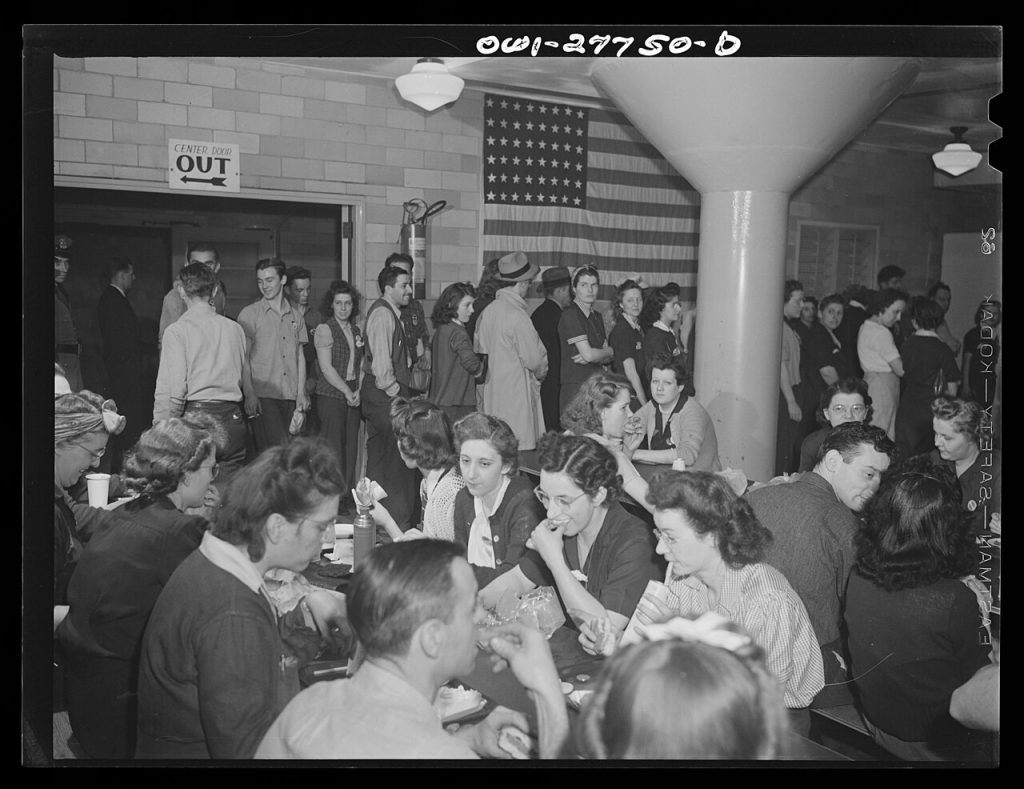
Walk into the kitchen of a certain kind of company at 12:15 and you will see something odd for a workplace: forty people who barely talk in meetings, standing in a line, chatting about weekend plans. That line is the real product of a free office lunch. The food is almost incidental.
A free office lunch became a signature of tech employers because they seem generous and cheap relative to a salary, and a free office lunch is the easiest of them to copy. But the logic behind them is more practical than charitable, and the practice works very differently at a ten-person startup than at a campus with thousands of badges.
The economics of a free office lunch are less silly than they look
Start with the arithmetic any finance lead will do. A catered or cooked lunch costs a company perhaps a few times what a sandwich costs you, because of volume buying and cheaper labor per plate. Compare that to the cost of a worker leaving the building, finding a place, queuing, eating alone and drifting back thirty or forty minutes later than planned. A company that feeds people on site recovers some of that time, at least in theory.
There is also a tax and compensation angle. In many countries, meals provided for the convenience of the employer are treated more favorably than the same value paid as salary, which is why meals sit alongside other employee benefits in most compensation plans. That varies by place, and anyone building a perk program should check local rules rather than assume.
But the strongest argument for a free office lunch has nothing to do with spreadsheets.
Proximity is the hidden benefit of a free office lunch
Researchers who study how ideas move through organizations keep finding the same thing: people talk to those they bump into. A shared table throws an engineer next to a salesperson who would never have scheduled a call. A question gets answered over rice and salad that would have sat in a ticket queue for a week.
This is why the design of the meal matters more than its quality. Long tables encourage mixing. Small tables for two encourage cliques. A cafeteria with a single serving line creates natural conversation; a bank of grab-and-go fridges lets everyone take a box back to a desk and defeats the purpose entirely.
If your goal is cross-team connection, measure that, not the satisfaction score for the pasta. One simple check is to ask, a few weeks in, how many people can name someone outside their own team they now talk to regularly.
Size changes the picture. In a ten-person startup, everyone already talks to everyone, so a daily catered meal adds little connection and a lot of cost. Ordering in once a week and eating together may do the job. In a company of several hundred, with departments on different floors, the shared table becomes the only place some people ever meet.
Where the idea goes wrong
A free office lunch has a darker reading, and employees are right to notice it. When meals are lavish and the office is designed so you never need to leave, the perk starts to look like a way to lengthen the working day. Dinner provided at 7 p.m. is a polite request to stay until 9.
Other failure modes are quieter:
- Dietary exclusion. One menu rarely fits religious, medical and personal restrictions. People who get a lesser option feel the difference every day.
- Remote and hybrid inequality. If half the team works from home, a lunch benefit favors whoever commutes. Stipends are fairer but lose the social effect.
- Entitlement drift. Perks are easy to give and painful to remove. A company that cuts the lunch during a bad quarter can do more morale damage than one that never offered it.
- Local business harm. Landlords and neighborhoods near large offices have long complained that in-house food drains custom from nearby restaurants.
A sensible way to decide
If you run a small company and are wondering whether a free office lunch makes sense, ask three questions before ordering anything.
First, what behavior do you want? If the answer is more conversation across teams, a weekly shared lunch may achieve most of what a daily program does at a fraction of the cost. If the answer is retention, remember that people rarely stay for sandwiches. They leave over managers, pay and boring work, and no menu repairs those.
Second, can you sustain a free office lunch? A perk you can only afford while funding is flush is a liability. Pick a version you could keep through a downturn: a stocked kitchen, a Wednesday lunch, a monthly budget per team. Founders raising money should also expect investors to look at recurring costs like this one, as covered in this guide to seed funding for first-time founders.
Third, who is excluded? Count the people who work remotely, work shifts, fast, keep allergies or simply prefer to eat elsewhere. A fair program offers them something comparable, whether that is a stipend or flexible hours.
If you bring in outside caterers, the agreement deserves the same care as any supplier contract, covering allergens, cancellation and who pays when numbers change. A plain overview of customer contracts for early-stage startups covers the kind of terms worth reading before signing anything.
The better question
The interesting thing about the free office lunch is that it exposes what a company values. Some use it to build a place people want to be, and the food comes with unhurried time to eat it. Others use it to shorten breaks. Employees can tell which kind they work for within a week.
So if you are deciding whether to start a meal program, or whether to keep one, don’t ask what it costs per head. Ask what you would like the room to feel like at noon, and work backward from there.
Image: Marjory Collins / Wikimedia Commons, Public domain.



