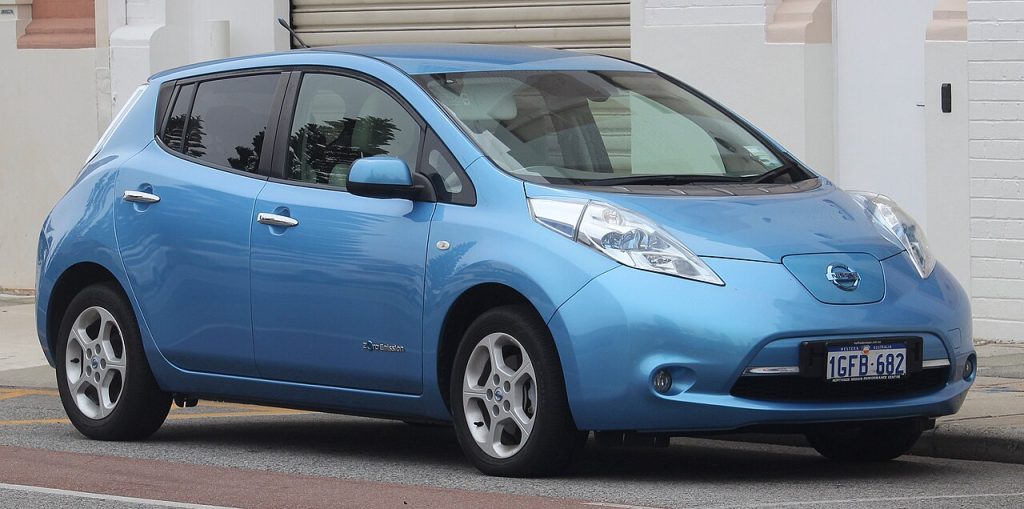
A used Nissan Leaf can be one of the cheapest ways into electric driving, and it’s also one of the easiest to get wrong. The same badge covers cars with very different batteries, and a ten-year-old example may no longer go as far as the number on the original brochure. Here’s how to think about it before you visit a seller.
Used Nissan Leaf generations and batteries
The first-generation Leaf appeared around 2010 and ran with a fairly small battery. Over its production years the battery capacity and chemistry were revised, and later first-generation cars generally offered more range than early ones. The second generation arrived later with a redesigned body and offered a larger battery option in addition to the standard one. Exact capacities and official range figures differ by year, region and test cycle, so check the figures for the specific car in front of you, using the manufacturer’s specification for that model year and market.
As a broad rule, the earliest used Nissan Leaf models suit short city trips, while the later cars with bigger packs can handle a longer commute without constant charging worry. Official ratings are also measured under standardized procedures, so real-world range is usually different.
Why age changes used Nissan Leaf range
Lithium-ion batteries lose capacity over time. How fast depends on temperature, how often the car was fast-charged, how deep the discharges were, and how many years it sat. The Leaf has a reputation for degrading faster than some competitors in hot climates, partly because early versions lacked active liquid cooling of the battery. That means a car from a warm region may have lost more capacity than a same-age car from a cool one.
So the model year gives only a starting figure. The condition of the individual battery tells you what you will actually get.
How to check the battery
- Look at the capacity bars. Many Leafs display a row of segments in the instrument cluster showing battery health. Fewer bars mean more loss.
- Use a diagnostic app. With an inexpensive adapter plugged into the car’s diagnostic port, apps designed for the Leaf can read state of health and capacity in more detail.
- Ask for service records. A dealer can run a battery report, and some give a written statement.
- Take a test drive with a full charge. Note the range the car shows and compare it with what the seller claims.
Other things worth checking
Find out whether the battery is owned or leased, since some markets offered leasing arrangements that carry monthly fees or transfer conditions. Check the charging port type and what charging speeds the car supports, because older cars may use a connector standard that is less common on new fast chargers in your area. Look at the onboard charger rating too: it sets how fast the car can charge at home on alternating current.
Inspect the usual used-car items as well, such as tires, brakes, suspension noises and any warning lights. Electric cars have fewer moving parts, but they aren’t maintenance-free.
Charging habits show up in the battery. A used Nissan Leaf that spent its life on a home charger at a gentle rate tends to age more kindly than one fast-charged daily on a delivery route. Ask the seller how it was used, where it was kept and whether it lived somewhere hot. A garage-kept car from a mild region is a safer bet than a sun-baked one of the same age.
Paperwork matters too. Ask for the service history, any battery replacement receipts, and proof of ownership if the battery was leased. A used Nissan Leaf with a replaced battery can be a bargain, but only if the work is documented and carries a warranty. Also confirm that recall work has been done, and check whether the connected app features still work, since older connected services are sometimes retired.
If your trips are short, an e-bike buying checklist may show that two wheels cover your needs, and if you are weighing electric against hybrid, why carmakers embrace hybrids explains why that option stays popular. Basic facts on the model are on the Wikipedia page for the Nissan Leaf.
Matching a car to your routine
Work backwards from your driving. Add up your longest typical day, then add a generous margin for winter, when heating and cold batteries cut range noticeably. If you can charge at home overnight, a modest range often suffices. If you rely on public charging, the practicalities matter more than the number: what’s nearby, what it costs, and how often it’s out of order.
Highway driving is also hard on range because air resistance rises sharply with speed. A Leaf that comfortably does a city commute may disappoint on a motorway run.
A fair price for a used Nissan Leaf follows battery health
Two cars with the same year and mileage can differ by thousands because of battery condition, so use that as leverage. A car with a weak battery can still be a good buy if the price reflects it and your daily distance is short. Walk away if the seller can’t or won’t let you check. A used Nissan Leaf is a battery with a car attached, and the sensible approach is to inspect the part that matters most first.
Image: EurovisionNim / Wikimedia Commons, CC BY-SA 4.0.