
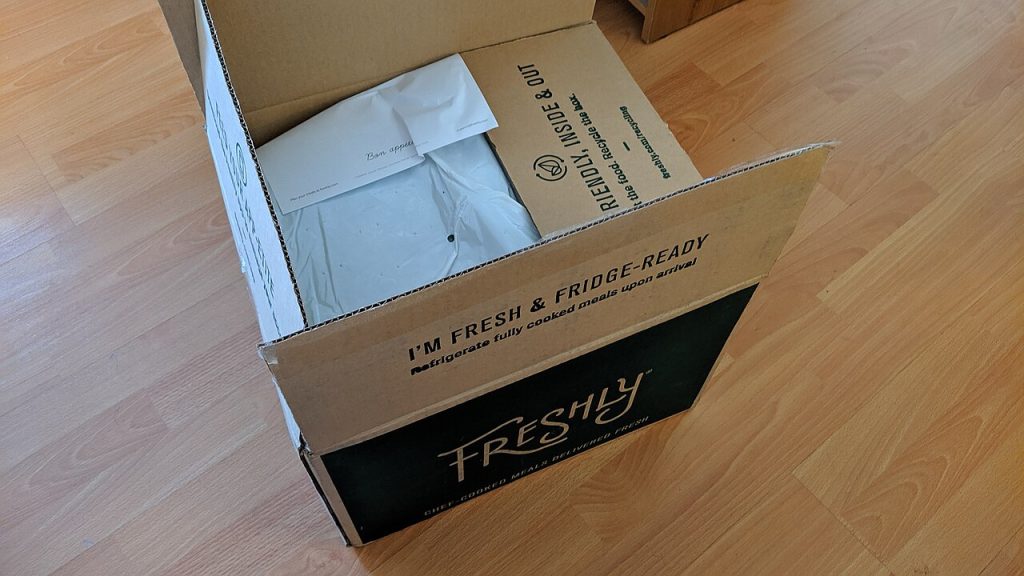
It’s 5:40 on a Wednesday, and the fridge holds half a cabbage, some eggs and a lonely jar of mustard. You don’t want takeout again, but you also don’t want to spend twenty minutes deciding what to cook. This small daily crisis is exactly what recipe subscription services are built to solve.
Whether a recipe subscription service succeeds depends on what you value, so it helps to break down what you’re really buying.

Three things in one box
A recipe subscription bundles several services that you could buy separately: ideas, planning and, in many cases, ingredients. Some deliver pre-portioned meal kits. Others give you a weekly menu and a shopping list, and you buy the groceries yourself. The difference in price and effort between these models is large.
- Ideas: someone else decides what’s for dinner, which removes decision fatigue.
- Planning: the quantities are worked out so you buy only what the week needs.
- Convenience: with delivered kits, shopping is gone as well.
The more of these you take, the more you usually pay. A recipe-only app can be inexpensive, while a fully portioned box costs noticeably more per serving than the same dishes made from supermarket ingredients.
Where a recipe subscription service saves money
The common case for these services isn’t price per meal. It’s reduced waste and fewer impulse buys. Many households throw away a fair amount of food because they buy for an imagined week of cooking that never happens. A plan that matches ingredients to specific meals can reduce that.
It can also cut down on takeout. If a subscription turns three delivered dinners a week into home-cooked ones, the comparison isn’t against groceries, it’s against restaurant prices. That’s where the arithmetic often works.
But the opposite happens too. If you skip meals or forget to cancel a week, you pay for food you don’t eat. Be honest about your schedule before you commit.
Reading the fine print
Subscription businesses make money from retention. That’s not sinister, but it means you should know how to leave, much like the steps in moving your playlists between music services.
- Check how to pause or skip a week, and how far ahead you must do it.
- See whether the introductory price rises after a few weeks.
- Look at delivery fees, which can be added at checkout.
- Find out how recipes handle allergies and dietary needs, and whether swaps are possible.
- Confirm how cancellation works. If it needs a phone call, think twice.
To see how the numbers might work, compare three options for the same week of dinners. A fully portioned box saves the shopping and the planning but costs the most per serving. A menu-and-list service lets you buy at your usual store, which keeps costs closer to normal grocery prices while still removing the planning. Or you can plan the week yourself on paper, which is free but depends on discipline. A recipe subscription service earns its fee in the middle ground, for people who have time to cook but not the energy to decide.
Check what happens with leftovers and odd ingredients, too. Kits often include a small bottle of a sauce you will use once. If the recipes repeat a few core staples across the week, you waste less. If every night asks for a new specialty item, the pantry fills with half-used jars.
Dietary needs matter more than people expect. If someone in the home avoids gluten, dairy or nuts, read how the service labels allergens, and do not assume a filter is perfect. For serious allergies, check the ingredient list yourself every time.
Who benefits most
People who like cooking but dislike planning tend to get the most out of a recipe subscription service. So do beginners, who gain confidence from clear step-by-step instructions, and busy households that want variety without much thought.
Experienced cooks may find the recipes too simple, and strict budget shoppers may find it hard to beat buying staples in bulk. Large families can discover that portions don’t stretch far enough.
A two-week test of a recipe subscription service
The cleanest way to decide is to run a small experiment. Pick a service and try it for two weeks. Track what you spend, how many meals you actually cooked, how much food went in the bin and how you felt about the time involved. Then compare against a normal fortnight.
Also notice what you learn. A good recipe subscription service builds skills, so that after a few months you rely on it less. If you start to recognize techniques and improvise, it has done something valuable even if you cancel.
Dinner will always need deciding. A recipe subscription service is simply a way to rent someone else’s decision-making, and the right question is whether you’d pay for that on a Wednesday evening with a half cabbage in the fridge.
Any recipe subscription service has a benefit that rarely shows up in a price comparison. Cooking from a clear recipe, week after week, is a bit like practicing pronunciation with a translation app, in that repetition teaches you things: how long onions take to soften, how much salt is enough, when a pan is hot. After a couple of months many people stop following instructions word for word and start adjusting. That confidence is worth something even if you cancel, because it makes ordinary groceries feel less intimidating and leftovers less wasteful.
So if you try a service, pay attention to what you learn, not just what you eat.
Image: Yongho Kim / Wikimedia Commons, CC BY-SA 4.0.



